
De captivants à banals, les articles et photographies de “The Baguette” sont une tentative de publier un journal de ma vie dans la Manche et de proposer un forum de discussion pour tout ce qui touche à la Normandie.
 Loches was first mentioned in the 6th century by the historian Gregory of Tours, who described the founding of a priory by Ursus the Hermit (Saint-Ours). It was not until circa 900 A.D., however, that the town really became established, under the ownership of the Counts of Anjou (soon to be kings of England) turned Loches into an impregnable fortified town.
  With Fulk Nerra’s keep, Richard the Lionheart’s and King John’s almond-shaped towers and Henry II Plantagenet’s walls which protected the entire rocky promontory, Loches was a veritable military fortress. King Philippe Auguste of France nevertheless captured the town in 1205. His successor, St-Louis, bought the town back in 1249 and, from then until the French Revolution, Loches was a royal town administered directly by royal governors.
  From the 14th century to the beginning of the 16th century, a number of French kings stayed in Loches (Charles VII, Louis XI and François I) hence the building of a comfortable residence known as the Royal Apartments. Gradually, the town expanded at the foot of the promontory, protected by a new wall.
 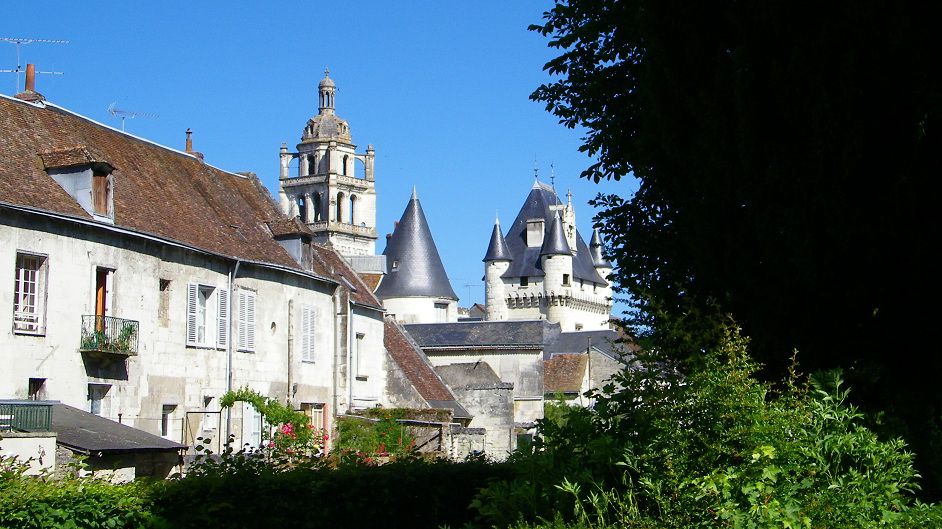 Two of the gates from this wall have survived. News of the town’s prosperity began to spread, thanks to its significant position along the trade route between Paris and Spain. A Town Hall, belfry and luxury mansions were built in the lower town during the 16th century. In 1968, the remarkably well-preserved old town center was listed as a conservation area. Since 2000, Loches has been part of the national network of Towns and Areas of Artistic and Historic Interest.
 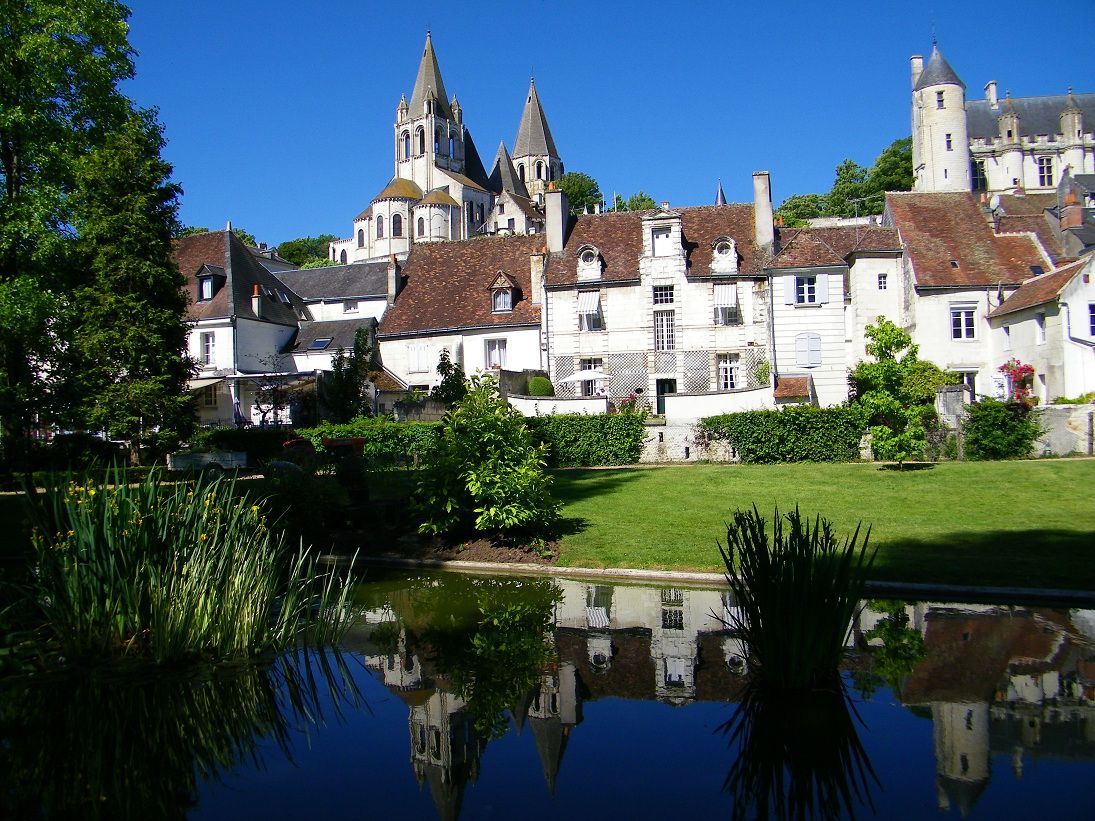 There is a breathtaking view of the Royal Apartments from the public gardens. They were built in two stages, between the end of the 14th and the end of the 15th centuries.
  The oldest section, on the south side, has four turrets that are more decorative than military. The second section, built a century later and extending out from the north side was designed in the Flamboyant Gothic style.
  The Franciscans Gate is the most recent of the four gates that once protected the lower town. Built in 1498, it includes a number of decorative features.
  It was named after the Franciscan friary nearby. The flour mill is a reminder of early 19th century industry.
  It stands on the site of the old communal flour mill and it housed a spinning mill and bed linen factory until 1900. In 1902, it was turned into a flour mill. Then in 2004, it was turned into serviced apartments.
 Saint-Antoine’s Tower is both a bell tower and a belfry, built between 1529 and 1575 during the Renaissance period. It was used to call people to religious ceremonies in the old Church of Saint-Ours (no longer in existence) and was part of the everyday life of the town, symbolising its power and independence. This is the only belfry in the Tours area.
 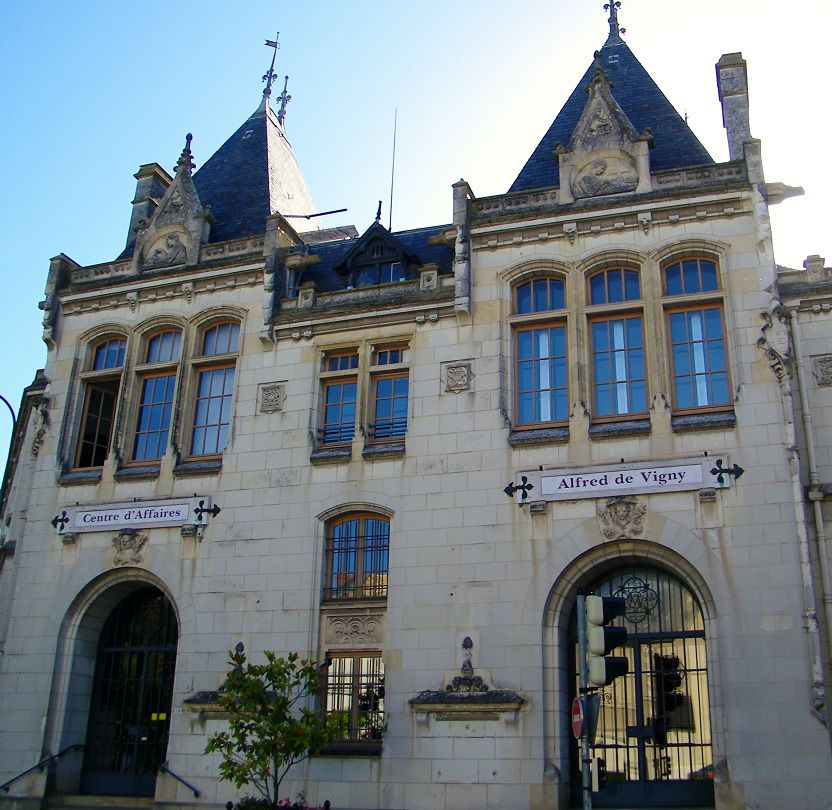 The Alfred de Vigny Centre or former Savings Bank was built in a neo-Gothic style and inaugurated in 1910.
 Two low reliefs decorate the pediments, one of an allegory of savings and thrift (a woman darning clothes) and the other showing a woman putting a coin in a piggy bank.
 Engraved on each of the wings of the building are sayings designed to glorify the act of saving.
  The Law Courts were built in 1866 by Gustave Guérin and is one of the most significant Second Empire buildings in Loches. Four busts of famous lawyers decorate the façade. In the pediment above the entrance is a carving of the goddess Athena, protector of the State who guaranteed the fairness of laws.
  Saint-Antoine’s Church (currently undergoing extensive restoration and renovation) was laid out in 1862 in the former Ursuline convent. This building provided the town with a parish church, a daughter church of Saint-Ours.
 The Picois Gate is the second defensive gate in the lower town to have survived to the present day. It is more military in style than the Franciscans Gate.
  It includes a Renaissance niche added when the Town Hall was built. In 1519, François I gave permission for the townspeople to buy this Town Hall. Renaissance in style, it has one of the earliest straight open newel staircases of the period.
 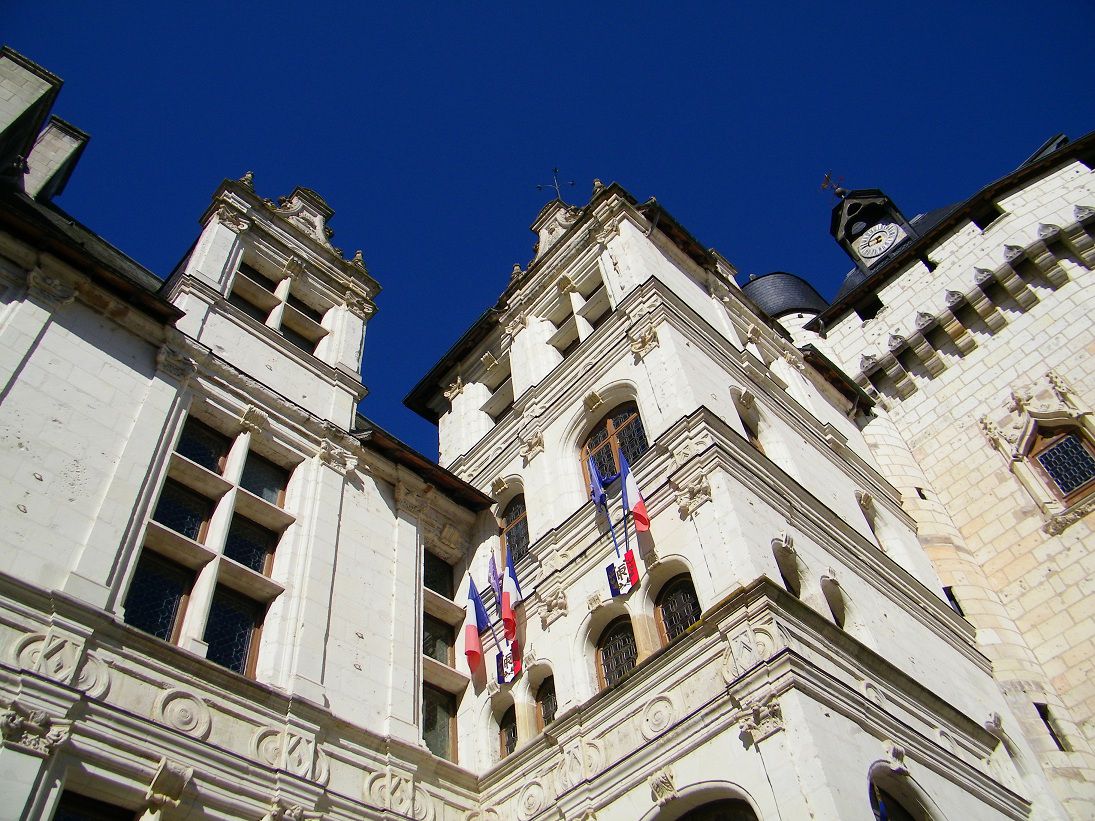 On two dormer windows are illustrations of François I crowned salamander and Loche’s coat-of-arms, symbols of royal and municipal power respectively. The building has served the same purpose for the past 500 years.
 This mansion, incorrectly known as the Chancellery, was built in the 15th century then altered and extended in the 16th and 17th centuries.
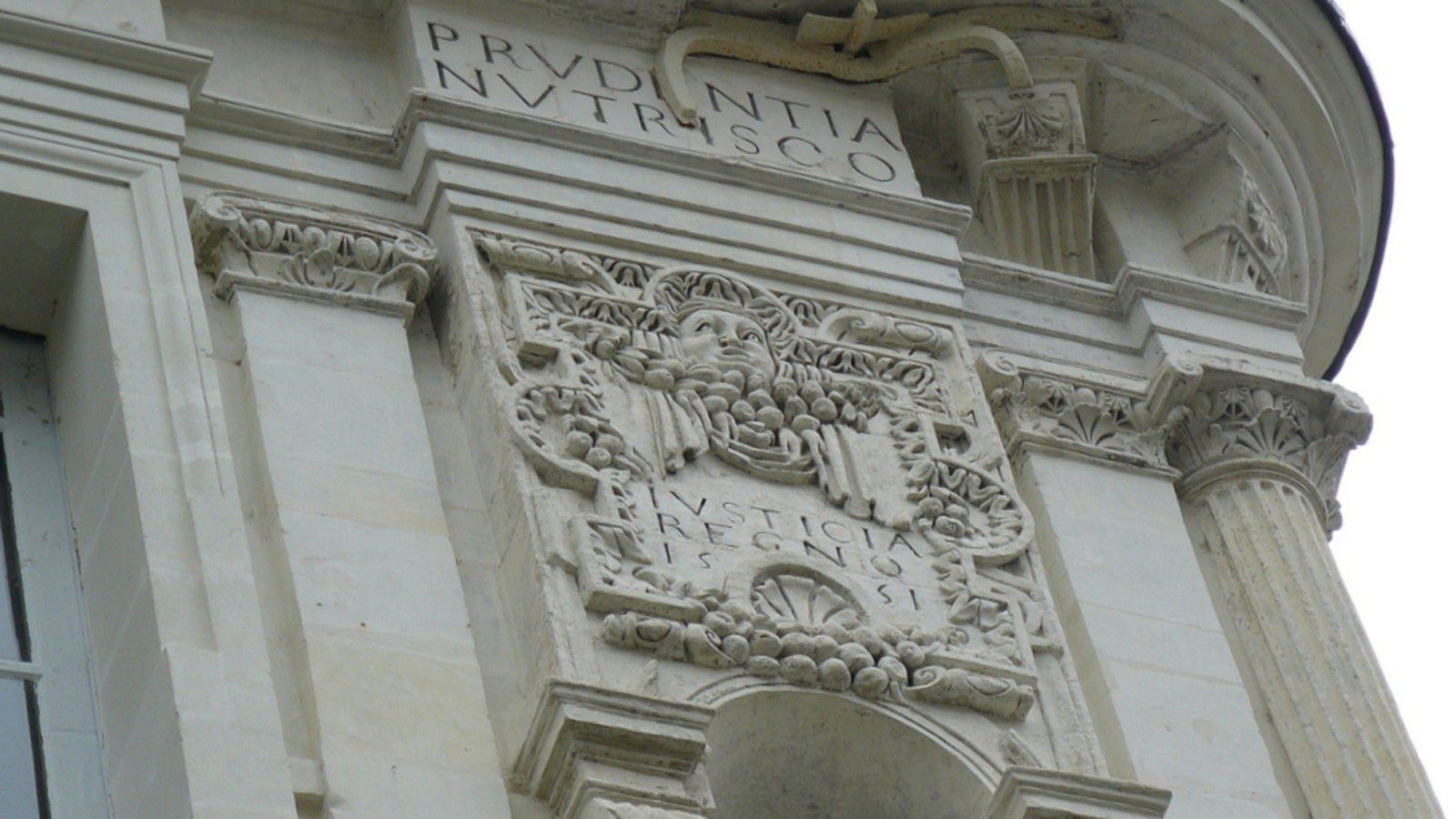 The façade, built in 1551, was inspired by the works of Michelangelo and is decorated with an antique frieze and columns with capitals that are typical of the Second Renaissance period.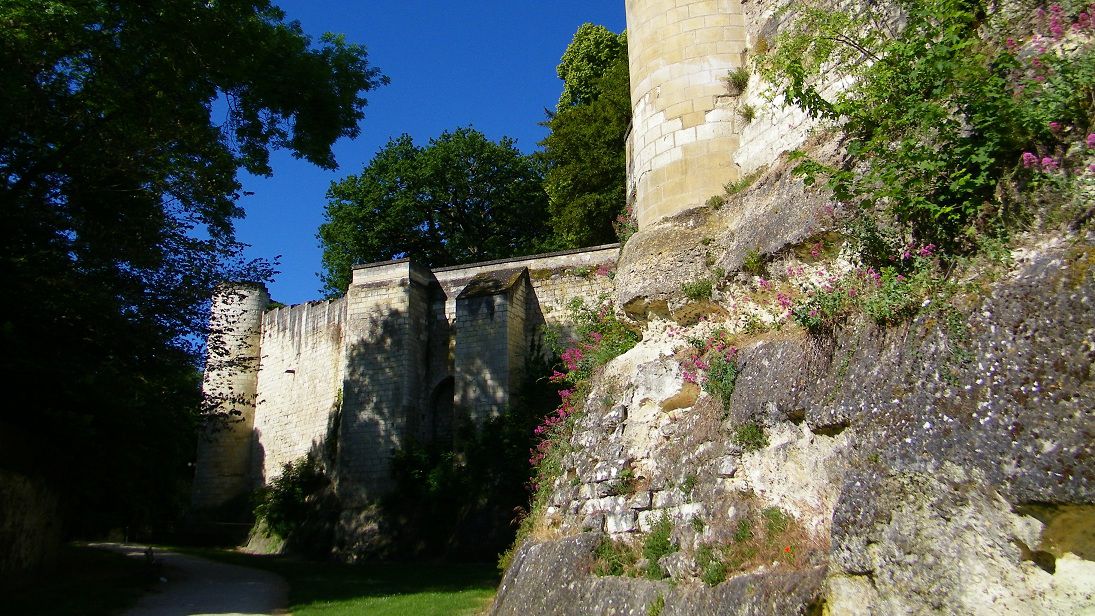

 Fort Saint-Ours: The first residential district at the foot of the castle, protected by a 12th century wall. Fort Saint-Ours forms the arc of a circle below the Royal Apartments. The district was home to leading members of the town’s society, who built luxury homes here in the 15th and 16th centuries.
  It was in 1569, during the Wars of Religion, that this casemate (called a caponnier) was built, half underground at the bottom of the moat. In the days of artillery fire, the caponnier was an inexpensive way of updating the town walls and protecting the bottom of ditches. Built out of the tufa rock, this is one of three caponniers built in this part of the fortress.
  Located on the south attacking side of the fortress, the three almond-shaped towers were built between the end of the 12th and beginning of the 13th centuries, a period of conflict between the King of France (Philippe Auguste) and the King of England who had possession of Loches (Richard the Lionheart then King John). The shape of the towers made them more stable, deflected any stones and limited dead angles, thereby ensuring more effective defence.
 The 13th century Royal Gate, which was altered in the 15th century, is the only entrance to the fortress. It has all the necessary systems of defence i.e. drawbridge, machicolations, arrow slits and a gun platform. The Lansyer House is quite ugly and really not worth looking at unless you are following the guide provided by the tourist office.
  Apparently, Emmanuel Lansyer was a landscape artist (you would NEVER guess by looking at his yard!) who studied under Viollet-le-Duc then under Courbet. In 1893, he bequeathed his family home and collections to the Town Council so that they could form the basis of a museum. It is now one of the Musées de France.
  The former Collegiate Church of Notre-Dame (now the Church of St-Ours) was founded in the 10th century but built in the 11th and extended in the 12th.

 It has two outstanding features—its 12th century carved polychrome doorway and its two pyramid-shaped domes above the nave.
 It contains the tomb of Agnès Sorel, King Charles VII’s official mistress. During the Middle Ages, the church stood in a canonial district where there was also a well-known school; after the Revolution, it became a parish church.
  The Keep, or Donjon, was built by Fulk Nerra, 4th Count of Anjou, between 1010 and 1035. This is one of Europe’s oldest surviving keeps. The building material used, the quality of the construction and its height (36 meters) make this an outstanding building for its time.
  Around the main tower, numerous other buildings were erected to increase the system of defence between the 11th and 15th centuries.
  It was then used as a State prison and, later, as a county jail until 1926. In fact, the continued use of the buildings has been one of the factors that ensured their good state of repair.


/idata%2F3191025%2FChateaux%2F2226-Le-Logis-Renaissance-et-la-forteresse-medievale--Mon.JPG)
/idata%2F3191025%2FChateaux%2F1699-Jardin-d-inspiration-medievale--Chateau-de-Langeais.JPG)
/idata%2F3191025%2FLe-Lude%2F1529-Chateau-de-Villandry.JPG)
/idata%2F3191025%2FLe-Lude%2F1407-Place-Francois-Sicard--Musee-des-Beaux-Arts--Ancien-.JPG)