
De captivants à banals, les articles et photographies de “The Baguette” sont une tentative de publier un journal de ma vie dans la Manche et de proposer un forum de discussion pour tout ce qui touche à la Normandie.
 Villandry was one of the last great Renaissance châteaux to be built on the Loire; it has unusual features for Touraine, like rectangular pavilions (instead of round towers) as well as the layout of the esplanade and its moat.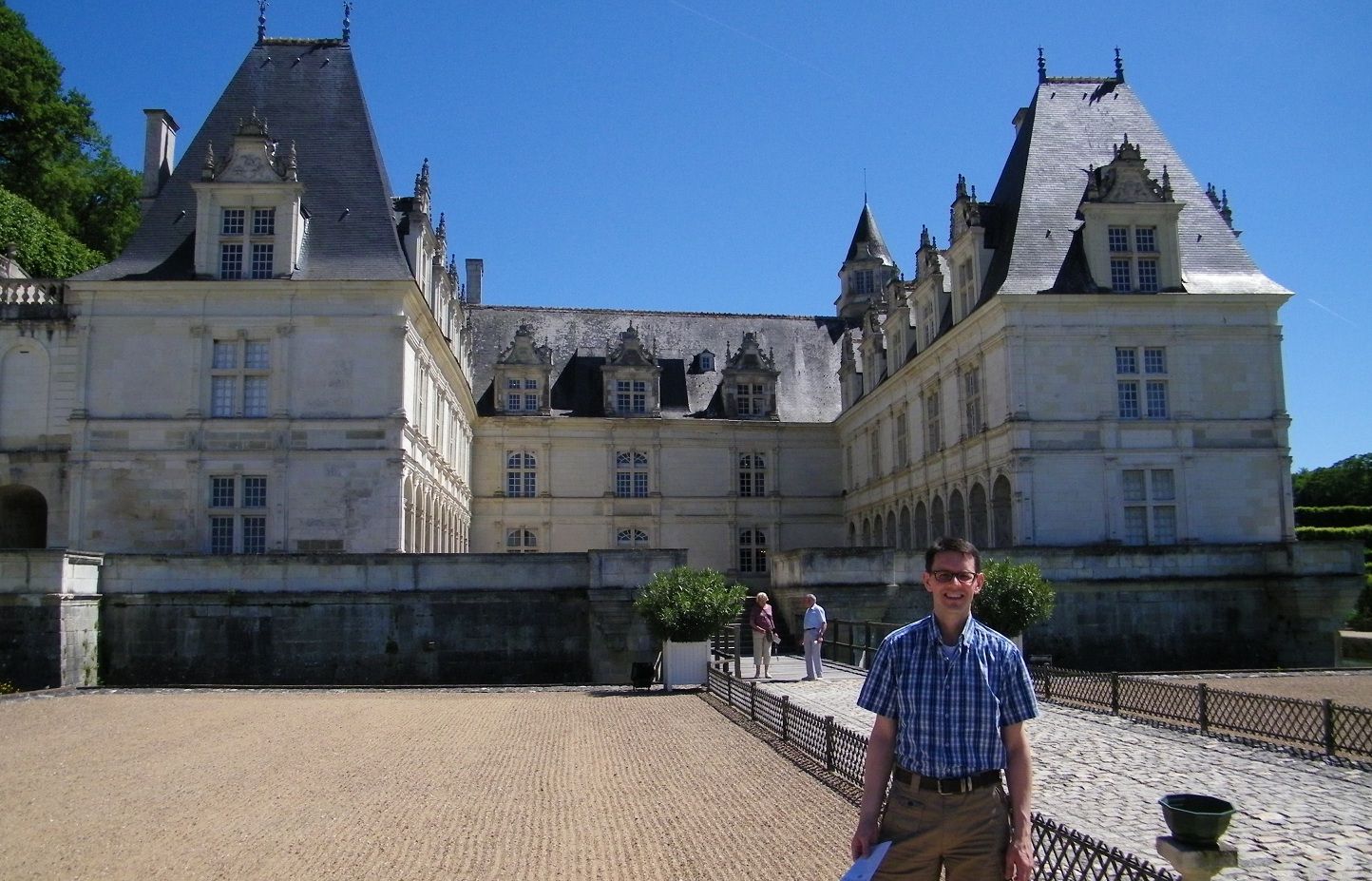
 Villandry’s international fame comes not so much from its château but from its gardens, which are among the most fascinating in France.
 Nothing remains of the early fortress except the keep, a square tower incorporated in the present structure which was built in the 16th century by Jean Le Breton, Secretary of State to François I. In 1754, the Marquis de Castellane, who came from a noble Provencal family, purchased the château and had it redesigned to meet 18th-century standards of comfort. In 1906, the château was bought by Joachim Carvallo, the great-grandfather of the present owner.
  He created 16th-century-style gardens that were in perfect harmony with the architecture of the chateau. Each room enjoys its own unique view, particularly of the gardens.
  The drawing room and study are from the 18th century. The armchairs and wing chairs are upholstered in silk from a factory in Tours that still produces numerous silks. The various photos set on the furniture, as well as the room’s size underline the fact that Villandry is first and foremost a comfortably-sized, family residence.
  The study, located on the ground floor of the keep, was Joachim Carvallo’s preferred work area. In particular, it was here that he would draw up his plans for the vegetable garden.
  The keep is the oldest part of the château, dating back to the 12th century. On July 4, 1189, the Paix des Colombières was signed in this medieval fortress by England’s Henry II, acknowledging his defeat by France’s King Philip Augustus.
 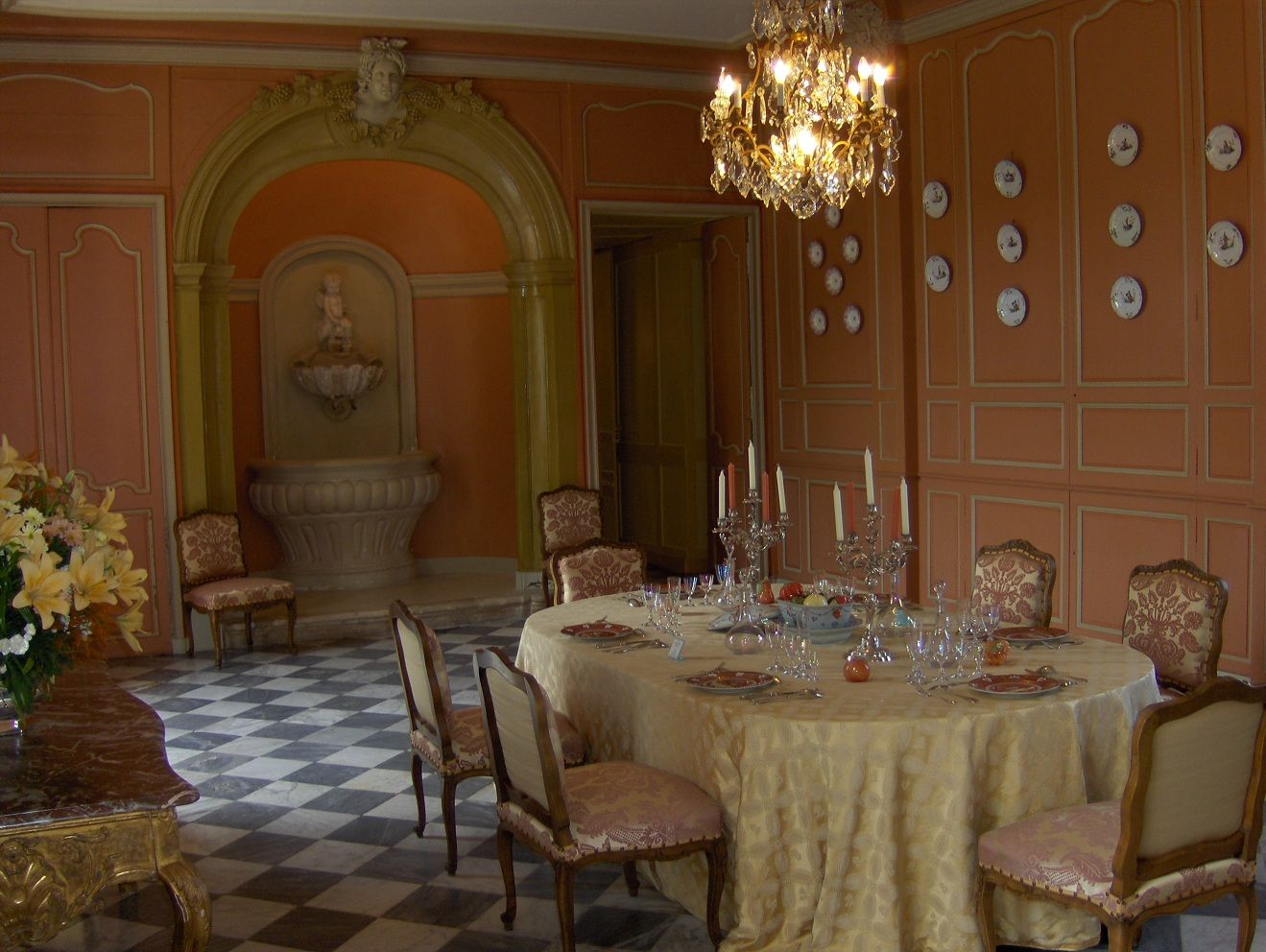 The Marquis de Castellance redesigned the dining room in the 18th century style; Louis XV panelling replaced the old tapestries, while parquet replaced the marble flooring. The windows give particularly lovely views of the ornamental gardens, designed as veritable open-air drawing rooms.
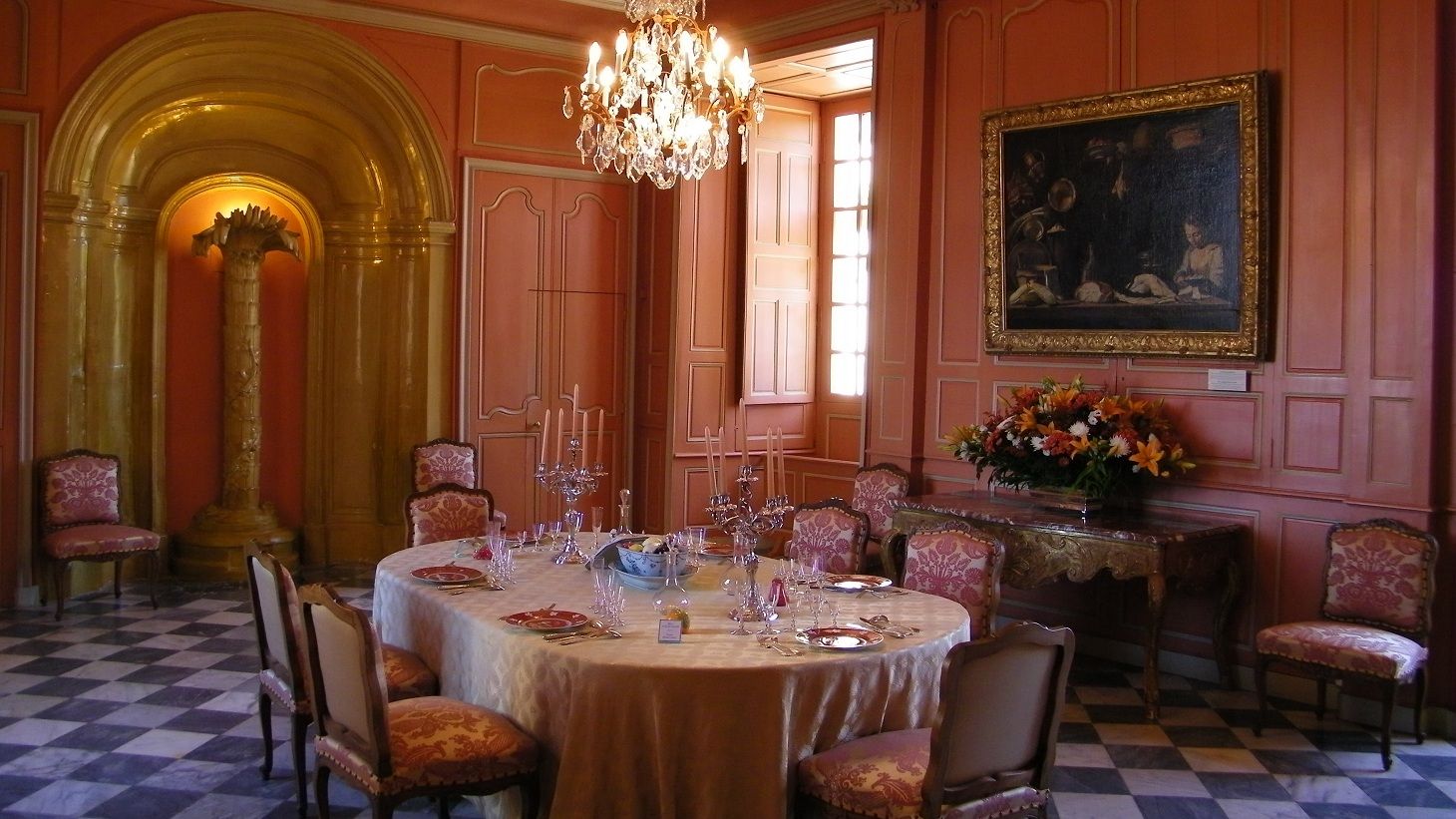 The salmon pink walls and fountain hint at the Provencal origins of the Marquis. In 1939, this room was listed as a historic monument.
  The kitchen is the château’s only rustic room, with its terra-cotta floor tiles, large fireplace and exposed masonry. It contains all the elements of an old kitchen: oak table, copper pots and pans and a roasting spit.
  The grand staircase, built of limestone, was constructed by the Marquis de Castellane to replace the octagonal staircase in the courtyard. The Marquis’ interlacing initials can be seen in the forged iron railings, typical for the 18th century. This staircase was also listed as a historic monument in 1934.
  The first floor bedrooms were traditionally reserved for the head of the household and for his guests. Today, they have been renovated and rearranged, but their dimensions and distribution in the western wing of the château date from the 18th century and are faithful to the Marquis de Castellane’s original designs.
  The first brightly colored room was that of Prince Jérôme. Napoleon’s youngest brother was the owner of Villandry for several years during the Empire period. This room’s furniture and design, therefore, is in the Empire style: mahogany furniture, red watered silks, trompe-l’œil and military drapes and lances.
  Also designed in the 18th century, the moat bedroom was used by Joachim Carvallo’s wife, Ann Coleman. There are paintings of three of the couple’s six children on display around the room. They are the work of their friend, the famous Vendéen artist Milcendeau.
 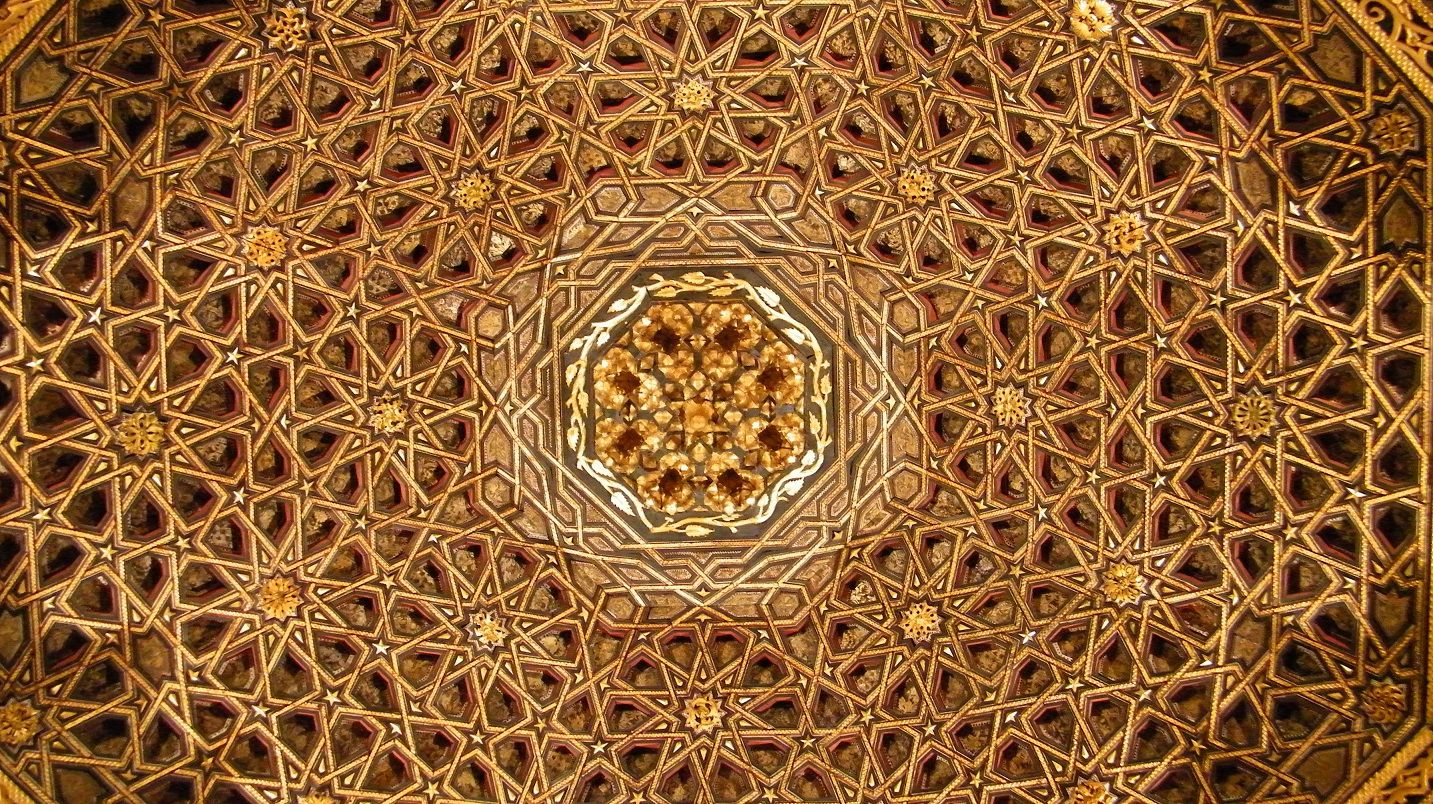 The ceiling in the oriental drawing room comes from the Maqueda ducal palace, built in the 15th century in Toledo. In the corners of this prestigious residence were four drawing rooms, each with its own coffered cupola of polychrome wood and gilding. The palace was dismantled in 1905 and Joachim Carvallo brought one of the ceilings back to Villandry, while the other three cupolas are currently housed by prestigious, international museums.
 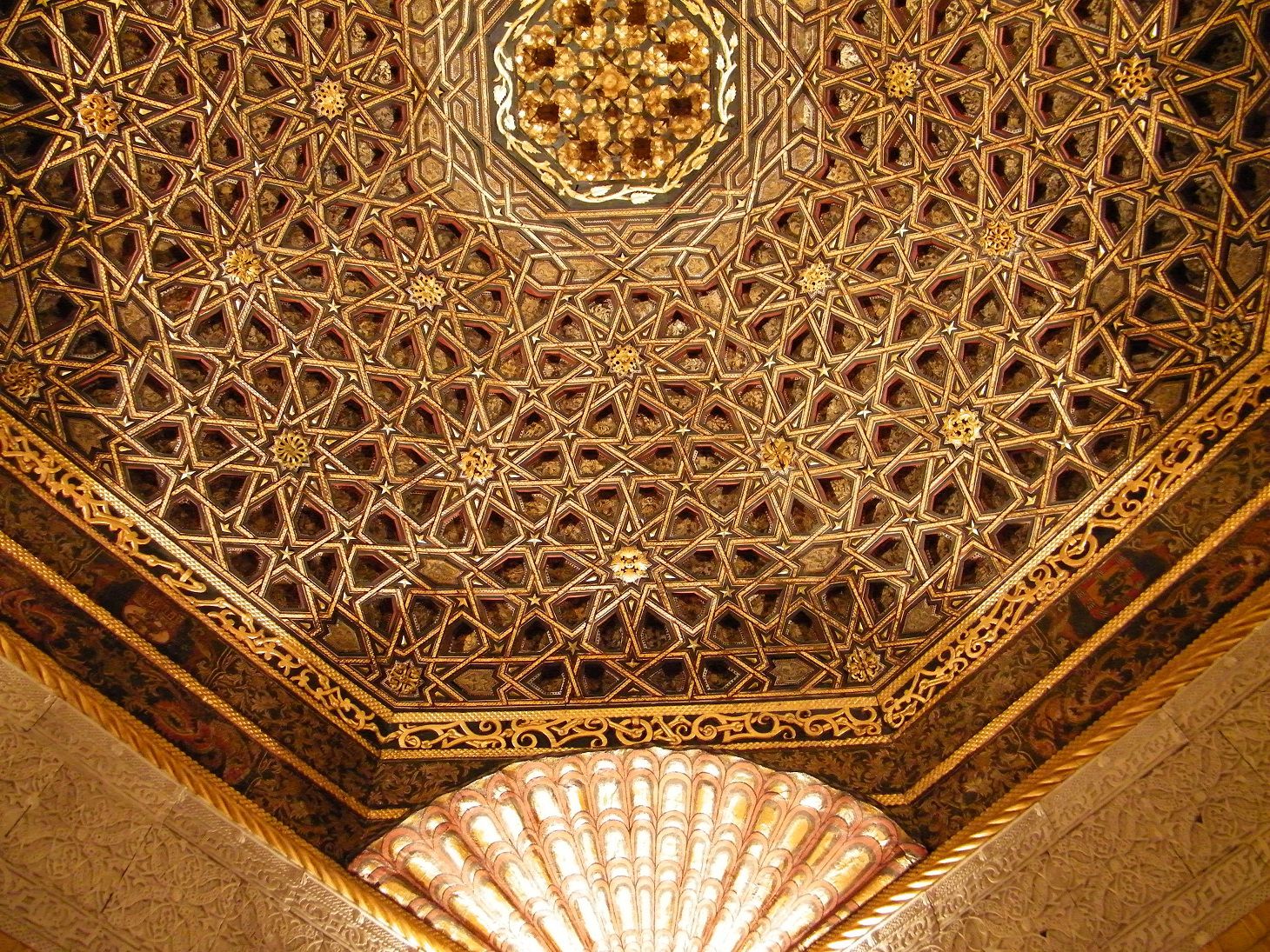 It took a full year to reassemble this ceiling from the 3,600 separate pieces. Built in the Mudéjar style by Moorish craftsmen for their Spanish patrons, the ceiling combines decorative elements from both Christian and Moorish art: Franciscan cords, scallop shells, floral designs and royal coats of arms all intermingle with tracery, gilding and arabesques.
 On the second floor, the two moderately sized rooms on the right are the children’s bedrooms. On display in the room are small toys and old books, along with embroidered clothing and a cradle.
 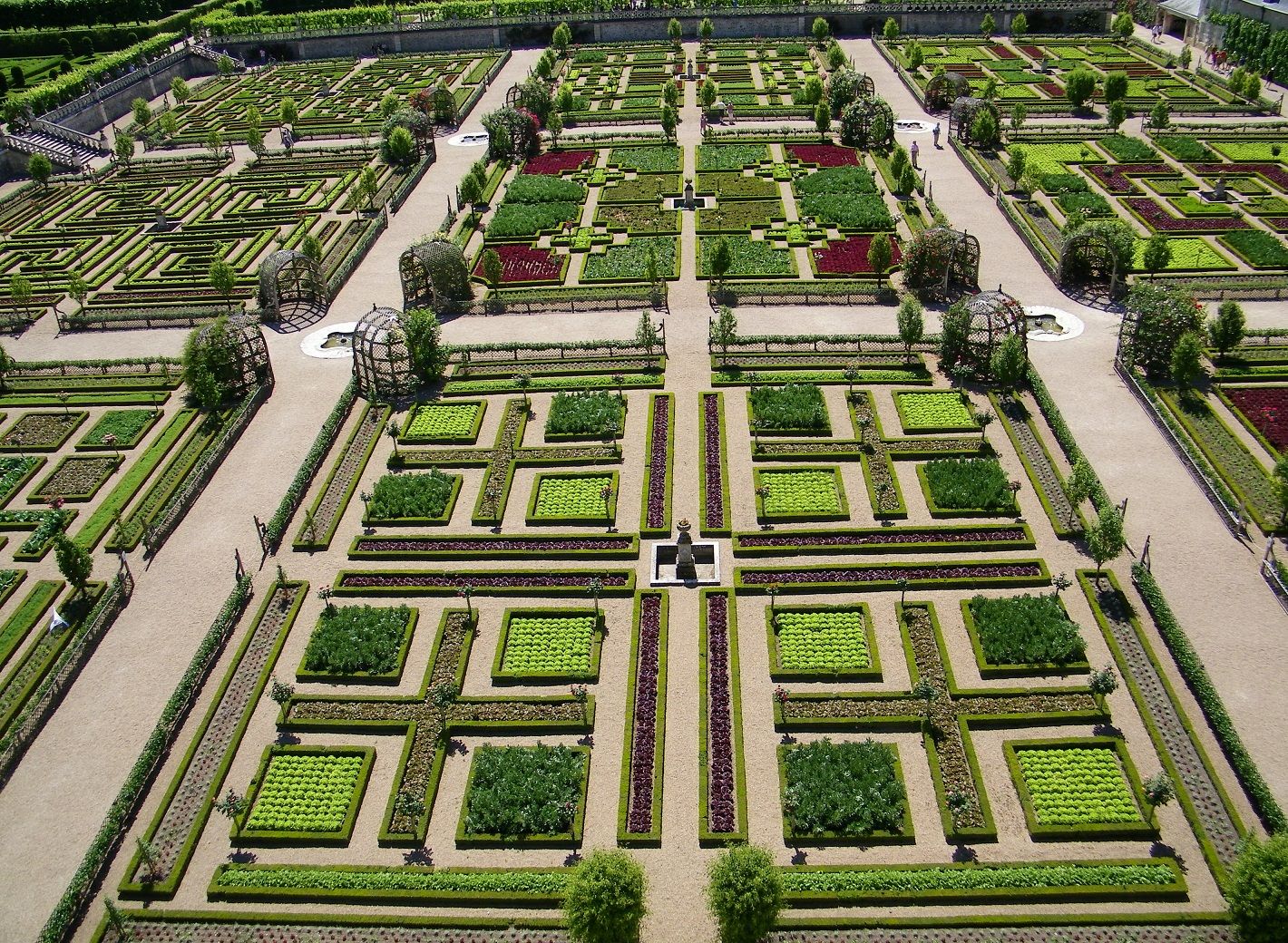 The tower keep affords a bird’s eye view of the gardens, as well as a magnificent panoramic view of the valley through which the Cher and the Loire rivers flow on their parallel courses for almost fifteen kilometres. The landscape is listed as a UNESCO World Heritage Site.
  Before leaving the château, visit the temporary exhibition gallery and admire the lovely chestnut framework which makes up the roof. Outside, along the terrace one has a perfect view of the ornamental garden.
 Half of the garden is dedicated to love with squares of box shrubs creating four distinctive flowerbeds symbolic of tender love, passionate love, fickle love and tragic love.
 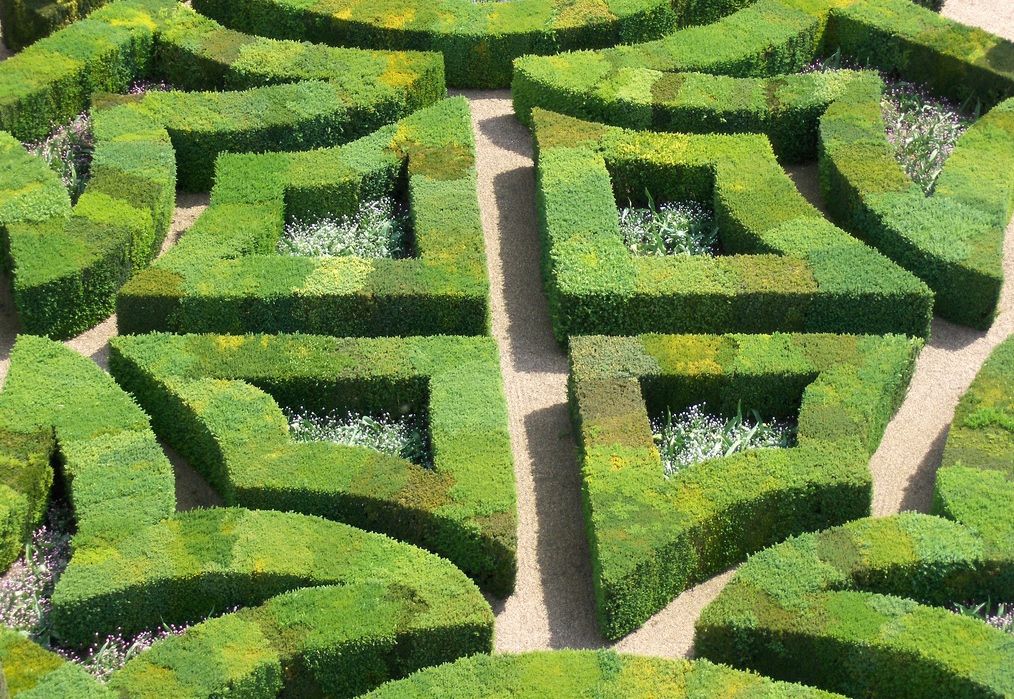 On the left, in the center, you can easily recognize the Maltese cross, with the Languedoc cross to its right, and the Basque cross on the left.
  Finally, along the moat there are stylized representations of “fleurs de lys.” On the other side of the canal is the “second room,” also planted with box shrub, evoking the symbolism of music.
  At the end of the terrace one comes to the 18th century Pavillion de l’Audience. Above the ornamental garden at the southern tip of the domain, is the water garden.
 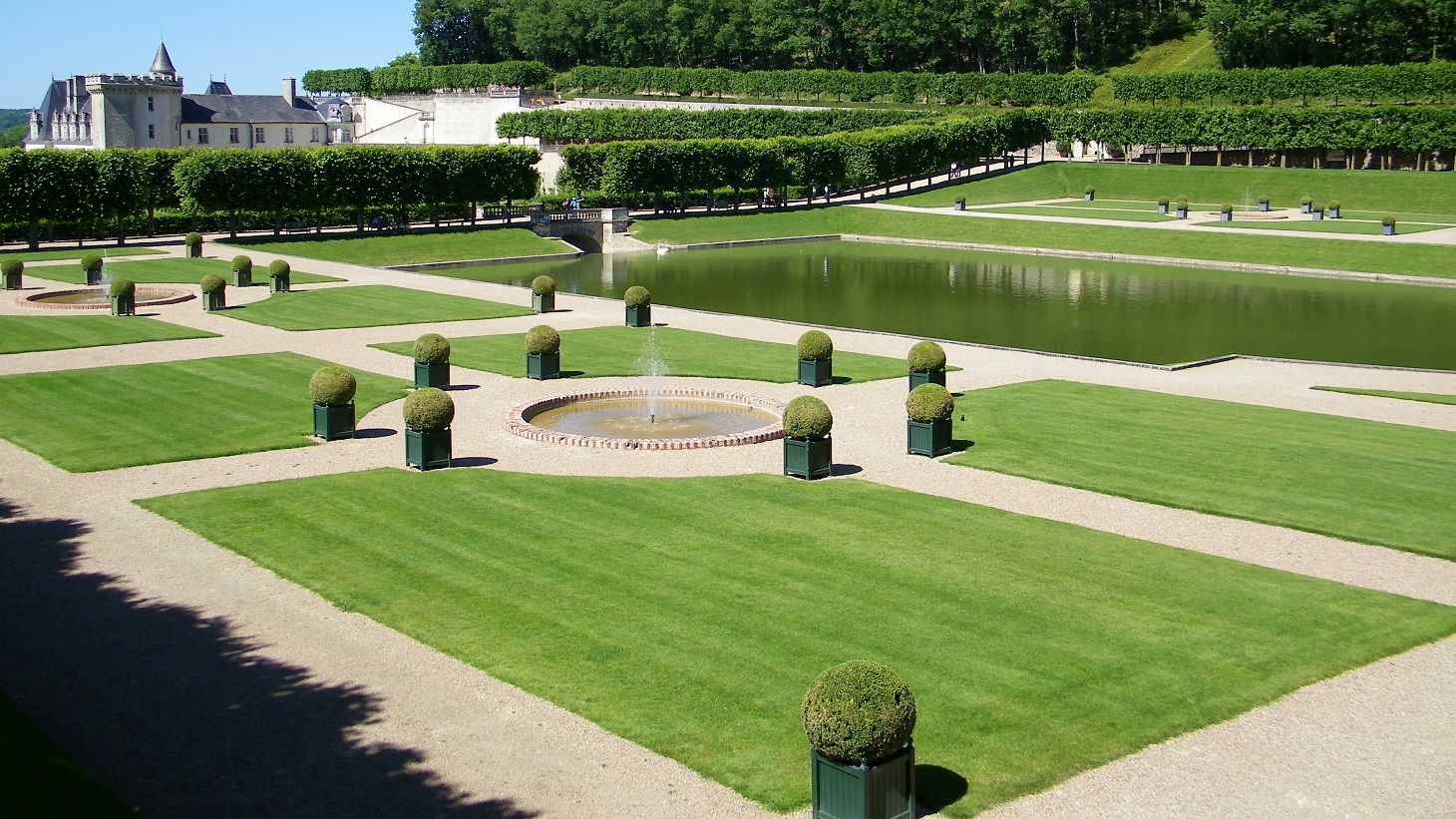 Of classical inspiration, it is centered around a large pond in the form of a Louis XV mirror, and is surrounded by a cloister of lime trees. It is a perfect place for rest and meditation.
  The most recent of the gardens, the sun garden is an exotic place, made up of three green areas. The cloud room is planted with blue and white shrubs and perennials.
  The sun room, with its oranges and yellows, shines around fountain in the shape of a star. Finally, there is the children’s room which serves as a play area under the peaceful shade of the apple trees.
 Between the kitchen garden and the church is the herb garden. This is the traditional garden of the Middle Ages devoted to aromatic, cooking and medicinal herbs.
 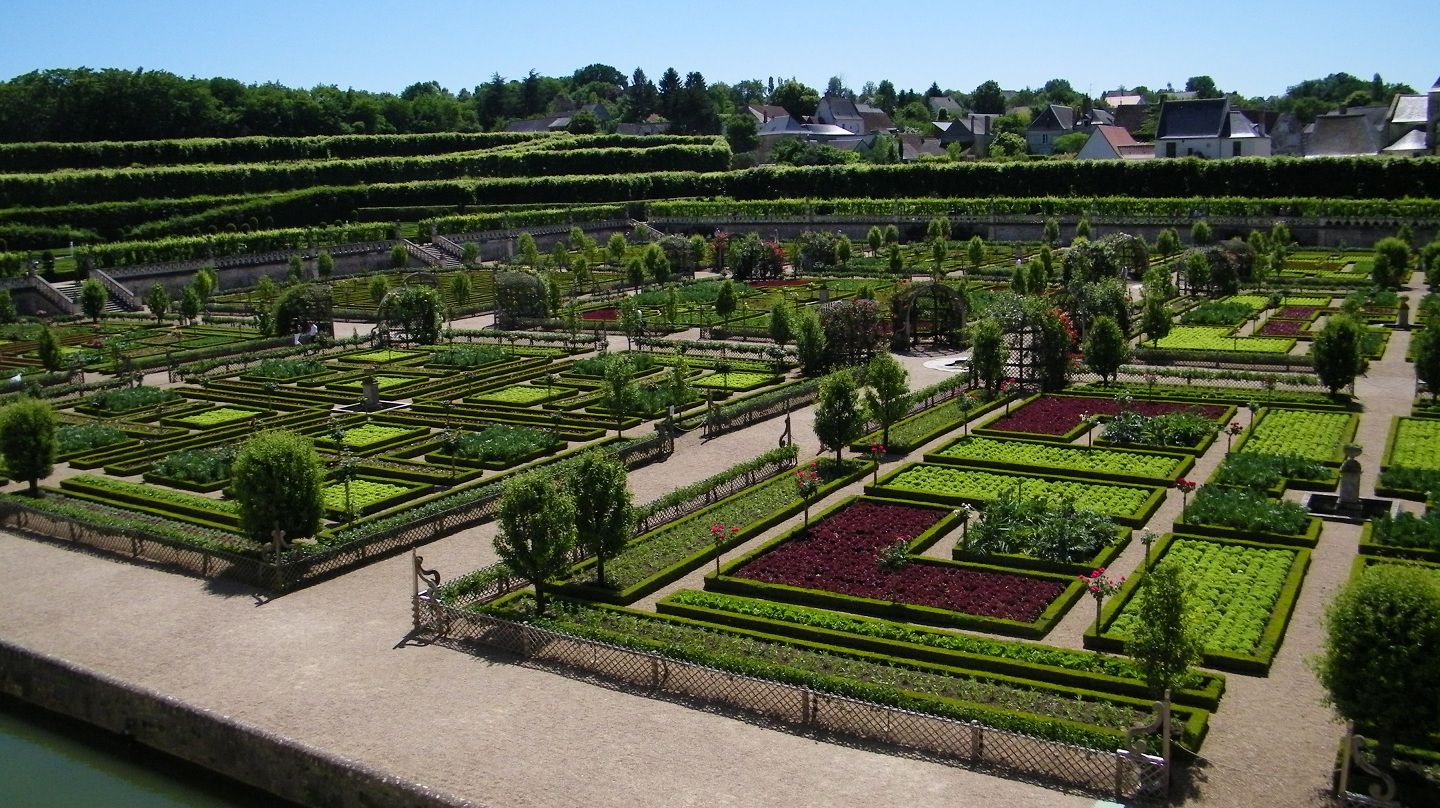 Between the château and the village is the Renaissance kitchen garden, made up of nine squares of equal size but with different geometric patterns in each.
 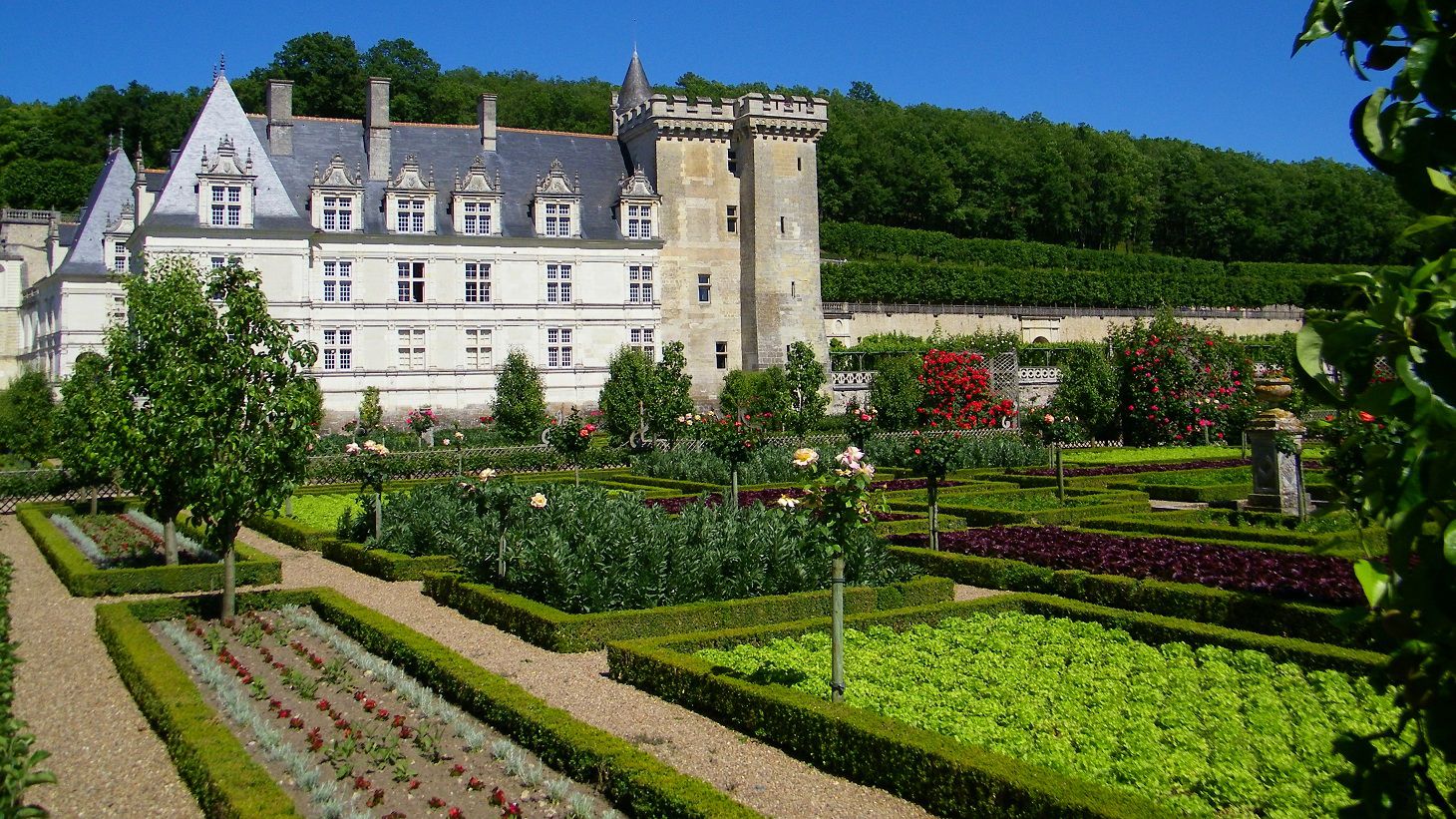 These squares are planted with vegetables of alternating colors (the blue of the leeks, the red of the cabbages and beetroot, the jade green of the carrot tops) to create the illusion of a multi-colored chessboard.


/idata%2F3191025%2FChateaux%2F2226-Le-Logis-Renaissance-et-la-forteresse-medievale--Mon.JPG)
/idata%2F3191025%2FChateaux%2F2100-Logis-royal-et-Jardin-publique--Loches.JPG)
/idata%2F3191025%2FChateaux%2F1699-Jardin-d-inspiration-medievale--Chateau-de-Langeais.JPG)
/idata%2F3191025%2FLe-Lude%2F1407-Place-Francois-Sicard--Musee-des-Beaux-Arts--Ancien-.JPG)