
De captivants à banals, les articles et photographies de “The Baguette” sont une tentative de publier un journal de ma vie dans la Manche et de proposer un forum de discussion pour tout ce qui touche à la Normandie.
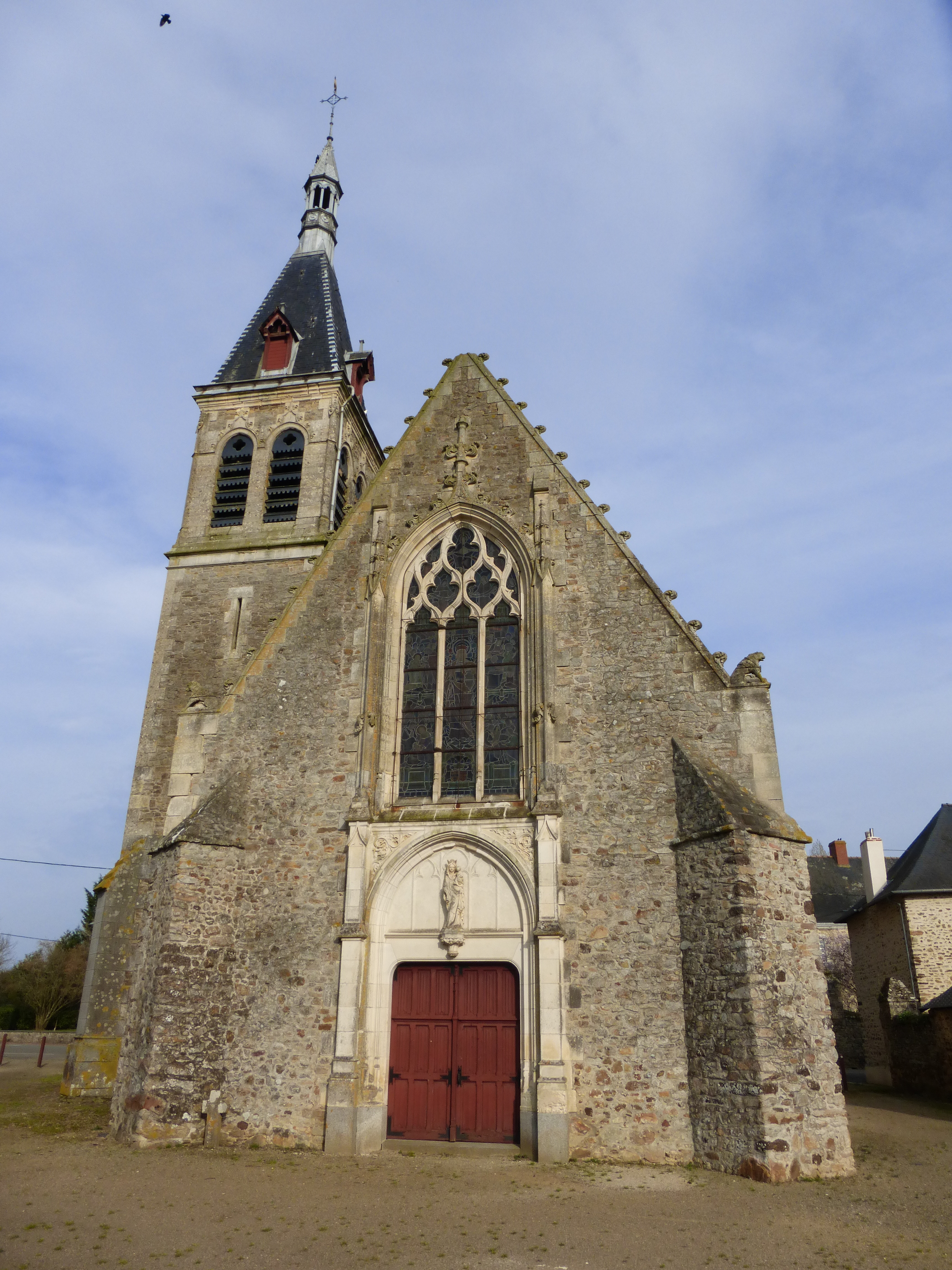 After leaving Laval, we headed to our final destination for the day, Évron but stopped just long enough in La Chapelle- Rainsouin to see the interior of l'église Saint-Sixte which is famous for its two funeral stones as well as a unique Entombment scene. One of the most interesting things about this church is the vaulted, wooden "reversed keel" ceiling that covers the nave.
 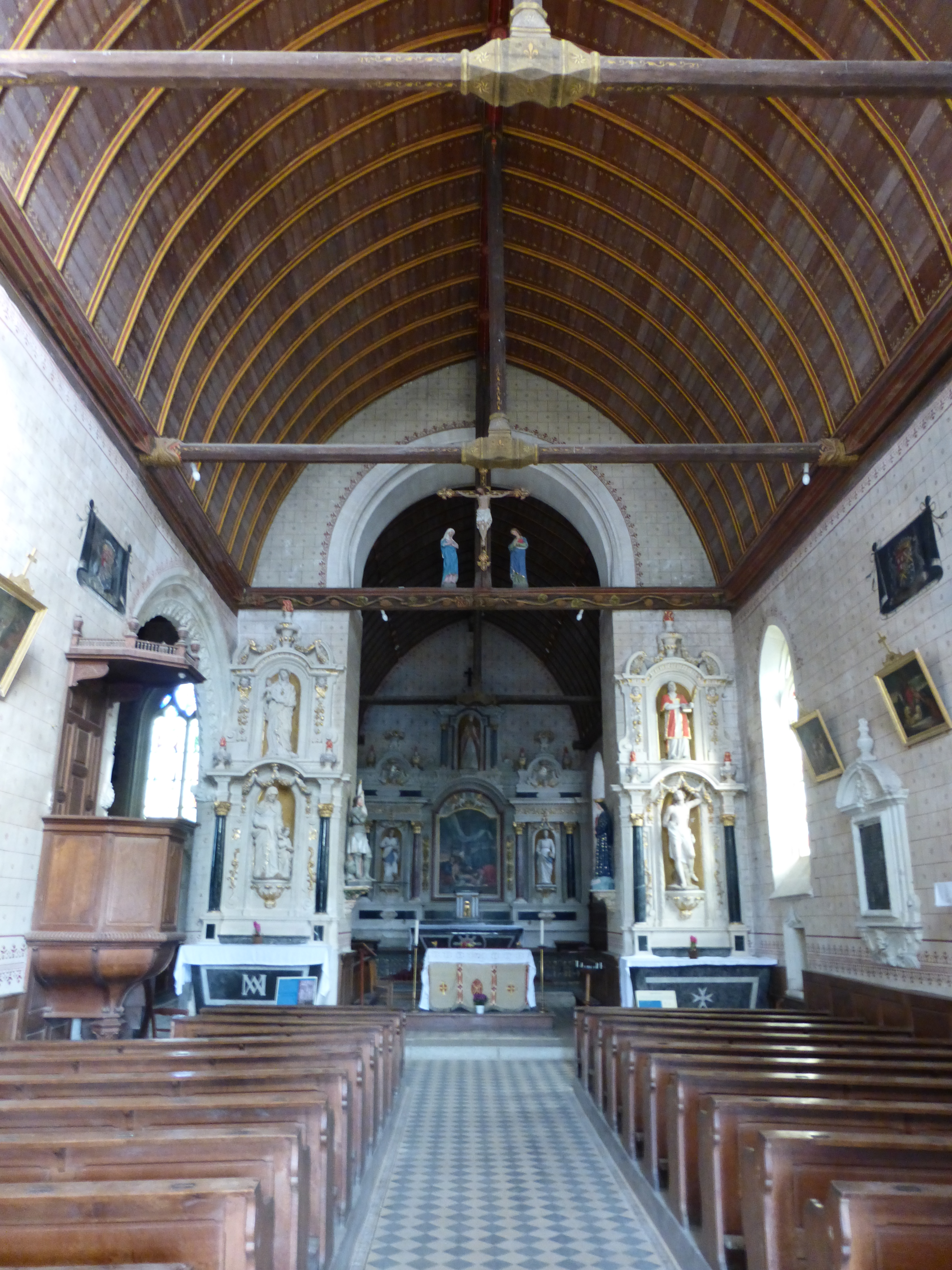 This beautiful carpentry work was probably established in 1506 and only repaired in 1842.
 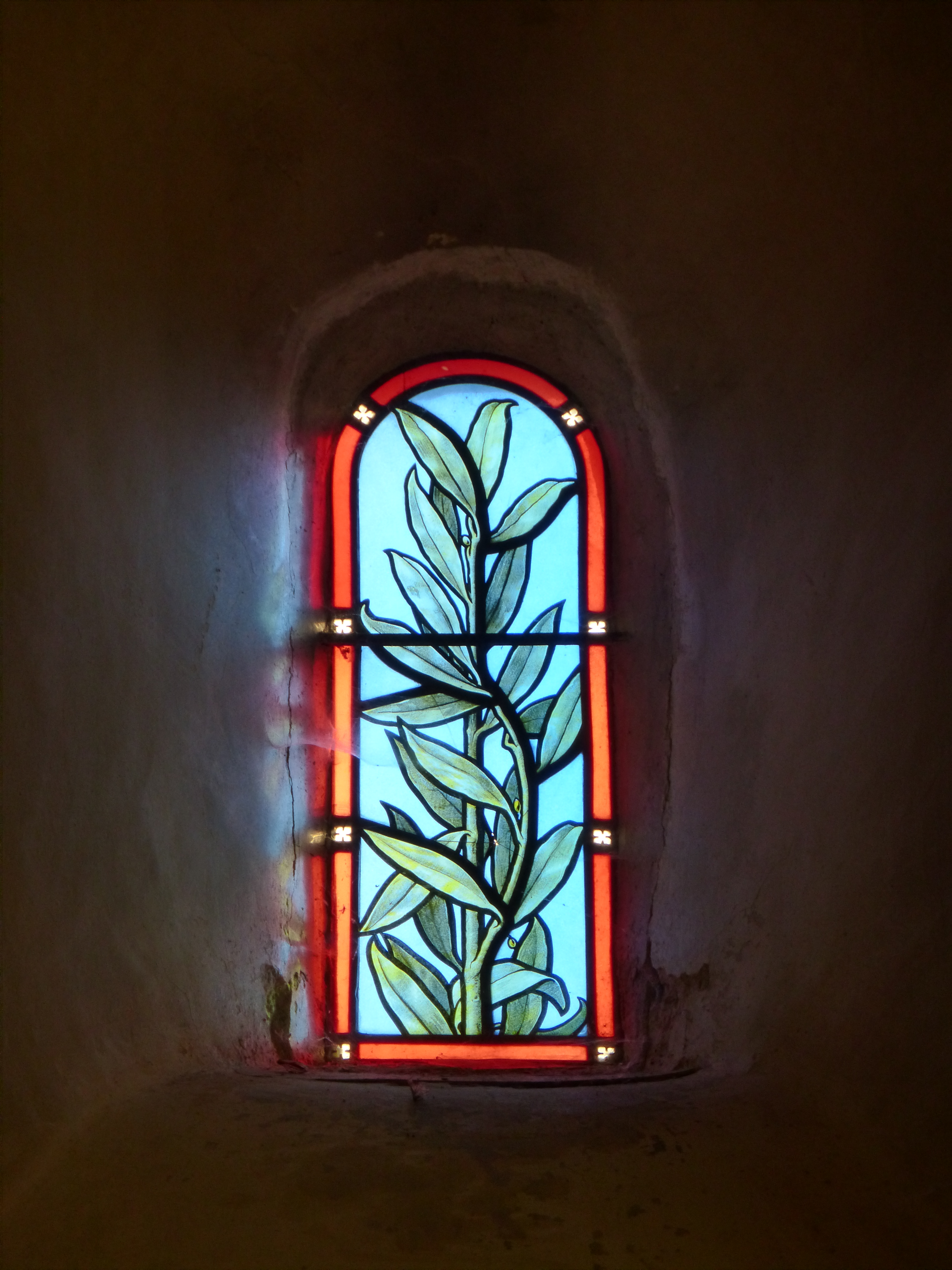 On the right after entering is a narrow splayed window which indicates that the original walls of the church were Romanesque in design but it is now thought that most of the masonry actually dates from the end of the Middle Ages.
 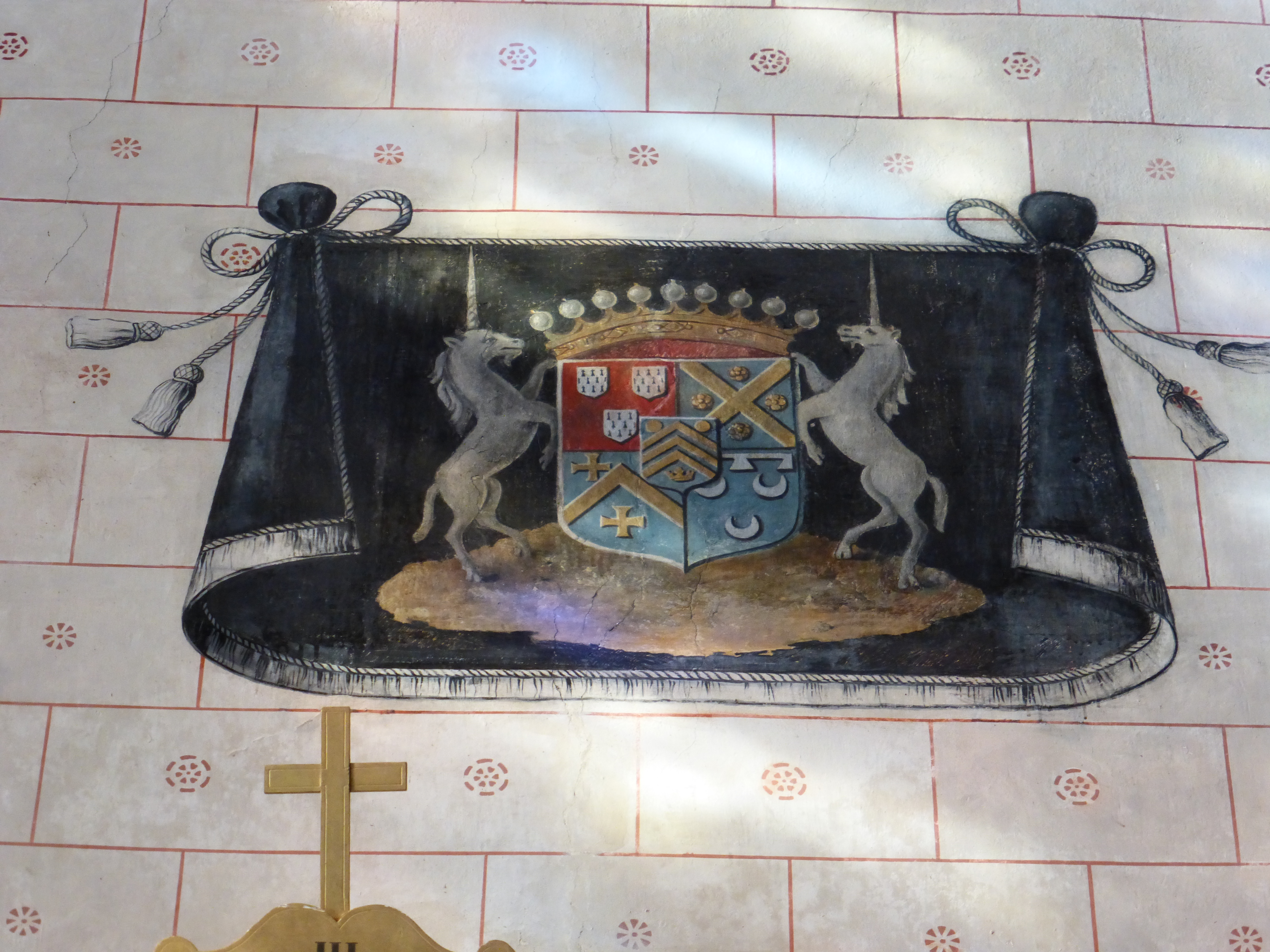 Another interesting feature along the walls upon entering are the 17th century “litre funéraire” or black funeral bands painted to honor the deceased lords of La Chapelle-Rainsouin known as the Le Prestre from the 17th century.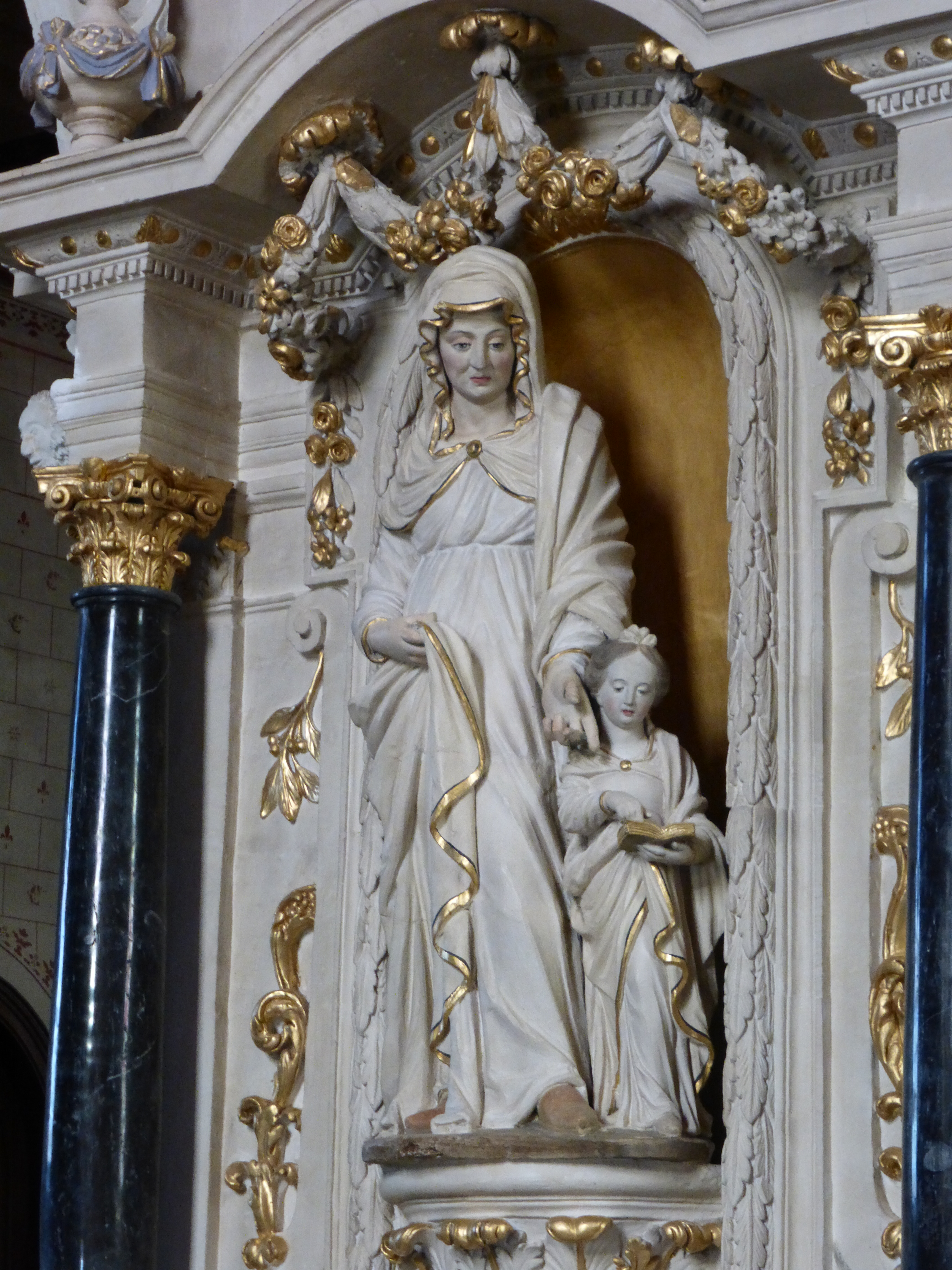
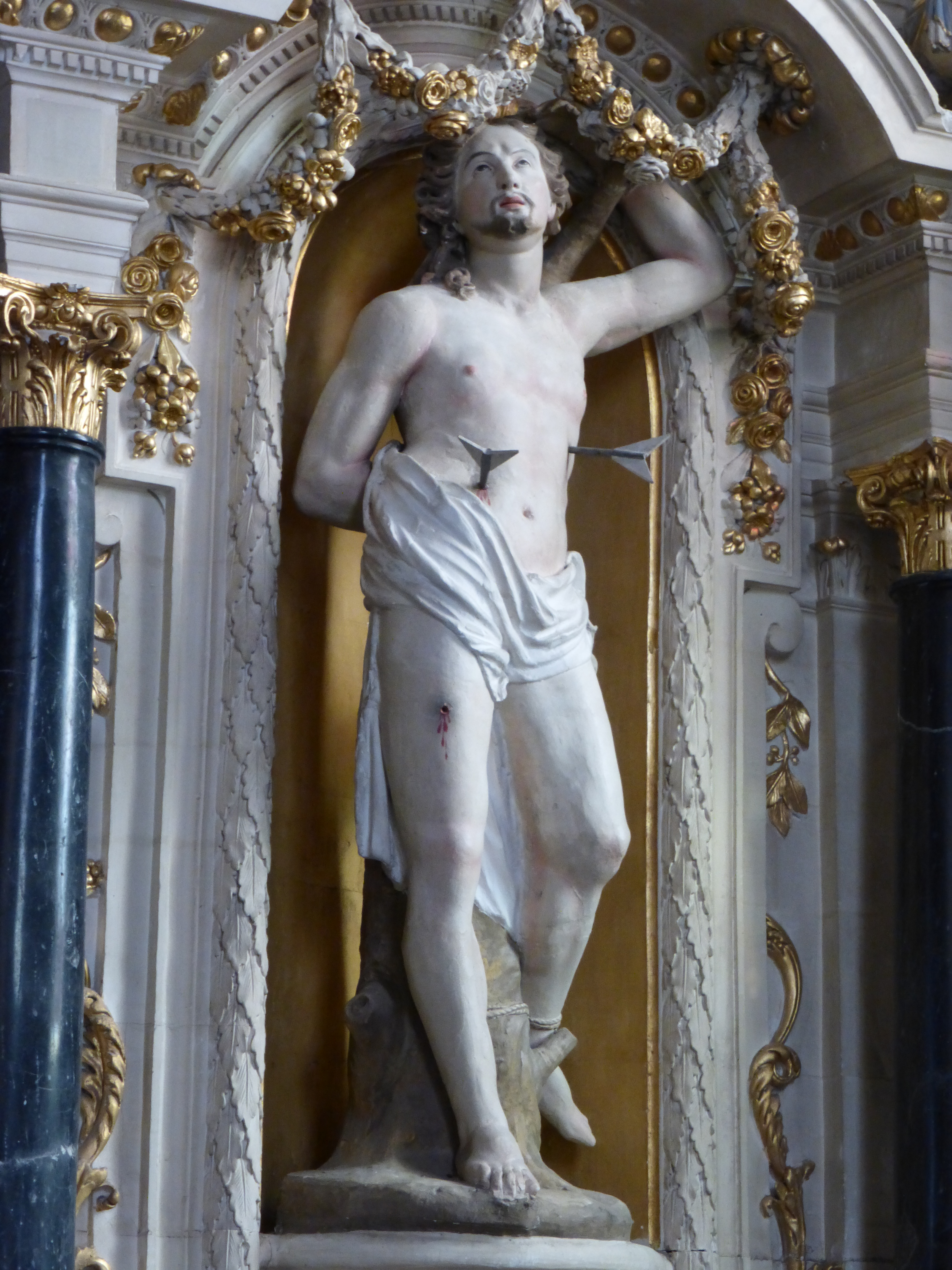 On either side of the main altar are statues dedicated to Sainte-Anne and Saint-Sébastien. The altarpiece is a beautiful piece of classical architecture with alternating columns of red and black marble framing a painting depicting the Descent from the Cross.
 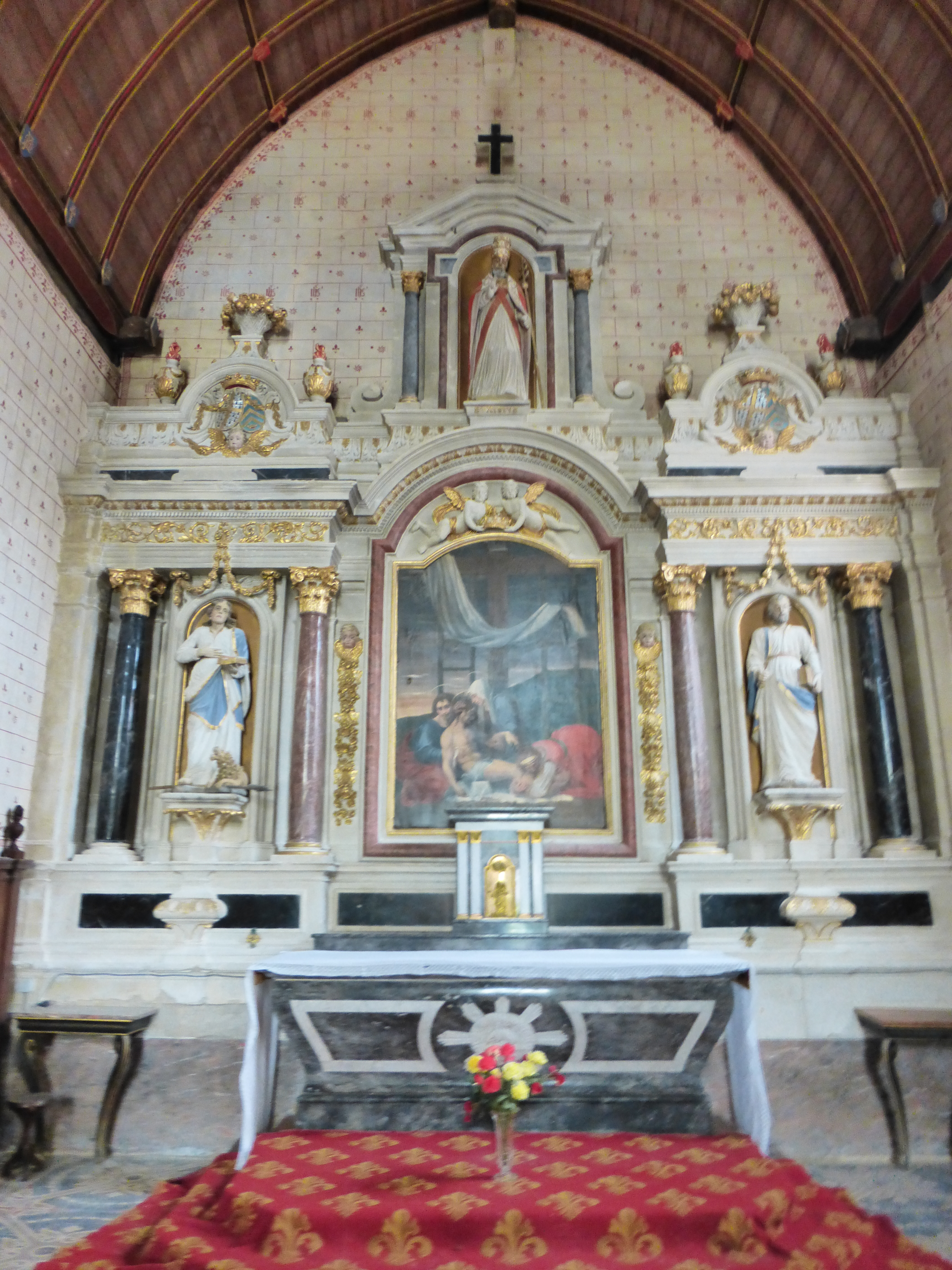 Three statues round off the decor: at the top, Saint-Sixtus; on the left, Saint-Mammès with a lion; and on the right, Saint-Peter. Above two of the statues are the arms of the family Le Prestre. The entire ensemble was executed in 1701 by François Trouillard, architect and sculptor from Château-Gontier, who pledged to deliver it within a period of one year along with three statues "gilded and detailed for the price of 1100 livres."
 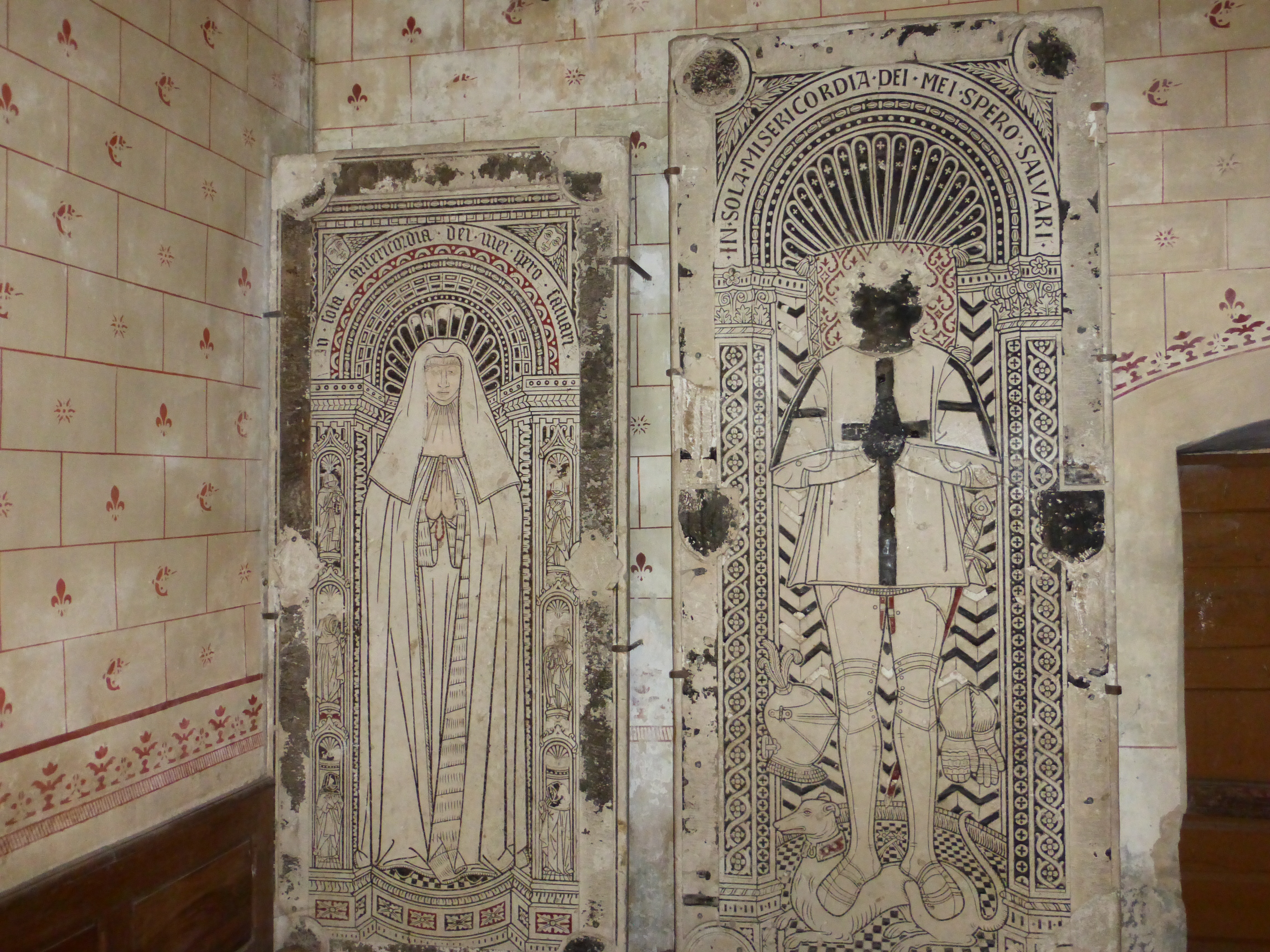 Within the north chapel named "Montfronchet" are two carved stones that once covered the tombs of the founders of the chapel. They were set against the wall in 1821 and have been identified as Olivier de La Chapelle and Arthuse de Melun and were most likely created between 1508 and 1526. Alone in the back of the church, within a small room locked with an iron gate, is a set of statues known as the Entombment, or Burial of Christ.
 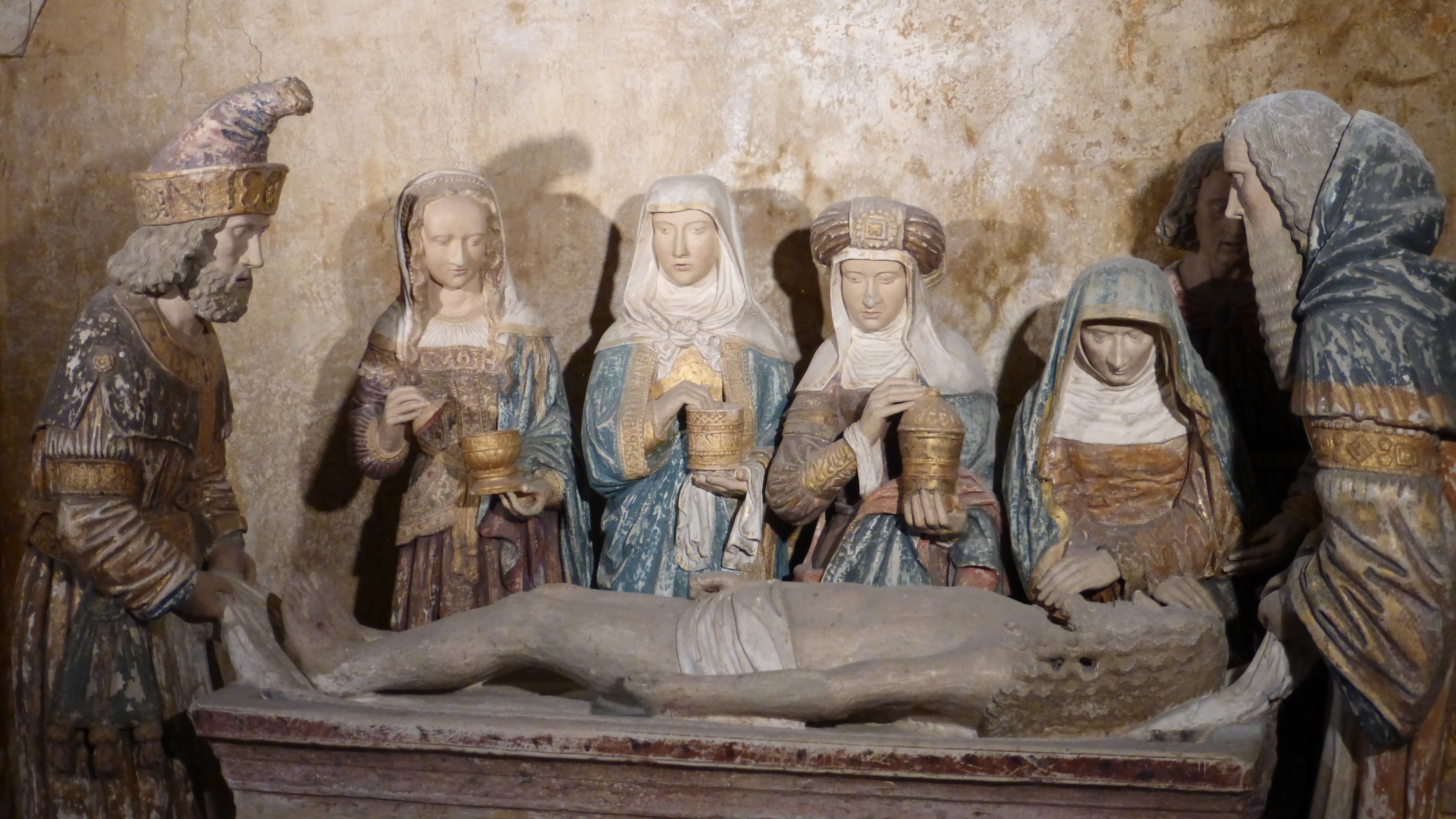 The scene is composed of seven characters which surround Christ lying in his shroud. The two statues on either end represent Joseph of Arimathea and Nicodemus. In the background are the three holy women, the Virgin and Saint John. These statues were executed in 1522 by someone named Gnothus and ordered by Arthuse de Melun.
 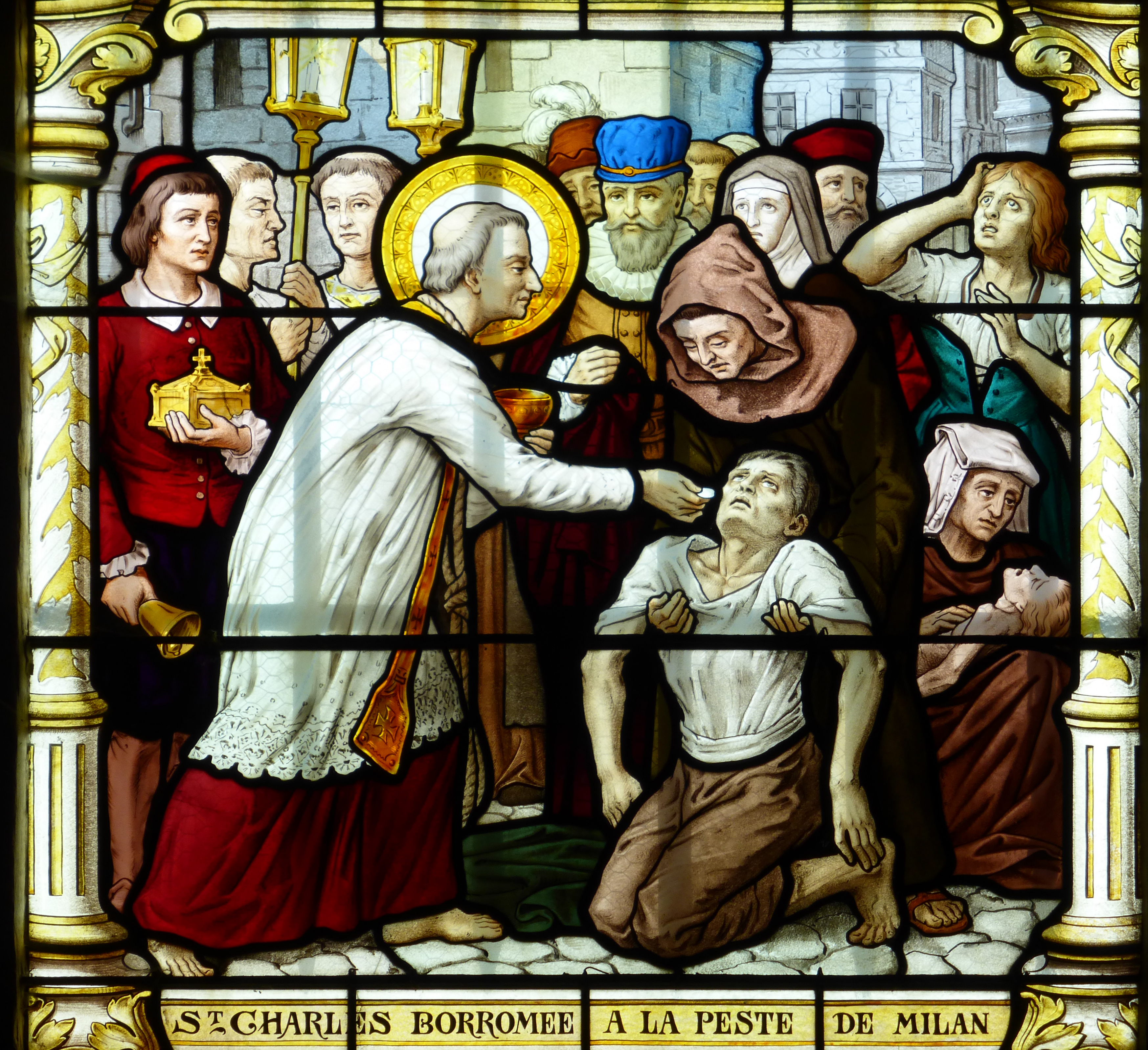 One stained glass window along the southern wall depicts Saint Charles Borromeo blessing the people of Milan during an outbreak of the plague in 1576. Above the western portal is a beautiful stained glass window commemorating the seventh and eighth crusades of Saint-Louis IX.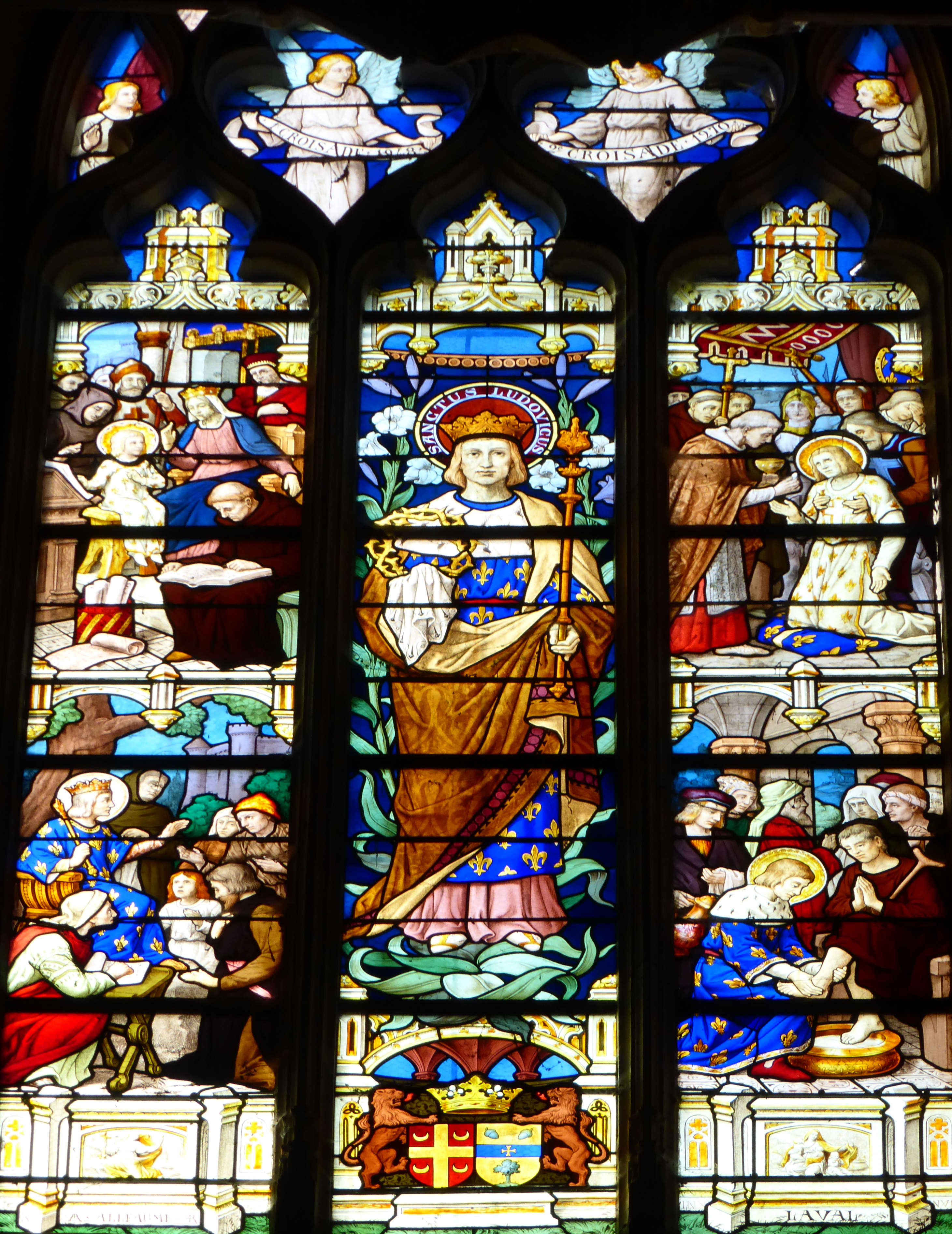


/http%3A%2F%2Ffarm6.staticflickr.com%2F5574%2F14659687412_90848dfd4e_z.jpg)
/http%3A%2F%2Ffarm4.staticflickr.com%2F3834%2F13872708804_13f223cc71_z.jpg)
/http%3A%2F%2Ffarm4.staticflickr.com%2F3746%2F13870990195_5b83c98032_z.jpg)
/http%3A%2F%2Ffarm8.staticflickr.com%2F7230%2F13505463893_85d118613a_z.jpg)