
De captivants à banals, les articles et photographies de “The Baguette” sont une tentative de publier un journal de ma vie dans la Manche et de proposer un forum de discussion pour tout ce qui touche à la Normandie.
 For almost five centuries this immense château, set in a 25 acre park, belonged to a famous Norman family, Le Veneur de Tilliéres; in 1936 it was bought by the nation. From the 12th century to the 15th century the château was the seat of the Blosset and Carrouges families. During the Hundred Years War the lords of Carrouges remained loyal vassals of the King of France.
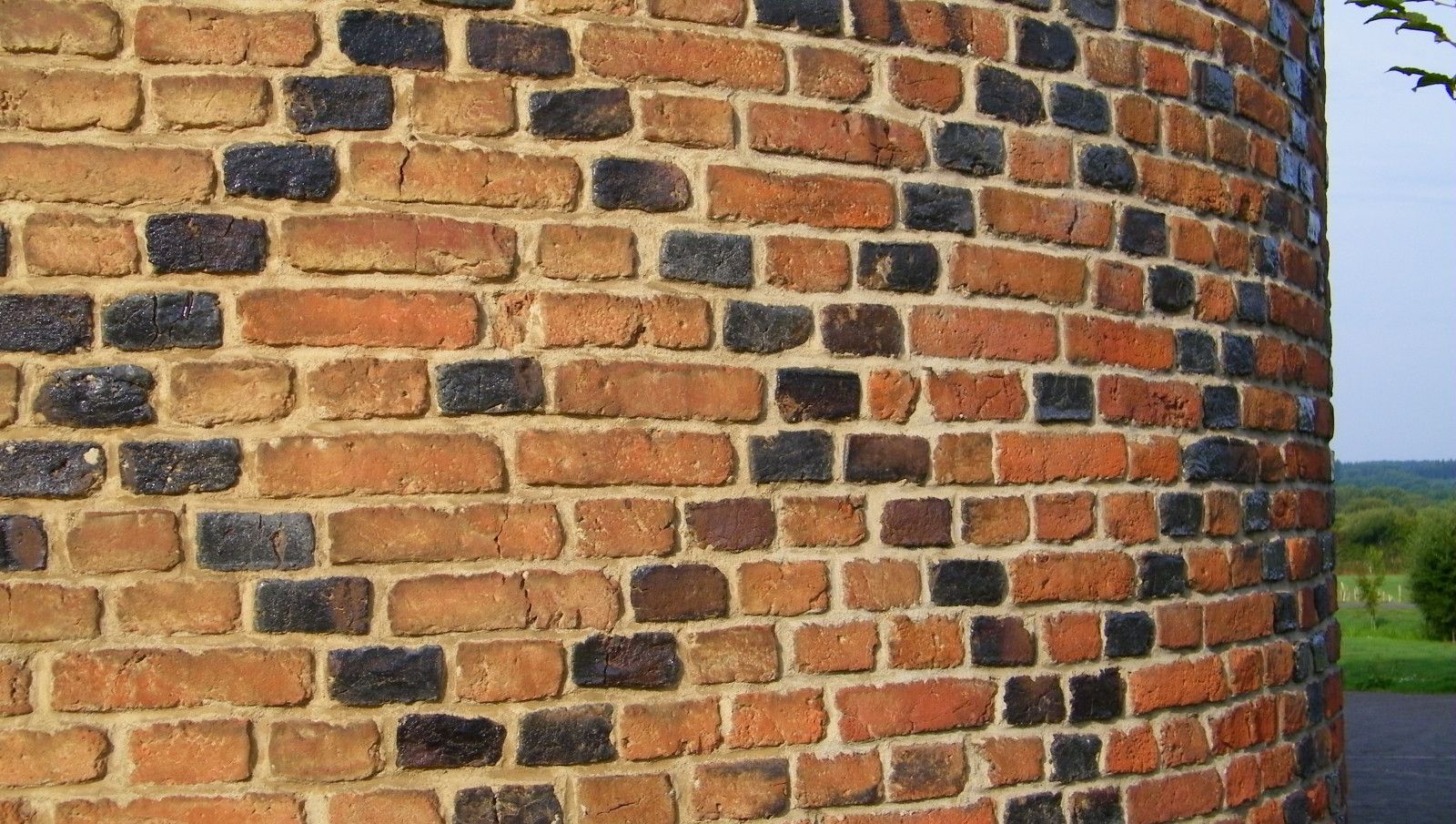
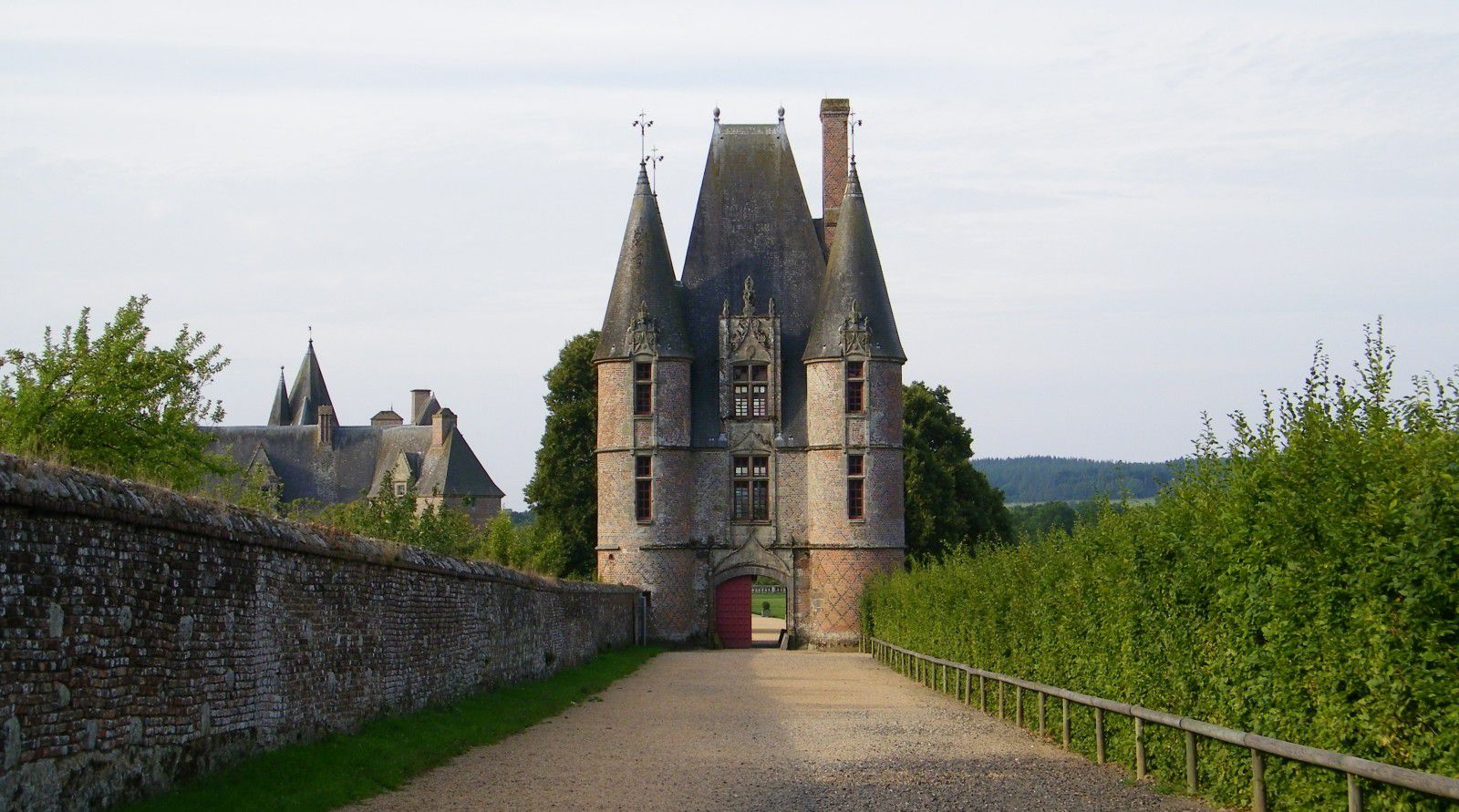
 The 16th century gatehouse which marks the north entry to the estate is an elegant brick building with decorative geometric patterns. Four slender towers, with pepper-pot roofs and narrow dormer windows flank the gatehouse. It was commissioned by Jean Le Veneur. The black and red brick ornamentation allows one to date the edifice between 1505 and 1533 when Jean Le Veneur became a Roman Catholic cardinal.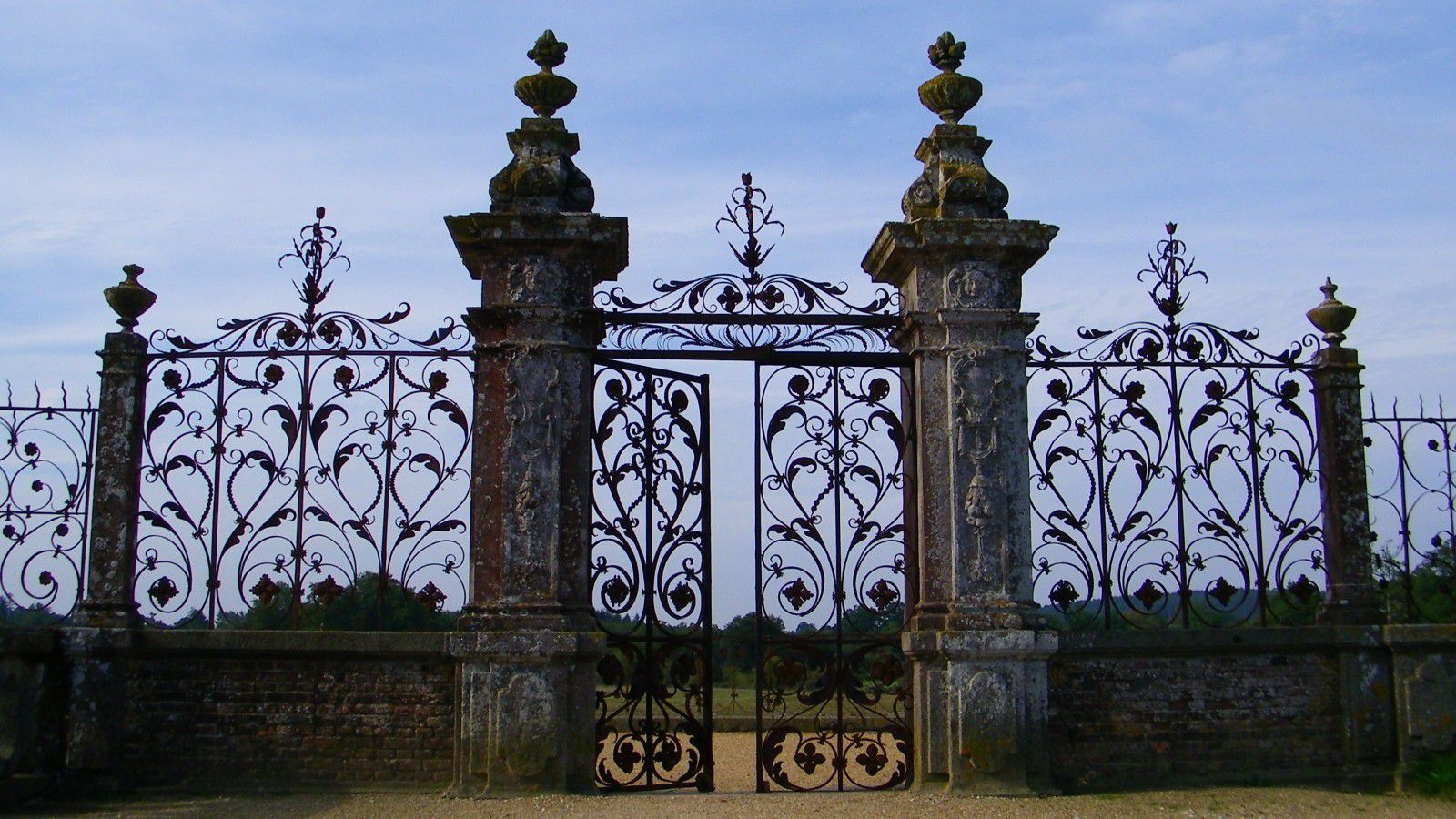
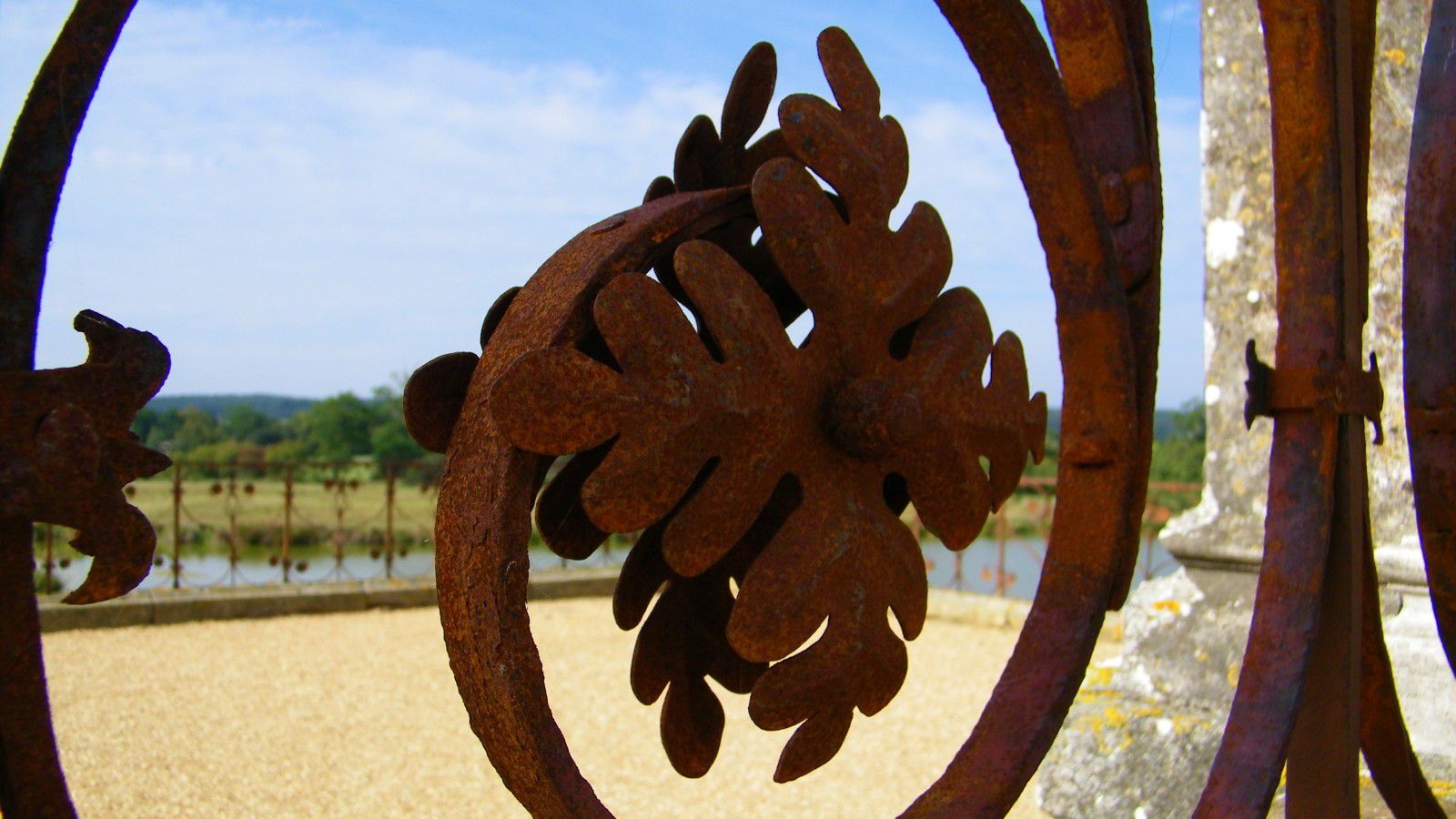 The Le Veneur family made most of their money through ironworks. Jean Le Veneur created the Carrouges forge around 1540. The most spectacular work from the forge is most visible at the grand gateway, its surrounding railing and the ornate south gate. Operated with uneven success, the Carrouges forge remained active until 1854.


 “The interior of the château is at least as expressive as the façades. Here resides great simplicity of olden times, conspiring with bombastic magnificence. The hallways are covered in lime, whilst the ceremonial chambers are highly embellished…” (Jean de La Varende, En parcourant la Normandie, 1953).
 The first part of my tour began in the kitchen. It presents an imposing array of copperware utensils in part from the 18th century. After leaving the kitchen, the tour guide led us up the spiral staircase of the Blosset wing (which also serves the right-angled, occupied wing) to the second floor.
  The first room on this floor is the Louis XI bed chamber. Its name evokes the king’s visit on 11 August 1473, on his pilgrimage to Mont-Saint-Michel. Its present décor was installed in the mid-17th century. The imposing 15th century chimneypiece is partially concealed by a frame of polychrome-and-gilt sculpted wood, very typical of the 1650s.
  Two windows light the room. The interior shutters are left half-open so that the visitor might appreciate the refined quality of the decorated woodwork: charming, chubby-cheeked cupids and foliage painted on small panelled woodwork.
 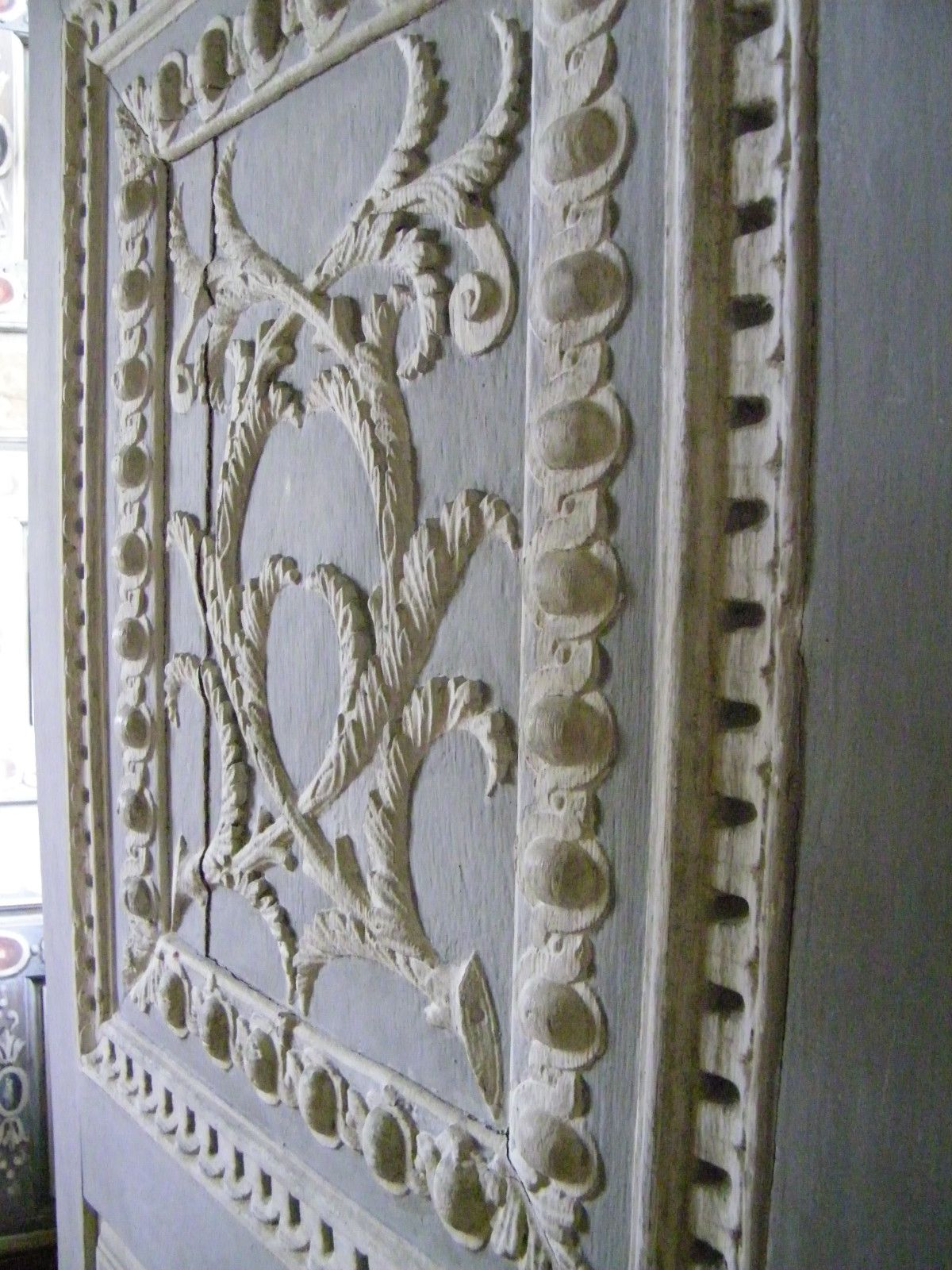 This décor contrasts with wainscoting panels that cover the walls and are ornamented with foliage and laurel leaves.
  The 17th century furnishings—tables, stools, chairs—are completed by a chest and a canopied bed with curtains garnished with a fabric of alternating stripes of velvet. They are reproductions of furniture said originally to have been in this room.
 Upon leaving Louis XI’s bed chamber, one follows the corridor to reach the north salon which occupies the center of the Blosset wing. During its last restoration in the 1980s, female portraits (Le Veneur women or close relatives) were reunited here. Like most of the furniture presented in the rooms, the family portraits were acquired by the State in 1936 at the same time as the château. The 18th century furniture (chairs, commodes, Turkish bed) soften the severity of the room’s architectural elements which are quite plain, painted in pink and white. Terra-cotta tiling covers the floor. Take a look out of the window at the beautiful gatehouse.
  In leaving this room one continues along the corridor to reach the Ceremonial Antechamber.
 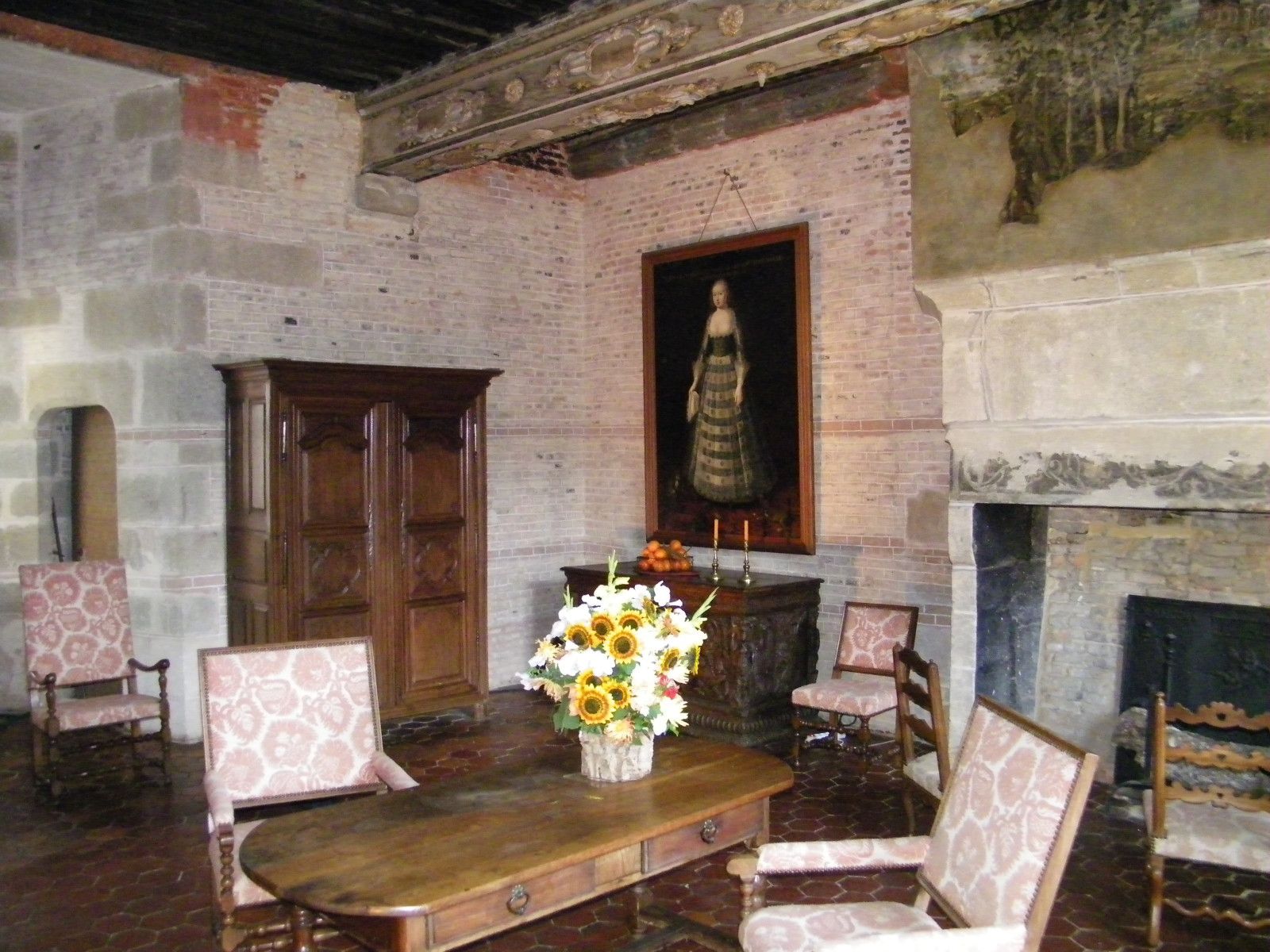 The fireplace here dates from the 15th century. By mid-17th century, the room was decorated with painted stars and sculpted motifs applied on the beams which span the ceiling.
 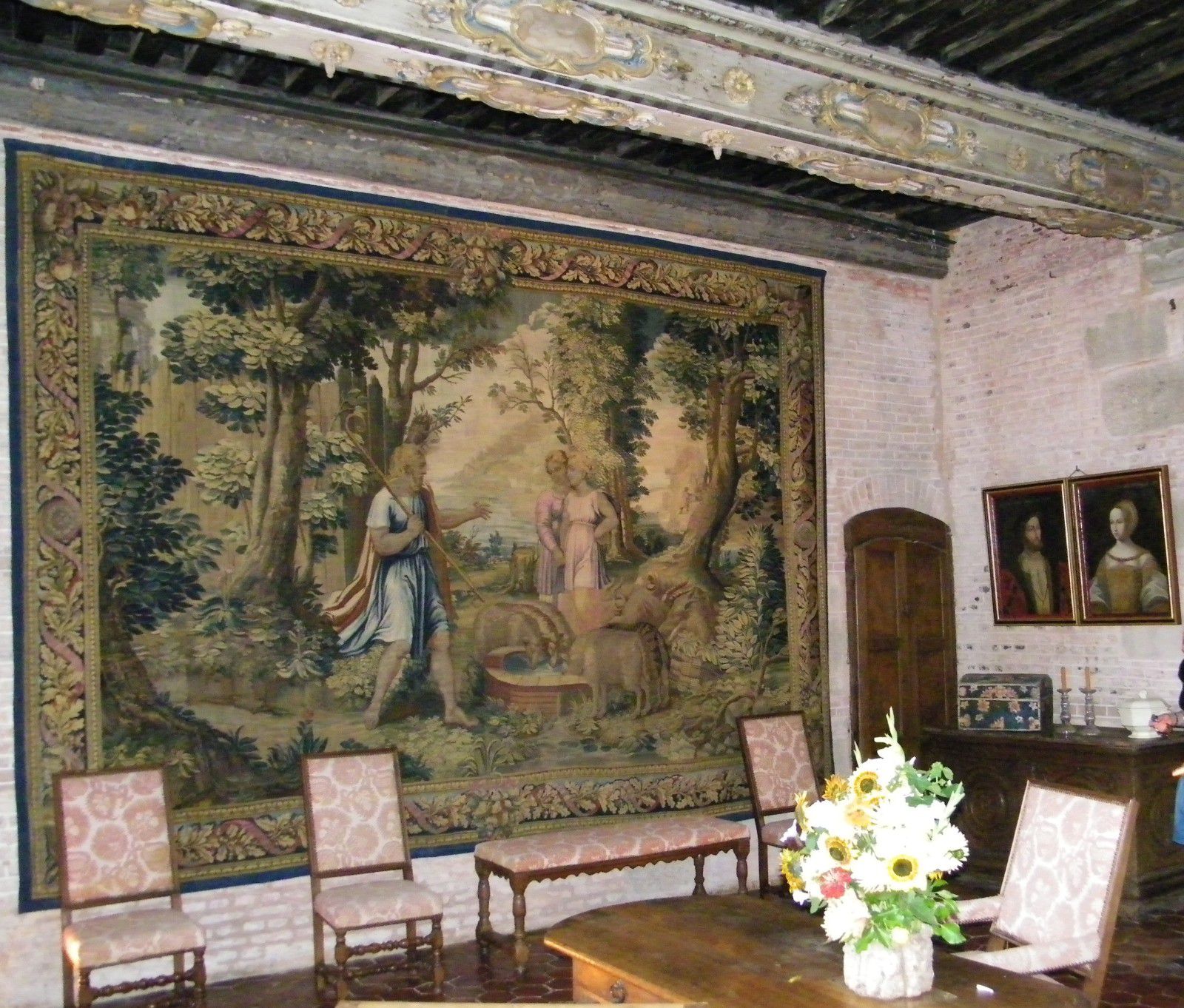 The tapestry representing Jacob at the Well was acquired in 1986 and bears the mark of Sébastien de la Planche, director of the Parisian Faubourg Saint-Germain Workshop in the mid-1600s. Handsome Renaissance and 17th century furnishings (chests, chairs, table and armoire) enliven this room whose floor is decorated with hexagonal terra-cotta paving tiles.
 Adjacent to the Blosset wing is the East Staircase. It was completed in 1579 and is entirely built in brick with granite pillars and rails. It does not appear to be made of brick because of the original painted plaster (paradoxically covering real brick). It was reserved for the suite of the Le Veneur private apartments. At the end of the 18th century it was used by the domestics of the château for dining-room duty.
  The dining room was installed permanently around 1787. Until then, no room served a particular dining function, the table being set up according to needs. On the large mahogany table is set the surtout in gilt bronze, cut crystal and glass. These belonged to General Alexis Paul Michel Tanneguy Le Veneur de Tillières who was responsible for many of the changes within the château during the 18th and 19th century.
  The monumental chimneypiece is from the late 16th century in Maine marble, polished granite and limestone. The walls are painted in a rag-finish whitewash with marbling.
  The tapestry, again by Sébastien de la Planche, represents Abraham and the Three Strangers.
  Between two niches for water fountains are the paired portraits of Marie Blosset and Philippe Le Veneur. They face those of Anne Le Veneur and François de Fiesque, her husband. The floor is paved in terra-cotta which comes from the city of Argentan.
  The next room is called the Summer Room and derives its name from the fact that it does not have a fireplace. It is the smallest room on the floor and highly intimate. A recent restoration transformed it into a charming little games room enlivened by walls covered in “domino” wallpaper with large Louis XVI motifs.
 The squares that make up the “domino” wallpaper were all hand-painted and assembled during a recent restoration.
 Furniture of the 18th century (commode, secretaries, hot-water bottle table, desk with table top for backgammon with a double-sided board for checkers and chess) complements the fine ensemble of chairs. The pastel portraits present members of the family living in the 18th century.
  That of Queen Marie Leszczinska, by Jean-Marc Nattier, was offerd by the queen to Charles-Jean-François Hénault, uncle of one of the Le Veneur ladies. The parquet is laid out in a herring-bone pattern called “point de Hongrie”.
 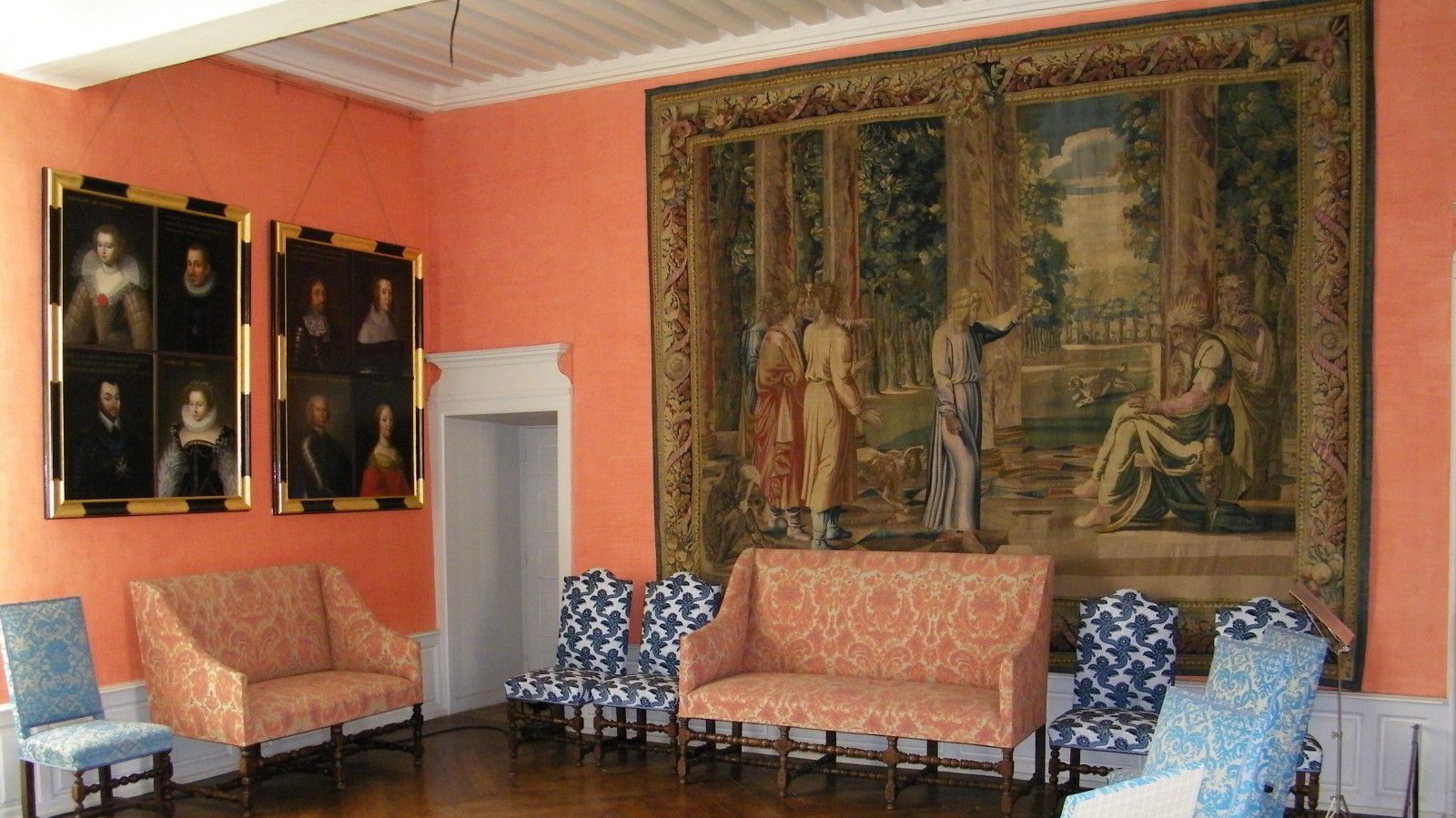 The next room is called the Portrait Salon where fourteen Le Veneur generations are reunited in a presentation executed in the early 1950s, in continuity with the family tradition.
  As was the case with most of the other house portraits, on them General Le Veneur had inscribed the name and titles of each of his ancestors. Most of the personages also figure in the other rooms. For a long time this room served as a ceremonial chamber where General Le Veneur would spend much of his time.
  The granite chimneypiece with polychrome designs retains its 17th century vividness. Walls are painted in matching colors imitating cloth. Furniture is disposed around the circumference of the space as was the tradition when it was not in use. The chairs, 19th century copies, are in Louis XIII style.
  The third tapestry of hangings from Sébastien de la Planche’s workshop features Joseph Interpreting the Dream of Pharaoh.
  The room with immense proportions called the Grand Salon was created during the course of the 19th century by the unification of two salons whose wall partition was removed. Illuminated on three sides, it benefits from full sunlight which accentuates the pale yellow tones of the small-panelled wainscoting.
  A granite chimneypiece, slightly austere, was retained while another chimney, situated between the two cabinets (study doors), disappeared under wall panelling. Behind in the recesses of the south pavilion, three cabinets (for resting, reading, writing, confidences…) were built in.
 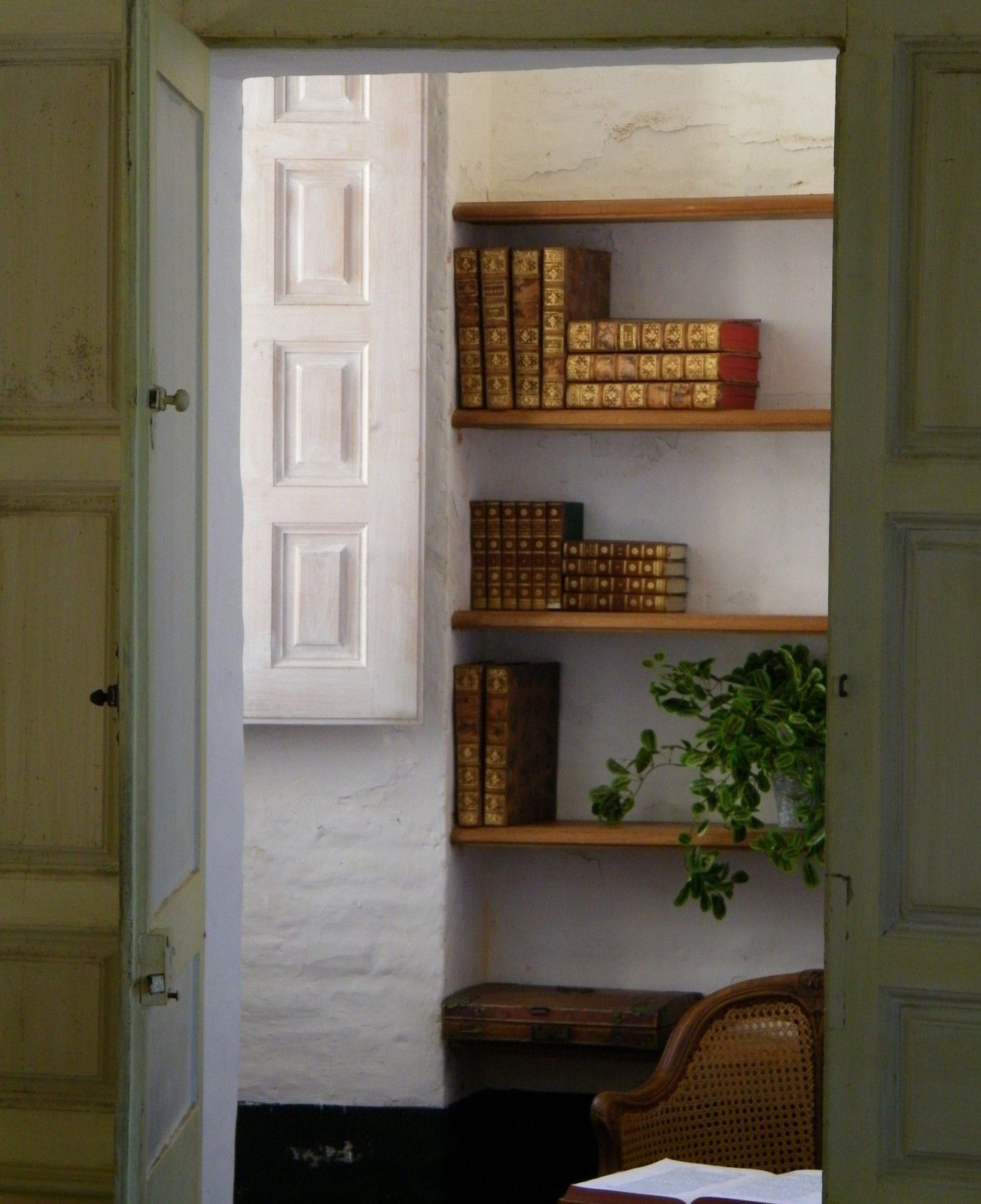 The one shown here imitates a miniature study. Furniture of the 17th and 18th century decorate the space. Gaming tables and chairs are scattered about as though ready to receive guests.
  The standing portrait of Cardinal Jean Le Veneur faces king Louis XIV, the latter displayed over the mantel. The Grand Salon was serviced by the Ceremonial Staircase at the south corner of the château.
  It assures the junction between the “grand apartments” wing and that of the “gallery”. Like the East Staircase, it was once covered in painted plaster. This was removed in the 1960s to reveal the bricks.
 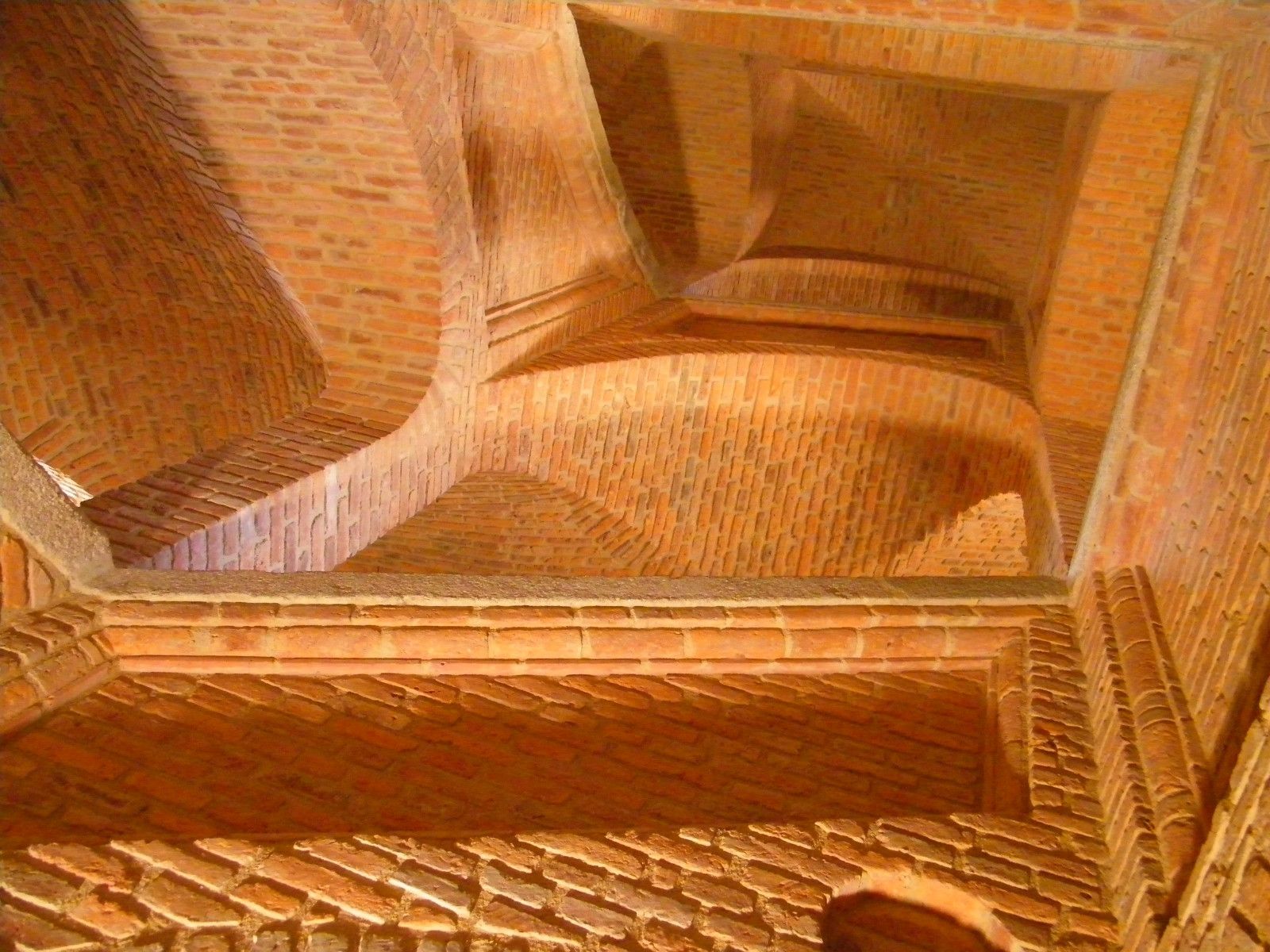 The best view of its twisting, square flights can be seen from the bottom floor looking straight up.
  Carrouges is one of the rare châteaux to possess a hall for theater. The largest and only two-story room of the house, 20 meters long by 7 meters wide, the hall occupies the entire gallery wing between the west bastion and south pavilion.
  At the end of the 18th century, it was General Le Veneur who undertook the creation of a theater hall. To give it volume, the upper story was knocked down. Mouldings to frame the large panels, window clamps and partition ornaments are the sole elements surviving from the original décor which perhaps included curtains or painted canvas on the wall and a plastered ceiling with moulded frame.
 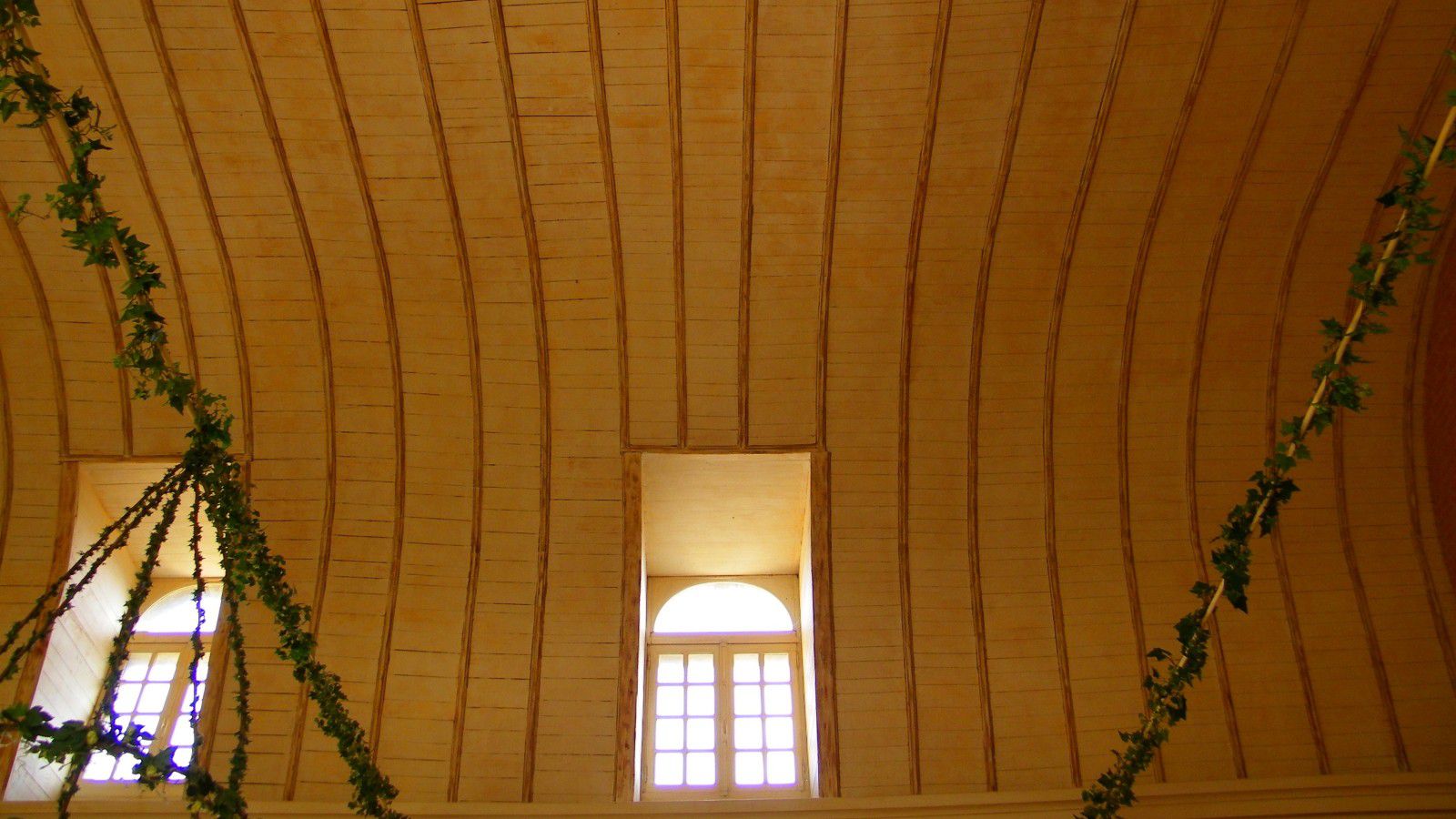 During the 1980s restoration, a choice was made to use chestnut wood on the ceiling forming a basket-handle arch. At the rear opens the Salon Pompadour, “foyer” of the theater; above is located the platform for musicians. It is still used for small concerts and recitals.
  Outside across the moat from the south west wing is the manicured boxwood and rose garden known as a parterre de broderie. It was restored in 1989 based on plans drawn up in 1711. One exits the estate the way one came in : past the chapter houses and through the gatehouse.


/idata%2F3191025%2Fsecond-batch%2F165-Hotel-de-Ville-de-Bagnoles-de-l-Orne--2-.jpg)
/idata%2F3191025%2Fsecond-batch%2F088-Le-pont-sur-la-Sarthe--Saint-Ceneri-le-Gerei.JPG)
/idata%2F3191025%2Fsecond-batch%2F062c-La-Maison-d-Oze--Alencon---Copy.JPG)
/idata%2F3191025%2Fthird-batch%2F028a-La-cathedrale-Notre-Dame-de-Sees.JPG)
