
De captivants à banals, les articles et photographies de “The Baguette” sont une tentative de publier un journal de ma vie dans la Manche et de proposer un forum de discussion pour tout ce qui touche à la Normandie.
 Reading about Bagnoles-de-l’Orne in the Michelin Green Guide did NOT inspire me to want to visit. I was disappointed in the book’s description of the town and I thought that there would be very little to see and do. I expressed this feeling to my father when I spoke to him on the telephone before going on my trip. He told me: “Every town has something interesting to see—you just need to know where to look.” How right he was! Unable to find a decent place to spend the night in Alençon, I booked a room at the № 1 rated Bagnoles Hôtel with its spectacular view overlooking the fountain at Place Méliodon.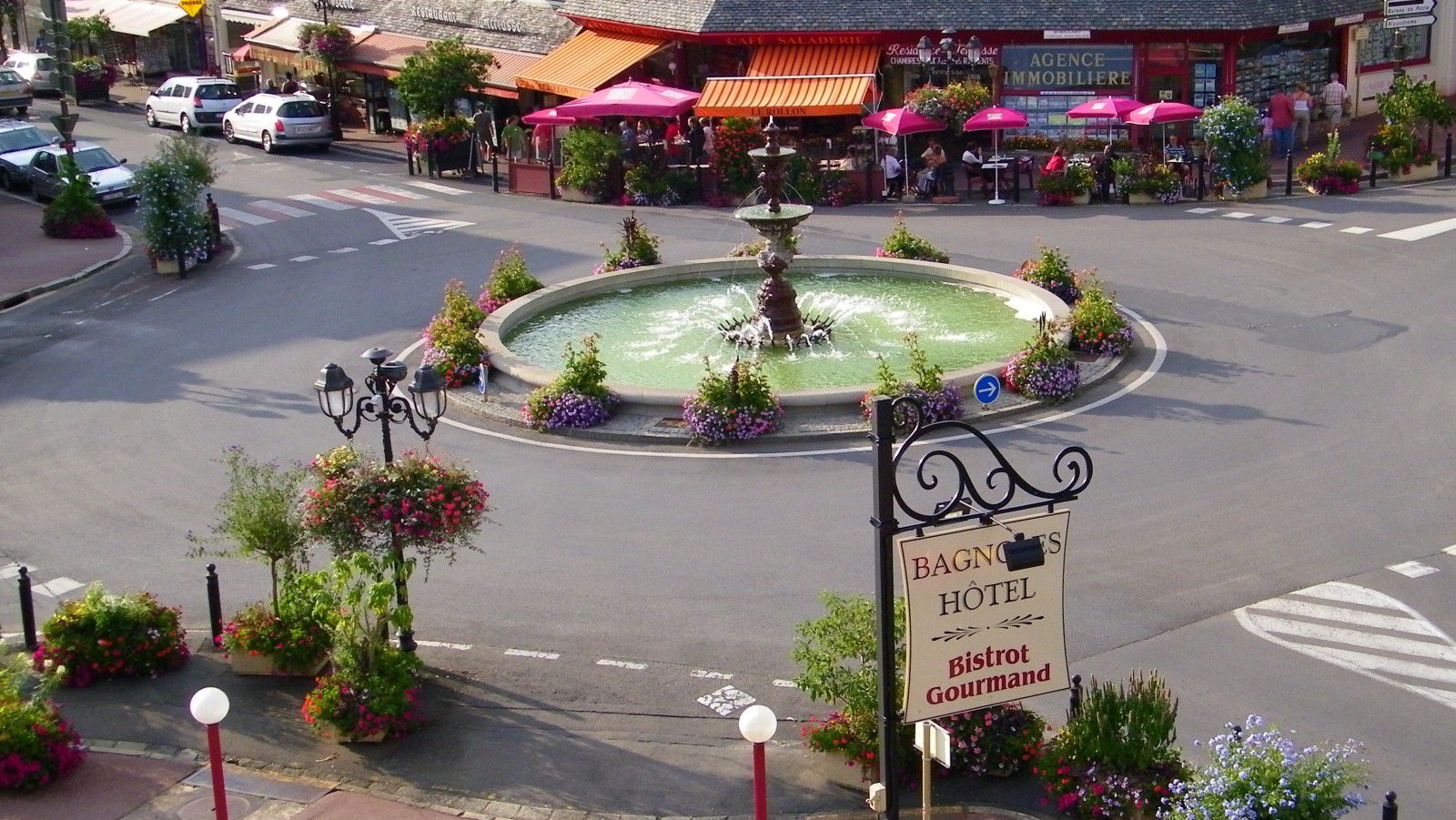
 Bagnoles-de-l’Orne is an extraordinarily lively town with charm and character located in an idyllic setting surrounded by the Andaines Forest. It is the largest spa in western France. In addition to the healing waters, the countryside itself inspires well-being, and the lovely lakeside setting invites calm.
 The lake is formed by the Vée, a tributary of the Mayenne, before it enters a deep gorge cut through the massif of the Andaines Forest. According to legend, rather than kill his horse Rapide, when it grew old, Hugues de Tessé abandoned it in the forest. Some time later he was surprised to see Rapide return to her stable strong and revitalized. He tracked the hoof marks to a spring where the horse had bathed and bathed in it himself and found similar rejuvenating effects. Over the years, the spa became one of the favorite vacation destinations for the rich and famous.

 The Belle Époque Quarter in Bagnoles-de-l'Orne exemplifies this with many upper-class residential homes built between 1886 and 1914. The superb villas with polychrome façades have bow windows and unique roofing. The rest of the town has similar architecture as well as some spectacular Art Deco buildings.
 The Église-Saint-Jean-Baptiste was built in 1934 by architect Olivier Michelin. Inside, its stained-glass windows all are based on the theme of water.
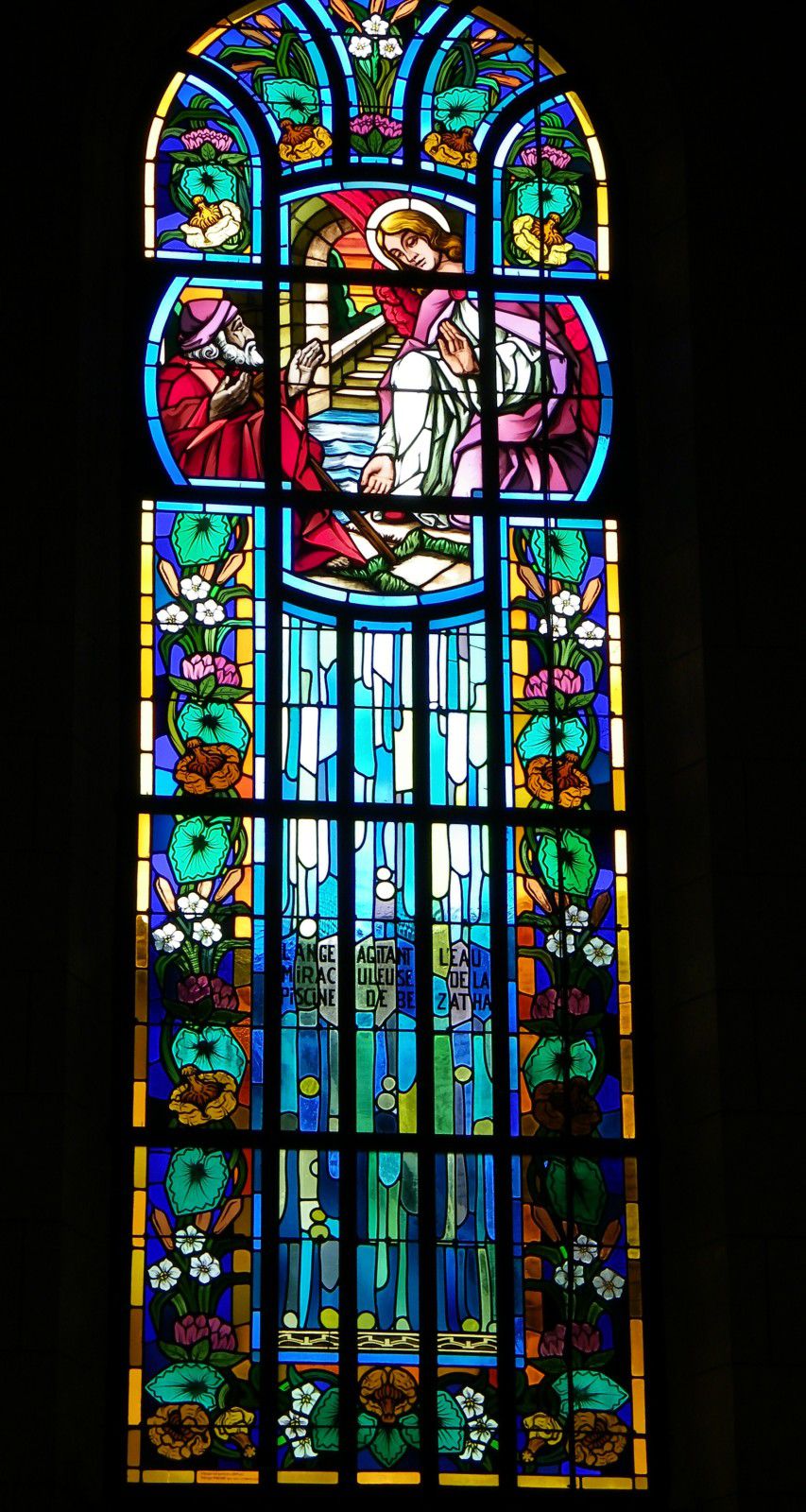 Appropriately, there is a fabulous window inspired by the Gospel of John, Chapter 5 where there is a description of an angel blessing the Pool of Bethesda, giving it healing powers.
  Along the lake is the Casino du Lac built in 1927 by architect Albert Bluysen. Both buildings are in romantic settings and blend flawlessly into the greenery of the surrounding forest. After World War I, Bagnoles-de-l’Orne became a popular tourist destination and large hotels were built near the thermal springs and around the picturesque lake.
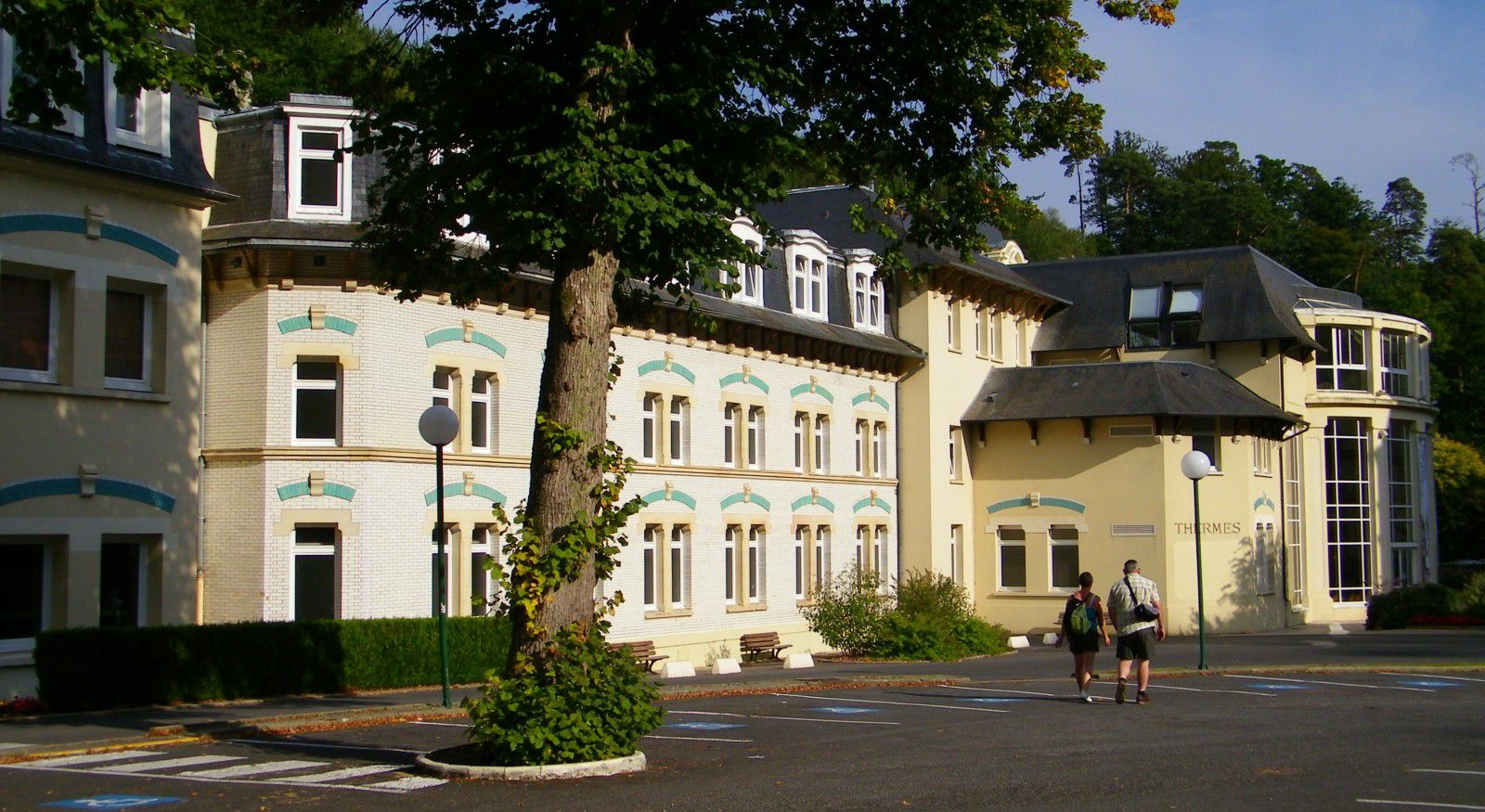
 Several buildings along the Vée are known collectively as Les Thermes and are the main attraction for patients seeking treatment for circulatory disorders, glandular disorders, phlebitis and even varicose veins. Don’t miss out on the hike up the Roc au Chien which offers a beautiful view of the lake below.
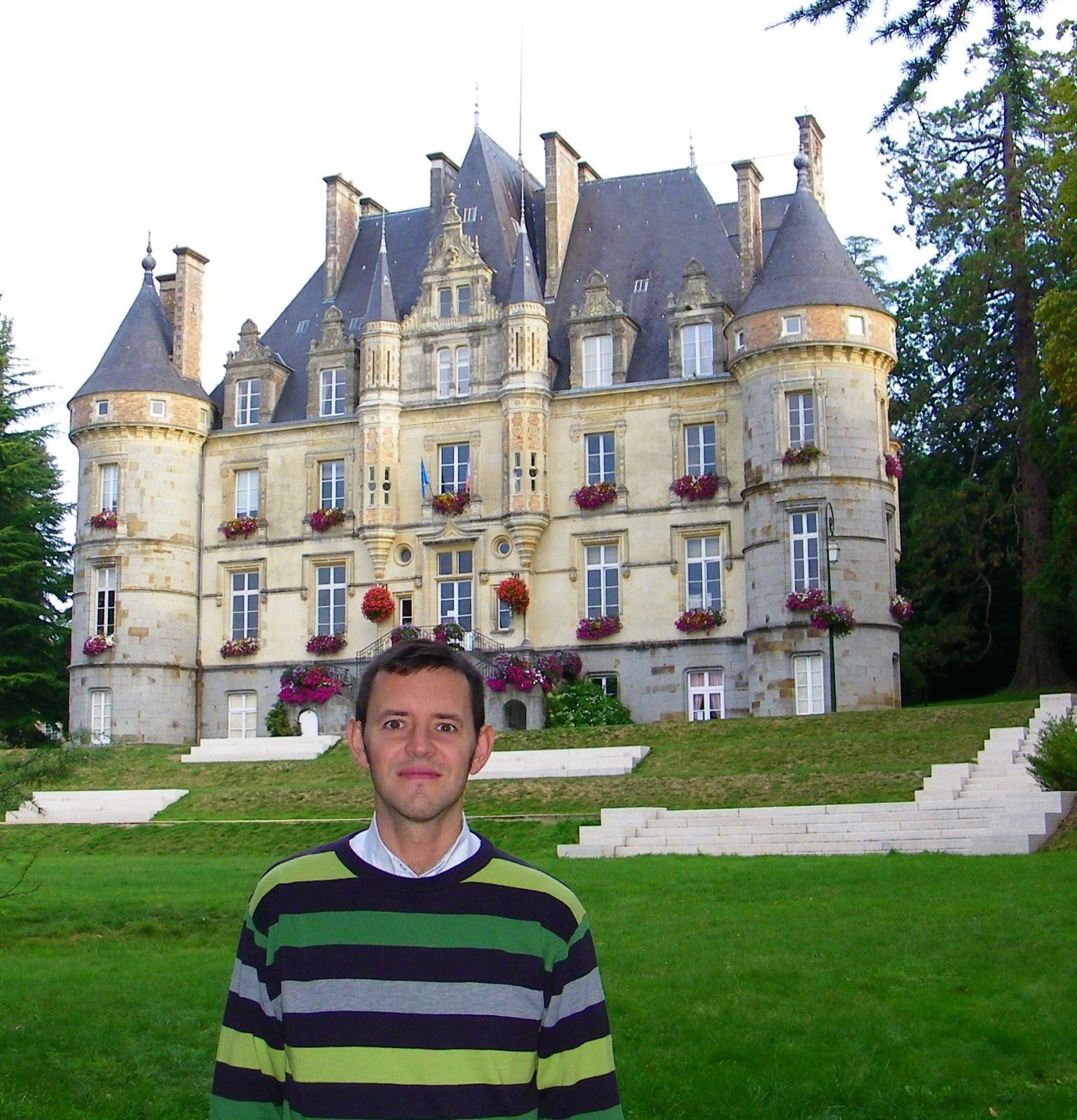
  It is also the name of a small hotel at the base of the cliff. A stroll through the surrounding park leads to an even larger park where the Hôtel de Ville is located in the former Château de Goupil.
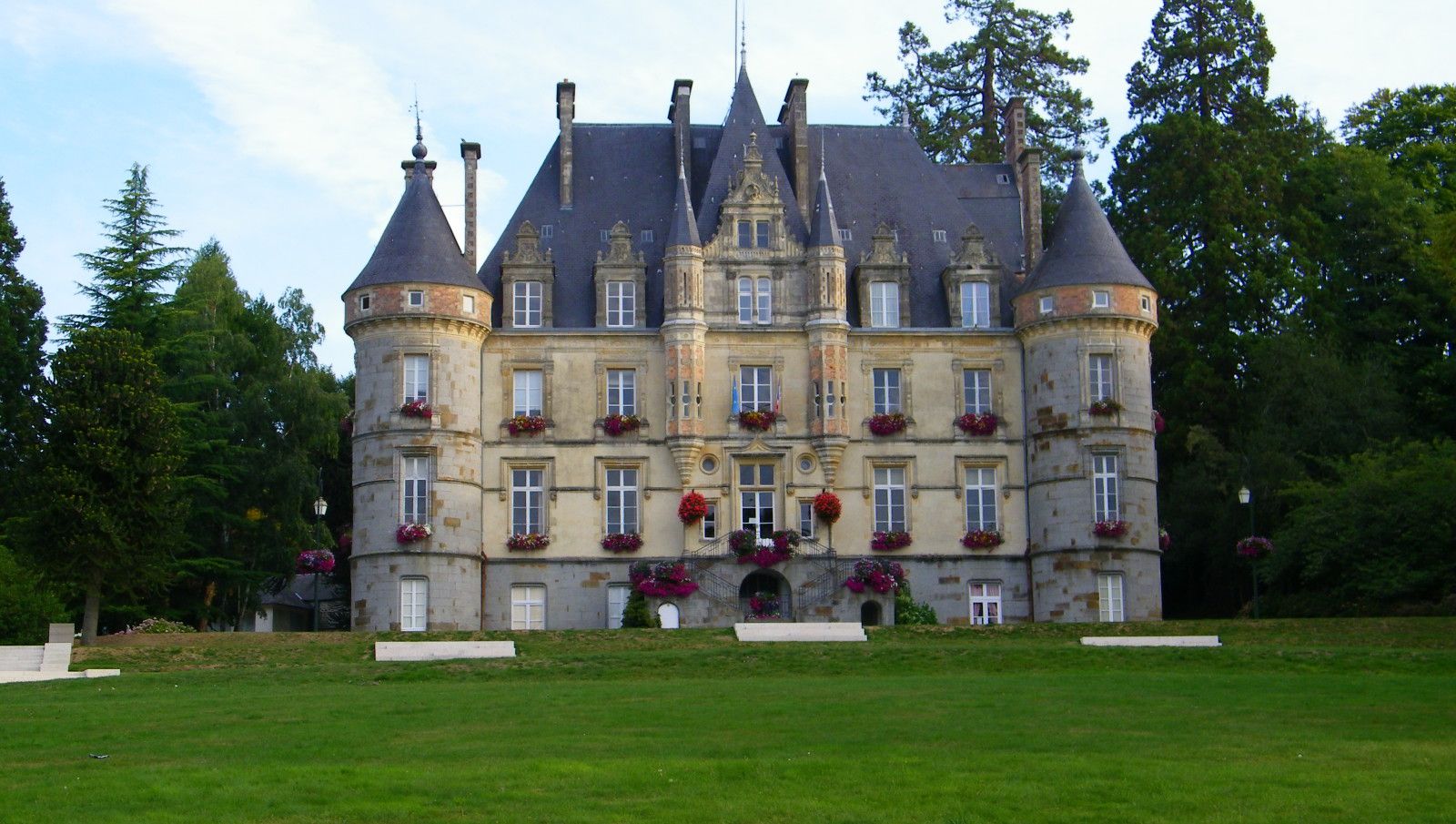
 It was built in 1859 at the demand of Anne-Marie Goupil to honor her husband Louis and his brother Jean whose mausoleum can be found behind the château.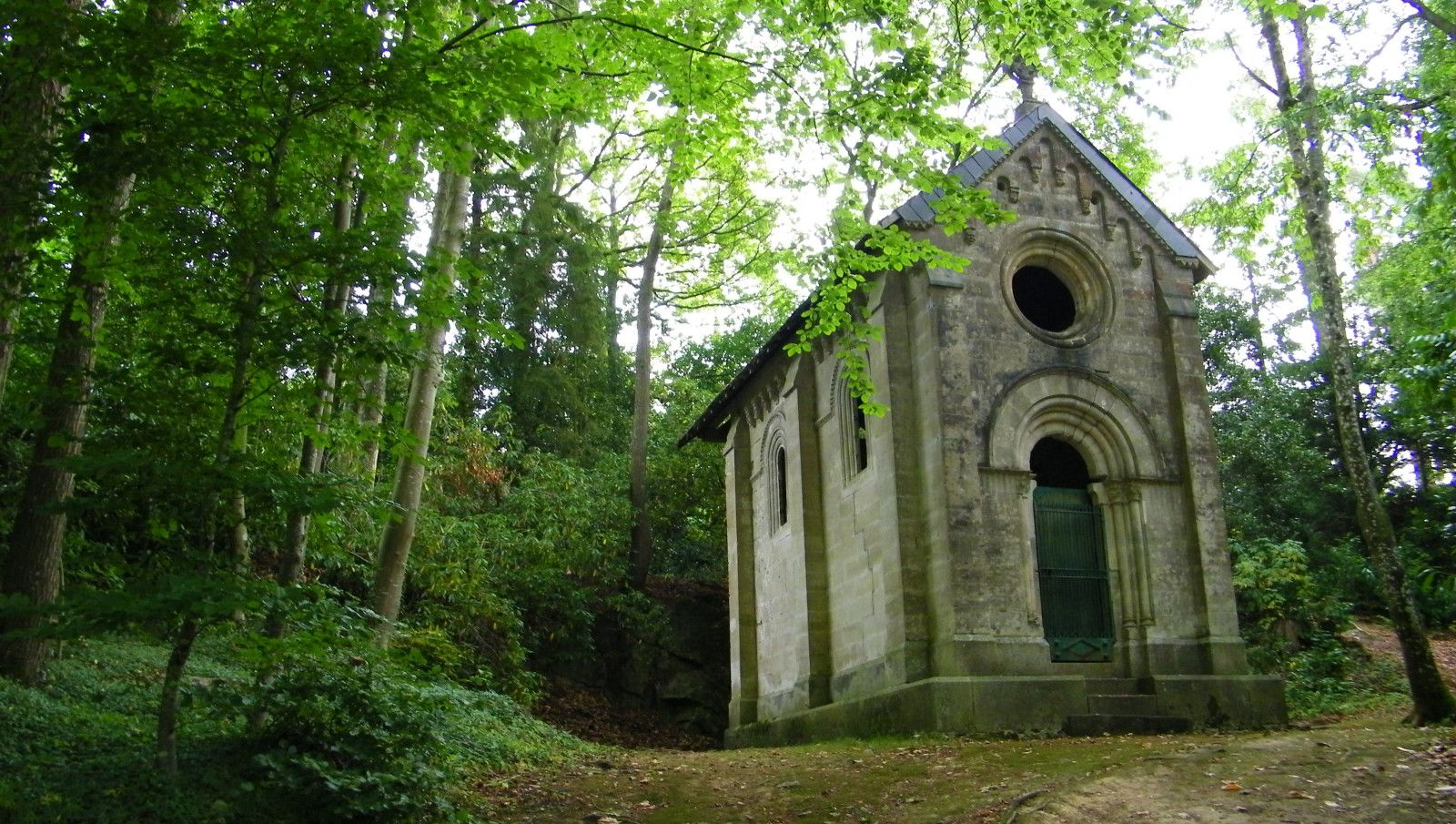
 The branches of two very large trees reach out to one another as if the brothers wished to be joined again throughout eternity. My stay in Bagnoles-de-l’Orne went beyond my expectations and I wish that I could have stayed longer.
  Despite being adorned with spectacular floral displays throughout the town, I hear that Bagnoles-de-l'Orne is at its most colourful during the fall.


/idata%2F3191025%2FPast-and-Present%2F184-Le-chatelet--Chateau-de-Carrouges.jpg)
/idata%2F3191025%2Fsecond-batch%2F088-Le-pont-sur-la-Sarthe--Saint-Ceneri-le-Gerei.JPG)
/idata%2F3191025%2Fsecond-batch%2F062c-La-Maison-d-Oze--Alencon---Copy.JPG)
/idata%2F3191025%2Fthird-batch%2F028a-La-cathedrale-Notre-Dame-de-Sees.JPG)