
De captivants à banals, les articles et photographies de “The Baguette” sont une tentative de publier un journal de ma vie dans la Manche et de proposer un forum de discussion pour tout ce qui touche à la Normandie.
 Saint-Céneri-le-Gérei, a village built on a rocky spur overlooking the river Sarthe near Alençon and the Alpes Mancelles, is one of themost beautiful in France. It was founded 1044 by William Giroie, who built a castle here. Unfortunately, little remains of the walls today. The place is named for Serenicus (Céneri), an Italian hermit who lived here in the 8th century. When he died, a monastery was built but later destroyed by the Normans in 903. Legends abound about the life of the monk Céneri. Aren't legends fun? In his youth, accompanied by his brother Céneré, he moved to Rome to be in the Pope's service where he entered the Benedictine order. Five years later, a vision ordered him to go west. The two brothers crossed the Alps in 659 and arrived in Saulges in the diocese of Le Mans.
  There they stayed until 689 when Céneri and a disciple, Flavard undertook a journey through the Alpes Mancelles during summer. Upon arrival at the edge of a beautiful river skirting a rocky promontory they decided to rest. Exhausted and thirsty, Céneri asked God for aid. A miraculous spring suddenly appeared along the side of a hill. Since then, the spring has never stopped flowing and a stone fountain was built around it. The water is said to have healing properties and can cure certain eye diseases.
  Another legend tells of a time when the river Sarthe was flooding and Céneri and some travellers wished to cross. Again, Céneri asked for God’s help. Suddenly, the river stopped flowing and everyone was able to cross the river. This section of the river was a favorite spot for Céneri and he built a small hut out of branches where he maintained a quiet existence as a hermit. As the reputation of Céneri’s holiness grew, disciples joined him and a thriving Benedictine community of 140 monks took hold. In 669, Céneri began construction of a wooden church at the top of the rocky promontory. He died on May 7, 670 before the completion of the church.
  In the early 15th century La chapelle St-Céneri was built at the same location as his small hut. Its simple Gothic style fits perfectly into the pastoral landscape. Sadly, it was closed on the day I visited but inside is an interesting statue of Saint-Céneri.
  Tradition says that girls wishing to marry should stick a needle in the dress of the saint. If the needle remains stuck in the stone, their wish would be granted within the year.
  A granite stone lies on the ground and may have served as St-Ceneri’s bed. Two other traditions are associated with this. Children with incontinence can be cured if they lie down on the stone. The other tradition says that if young women desiring to be pregnant lie on the stone they would be granted a birth within the year.
  The Romanesque church on the hill was built in the late 11th century by the family Giroie which gave the village its name. Inside the church, one first notes the contrast between the walls of the nave and choir.
 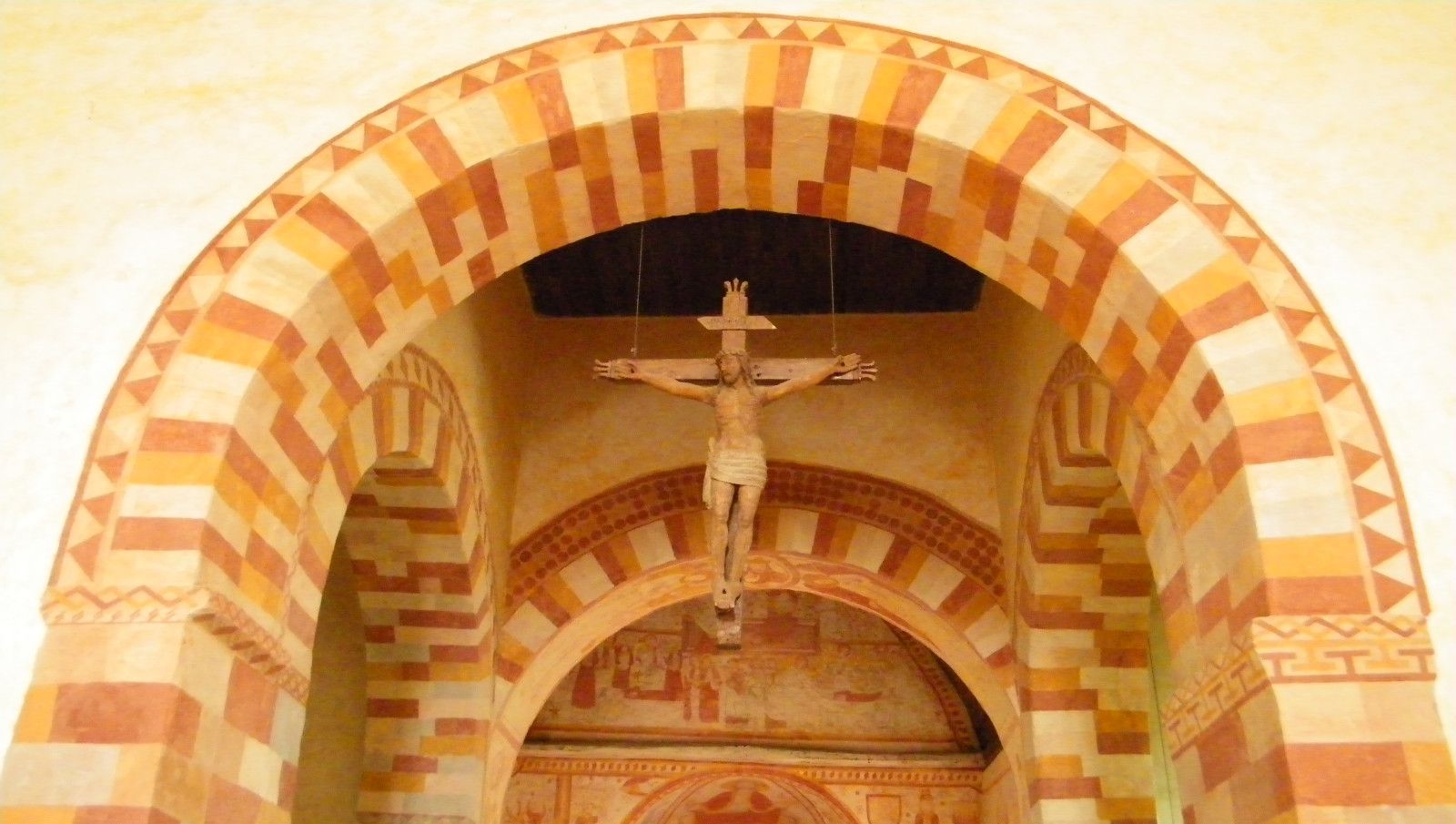 Done in the Romanesque style, the paintings that cover the walls are of the 14th and 15th centuries while the oldest dates to the 12th century. These frescoes, covered in 1650 under a coating of plaster and lime were again restored and revealed in 1856.
 Two painting on either side of the choir are of angels in flight. They wear white dresses with wings made from the feathers of a peacock. The four branches of the crosses they carry are made of lilies lined in brown and gold.
  The elliptical ceiling of the apse occupies the figure of Christ in Majesty. It is interesting in its anatomical features reminiscent of 4th century paintings with the base of his nose being too close to the chin and the mouth being painted very thin.
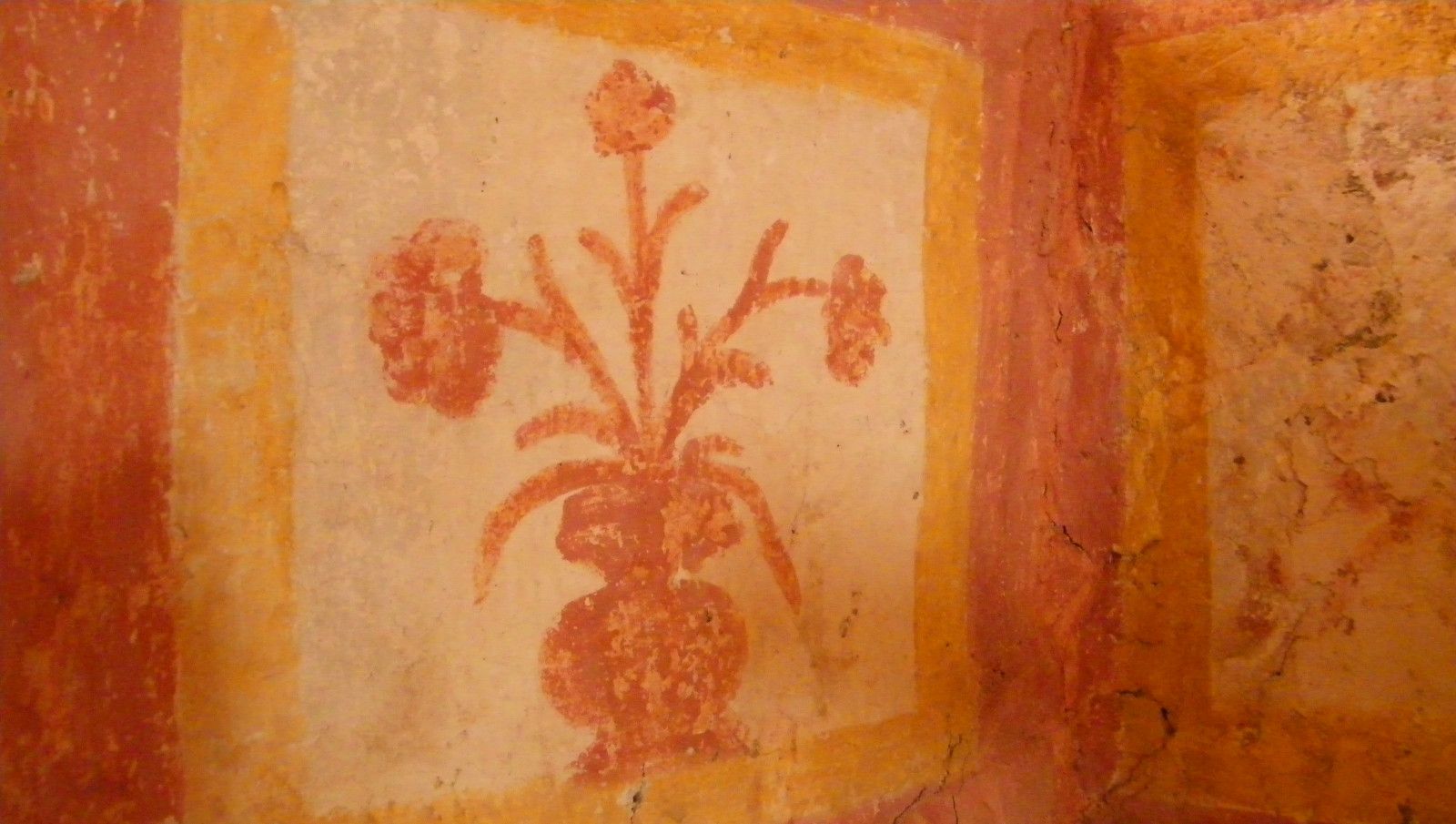
 Other Romanesque frescoes and designs abound throughout the choir including the lion, traditional symbol of St-Mark. Outside the church along the wall of the apse, is a hive of bees which have made their home here since 898. Soldiers who came to conquer the town showed great disrespect by placing their camp over the tomb of St-Céneri.
  The infuriated bees chased the soldiers until every one of them jumped off the cliff to their deaths. Since then, the bees have protected the town. It was in 1886 that the church was classified a historic monument.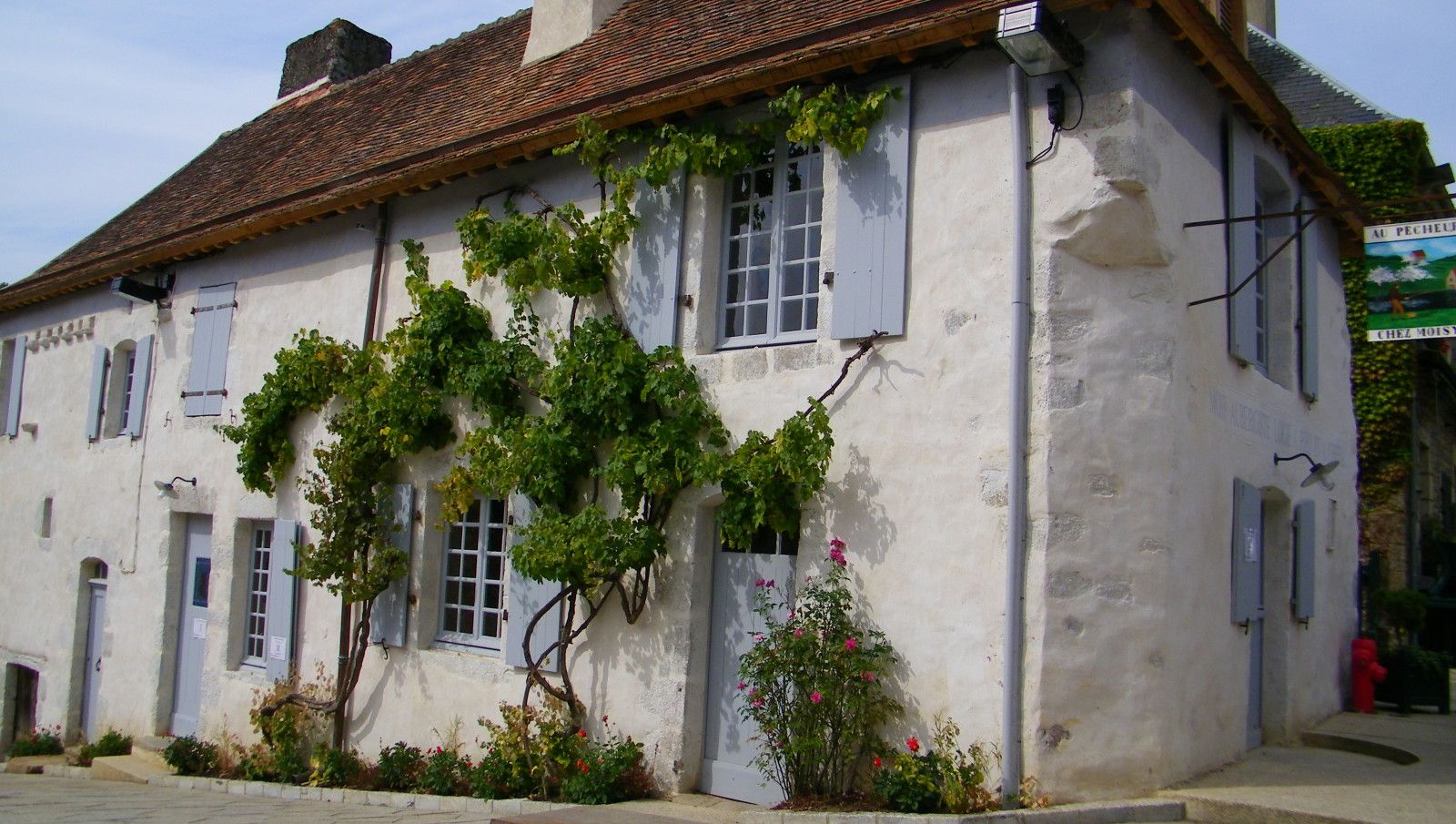
 Auberge Moisy houses “la salle des décapités” with the walls of a room covered with portraits in Chinese shadow by painters of the 19th century.
  Another home called l’Auberge des Peintres is decorated with works of art by famous artists who visited the village for inspiration in their work.


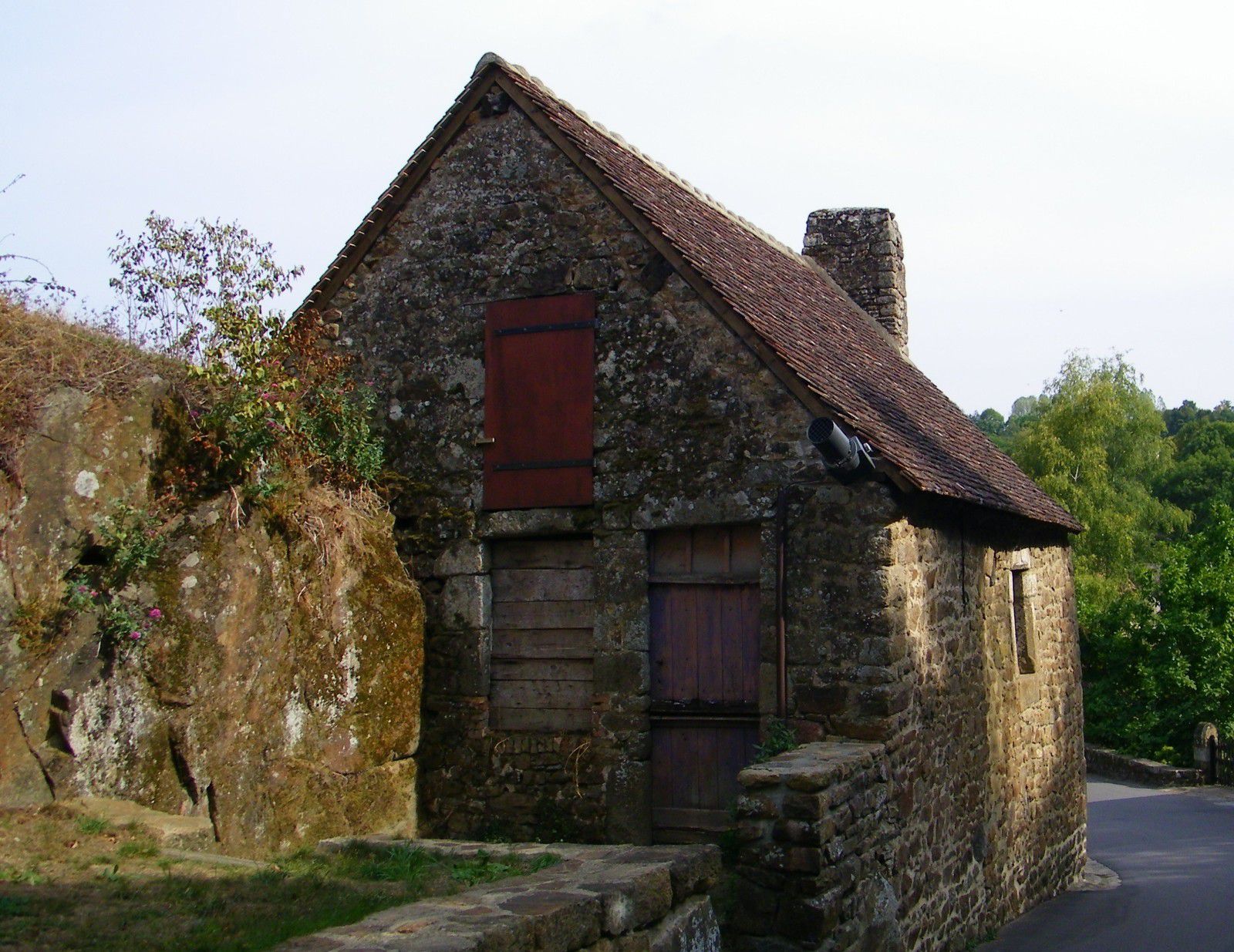

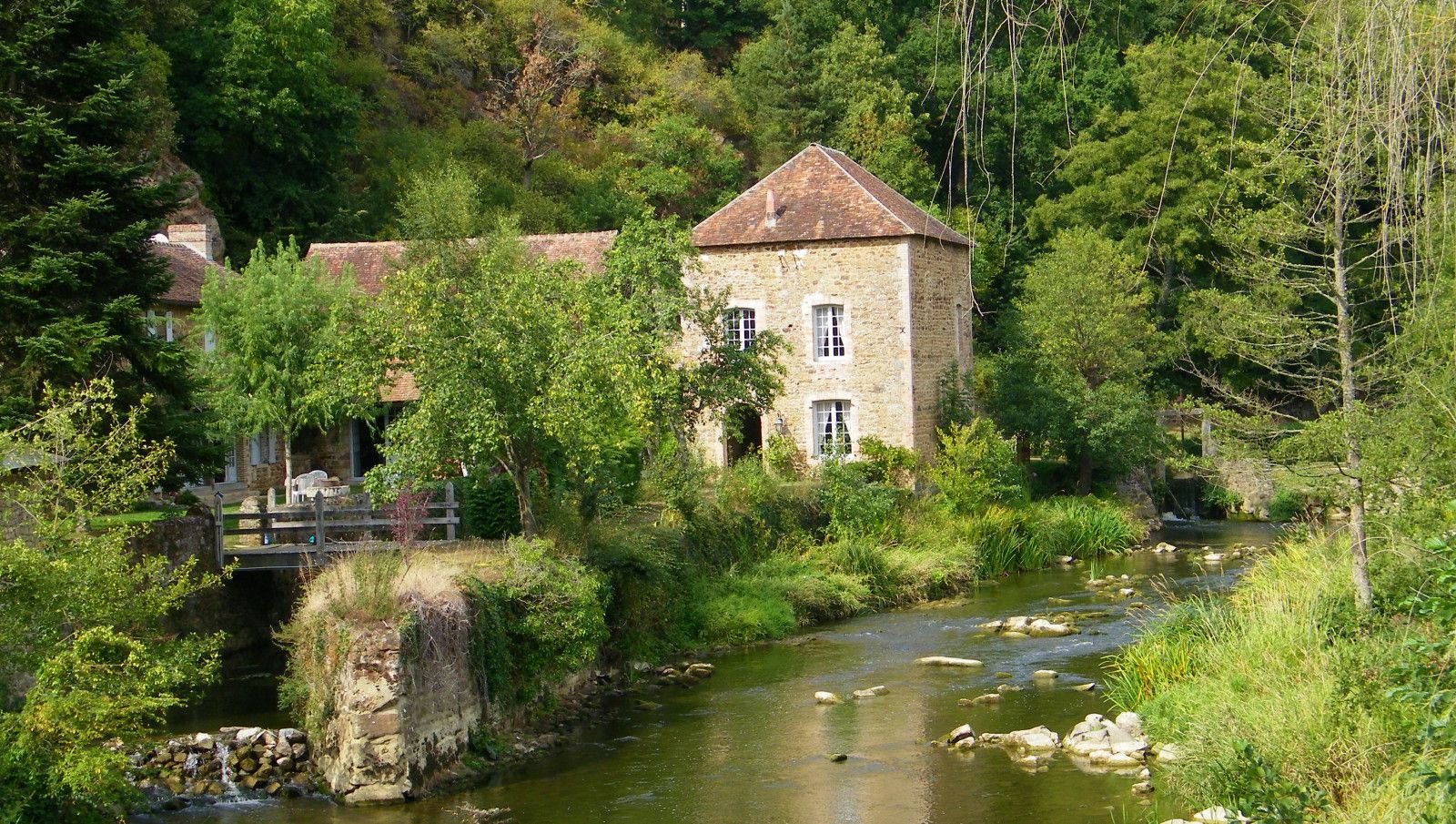 Of course one of the best photos is of the stone bridge which covers the Sarthe. The many old stone homes including the old mill along the Sarthe give this village its unique charm.


/idata%2F3191025%2FPast-and-Present%2F184-Le-chatelet--Chateau-de-Carrouges.jpg)
/idata%2F3191025%2Fsecond-batch%2F165-Hotel-de-Ville-de-Bagnoles-de-l-Orne--2-.jpg)
/idata%2F3191025%2Fsecond-batch%2F062c-La-Maison-d-Oze--Alencon---Copy.JPG)
/idata%2F3191025%2Fthird-batch%2F028a-La-cathedrale-Notre-Dame-de-Sees.JPG)