
De captivants à banals, les articles et photographies de “The Baguette” sont une tentative de publier un journal de ma vie dans la Manche et de proposer un forum de discussion pour tout ce qui touche à la Normandie.
After visiting the windmills at Besneville, our AVF group headed to the small town of Saint-Lô-d'Ourville where we were to have lunch at the restaurant "Au p'tit creux". Before that, we had quite a surprise when we were given a guided tour of the parish church. 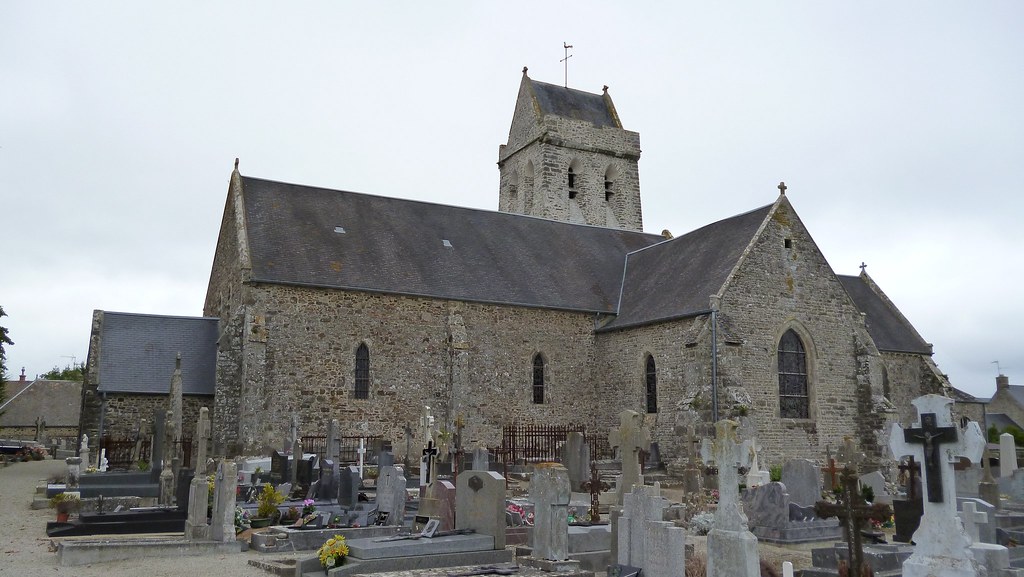 This church owes its patronage to Saint-Lô, the fifth bishop of Coutances during the 6th century. Tradition says that when he was only 16 years old, he was appointed bishop by the people when they all cried out in unison, “Lô évêque ! Lô évêque !” They did not say, “Vox populi, vox Dei” meaning (the voice of the people is the voice of God). Therefore, an election took place in the year 525 and he held the post of Bishop of Coutances for nearly 40 years. The origin of this parish church dates from the 11th century, but the construction that we see today dates from the 14th and 15th centuries.
 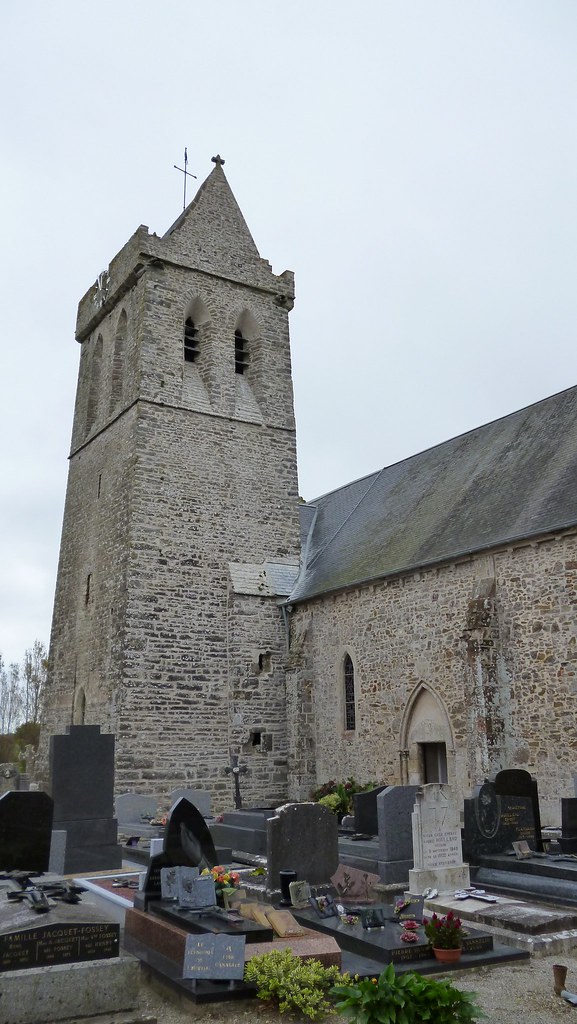 The tower, with its gabled roof, is from the second half of 15th century while the rest of the building has been redesigned over the centuries.
 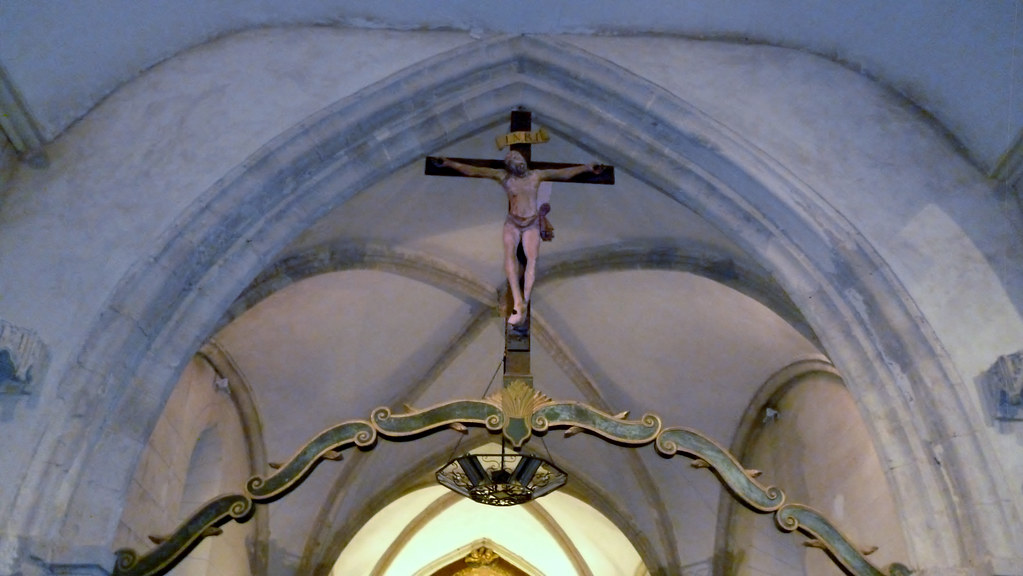 The window above the altar came from the late 16th century, the Gothic arch of the entrance to the choir was enlarged and the rood beam above the sanctuary dates from the second half of the 18th century. Long missing and forgotten, it was found in the attic of the sacristy in 1952 and in 1959 it was returned to its place between the chancel and the nave. The crucifix attached to the rood beam is probably from the 16th century.
 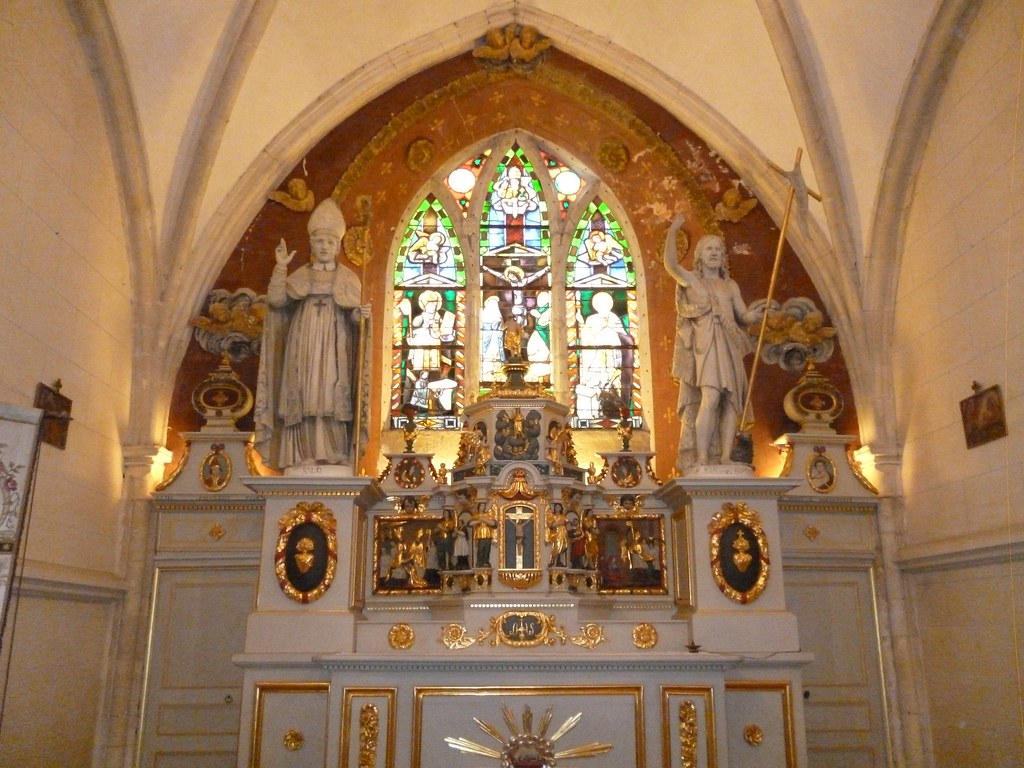 The main altar and its reredos come from the 17th century and refer to two scenes from the life of Saint-Lô:
 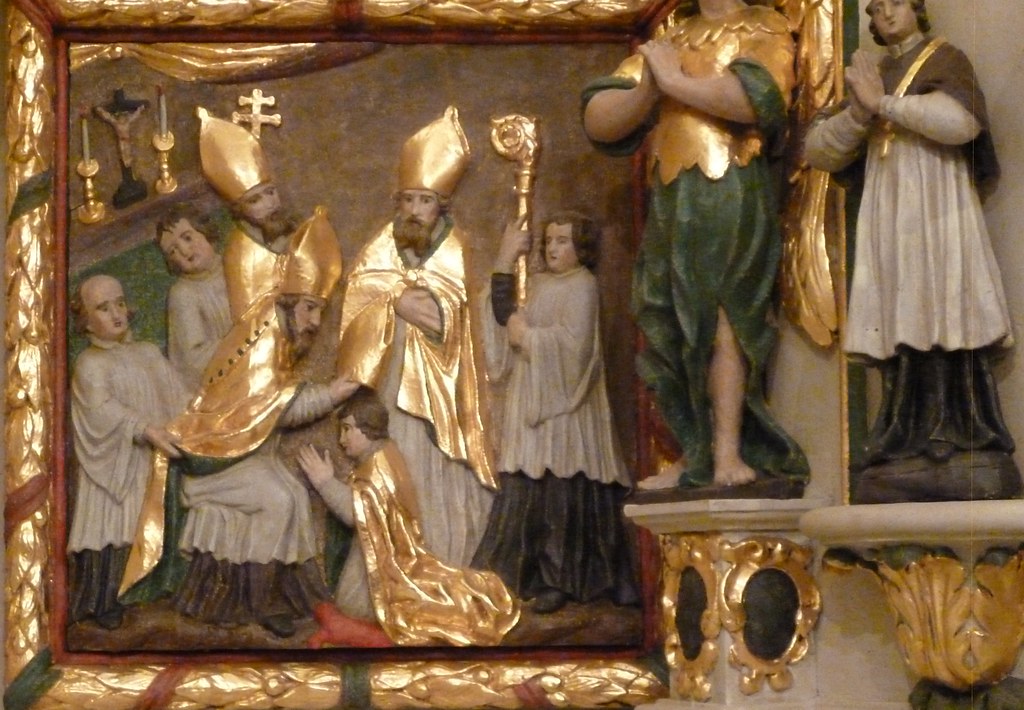 to the left, his ordination,
 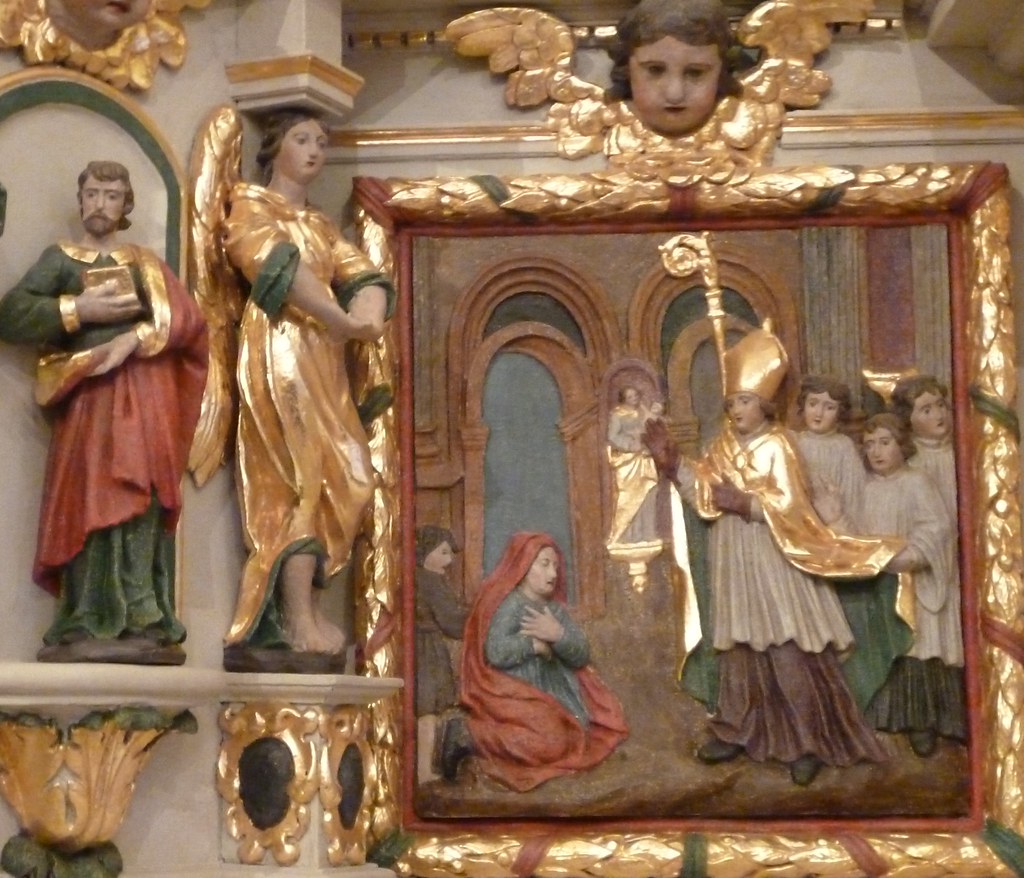 to the right, the miracle of the bishop healing the eyes of a blind woman.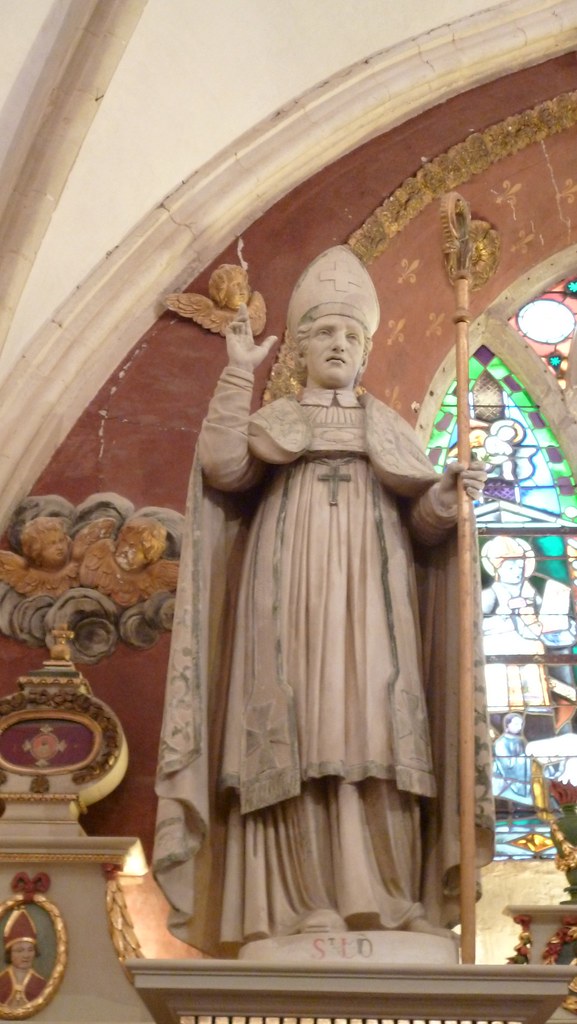
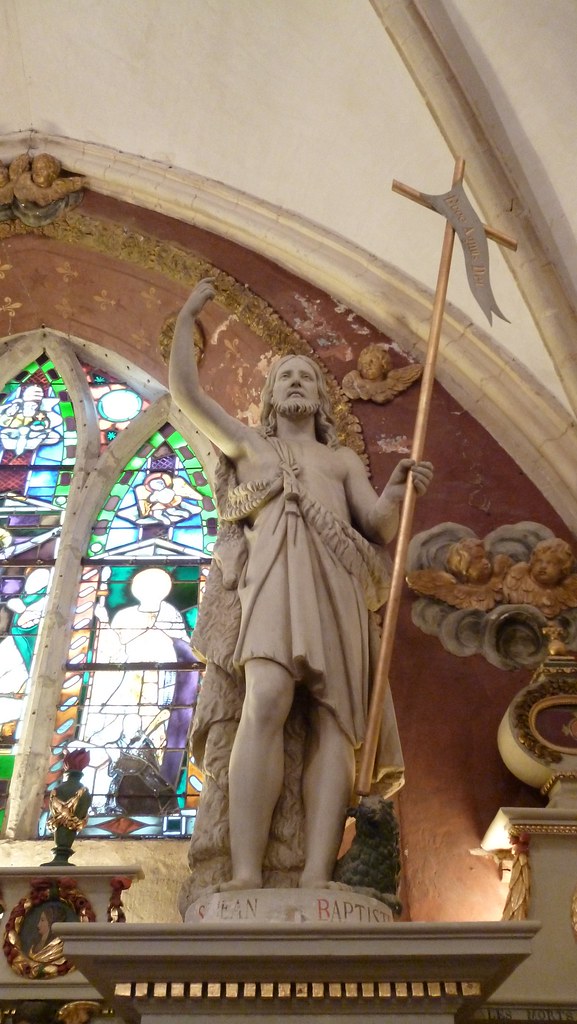 Statues of Saint-Lô and Saint John the Baptist can be found above the altar as well. The nave, the choir and part of the transept belong to a period of transition from late Romanesque to early Gothic.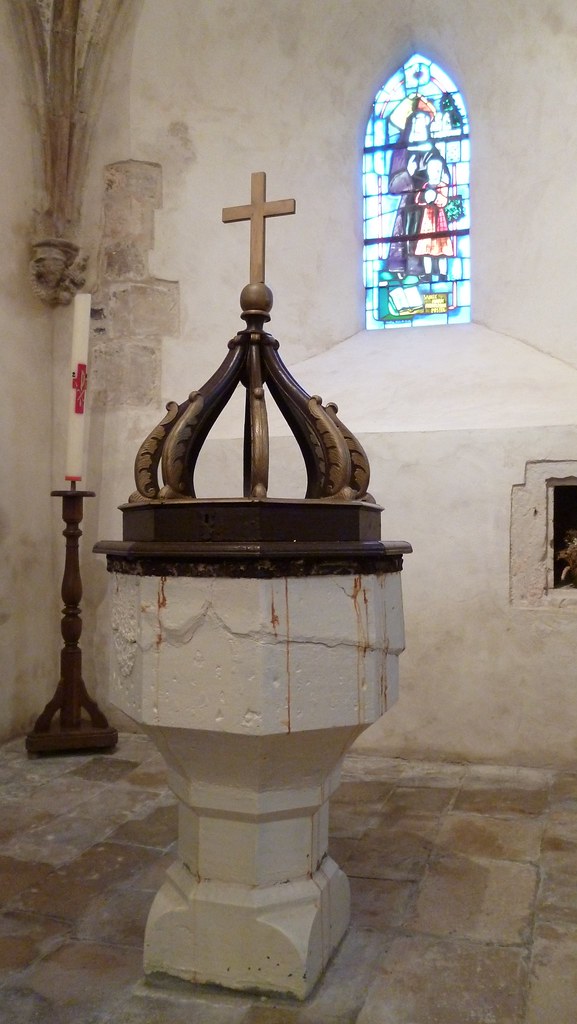
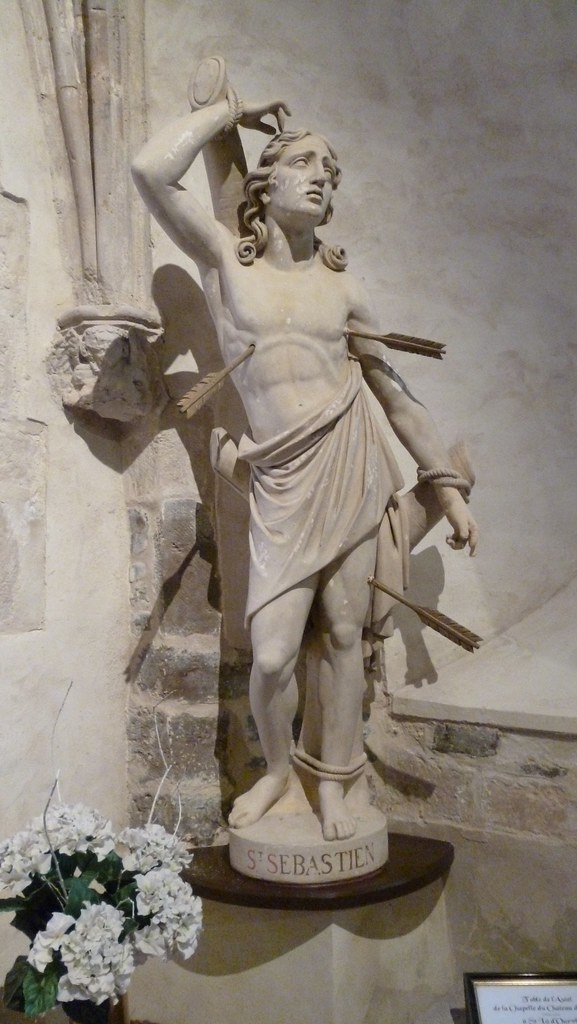
 The chapel to the left of the nave has an exquisite limestone baptismal font and a stone statue of Saint-Sébastien.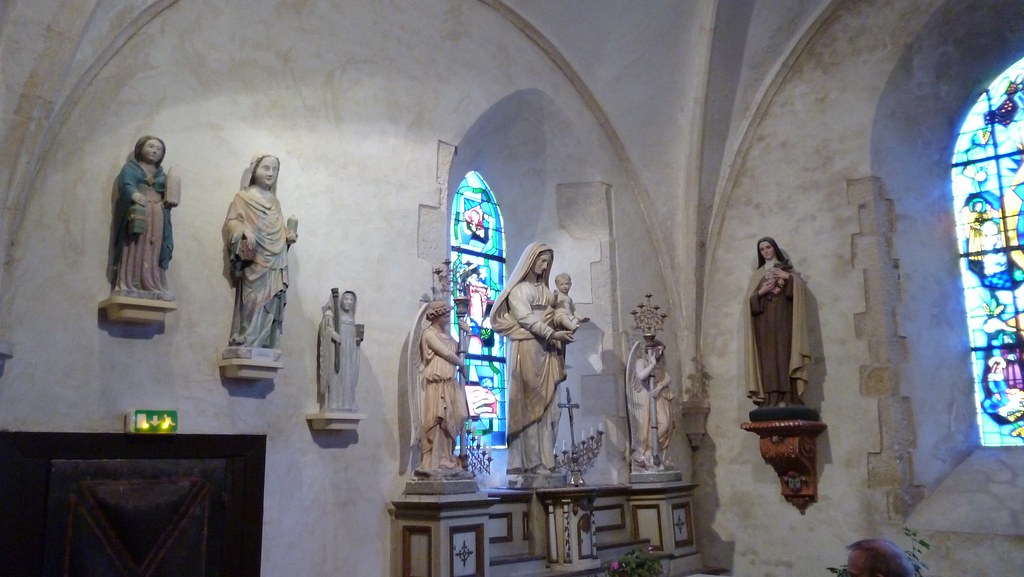
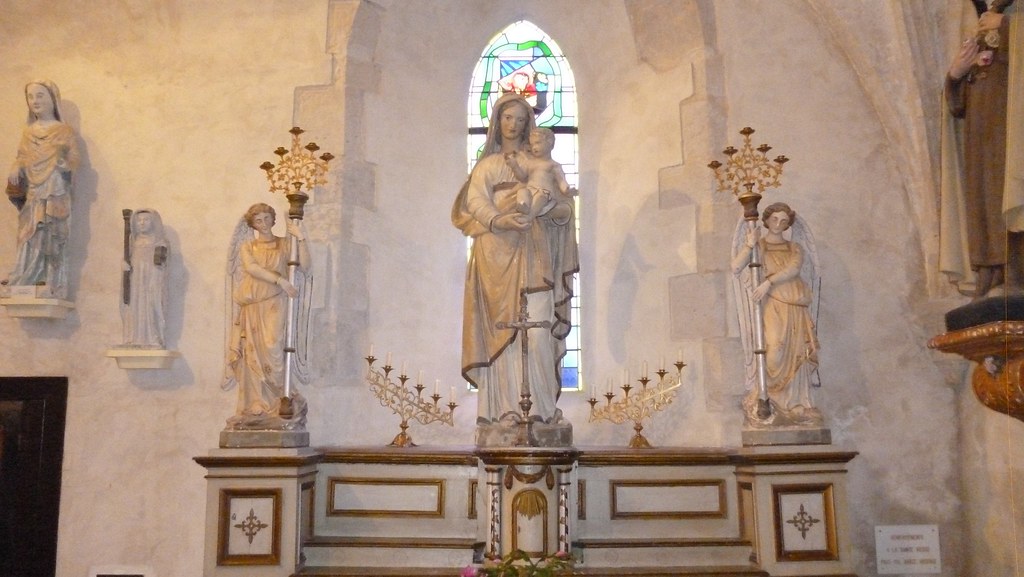
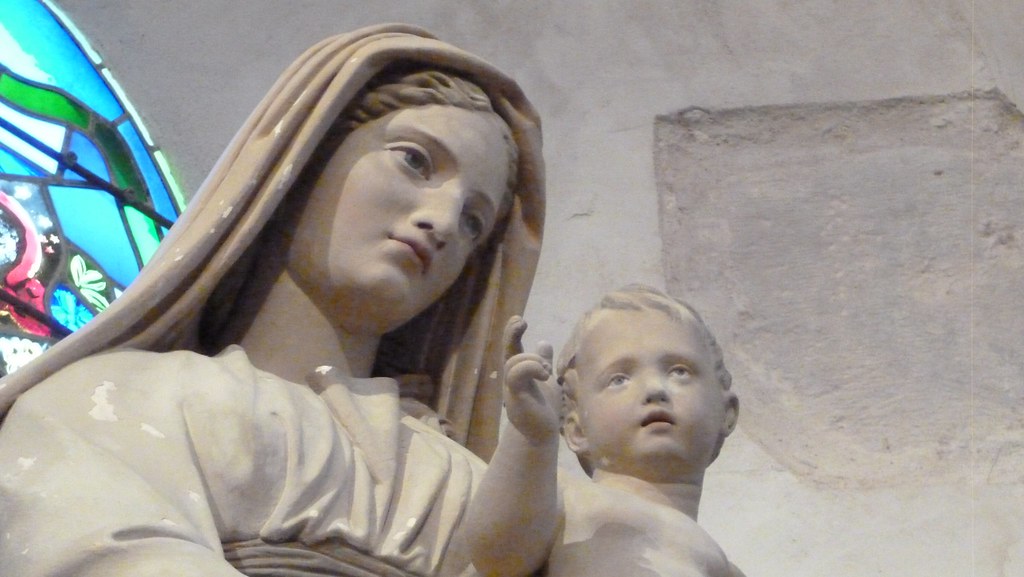
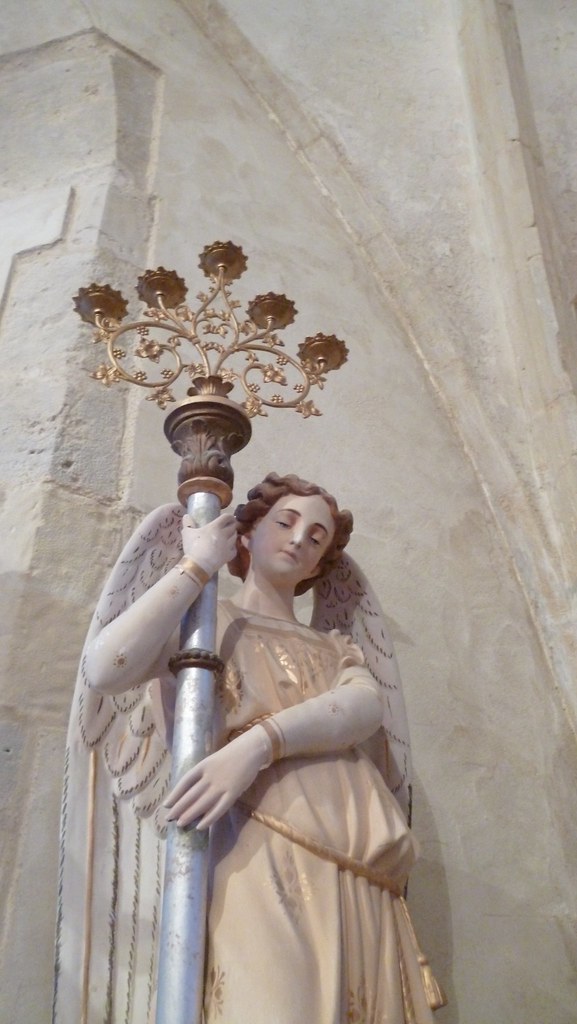 In 1572, the arch of the entrance to the choir was enlarged and expanded to create the Chapel of the Virgin.
 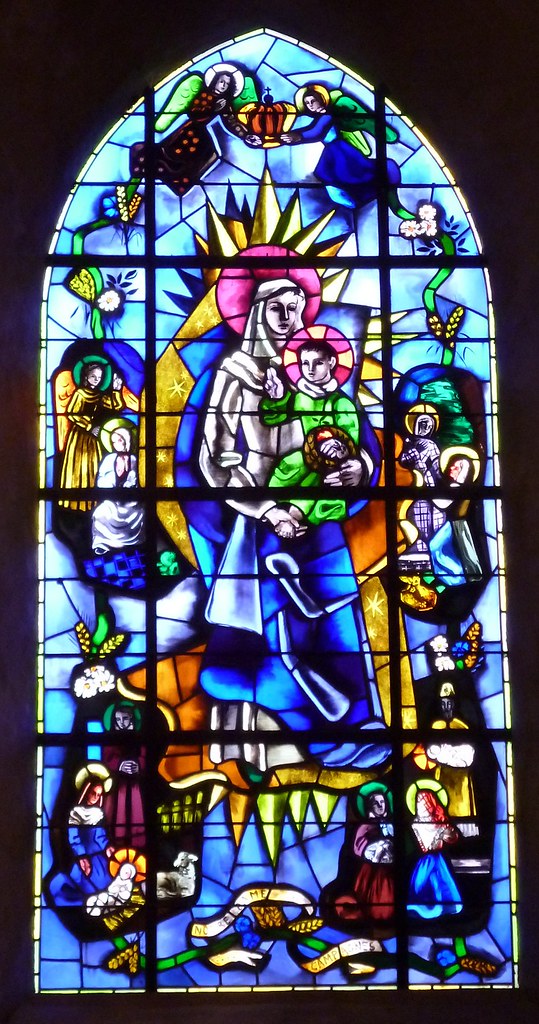 This beautiful stained glass window dedicated to Notre-Dame-des-Compagnes can be found in the Virgin’s Chapel.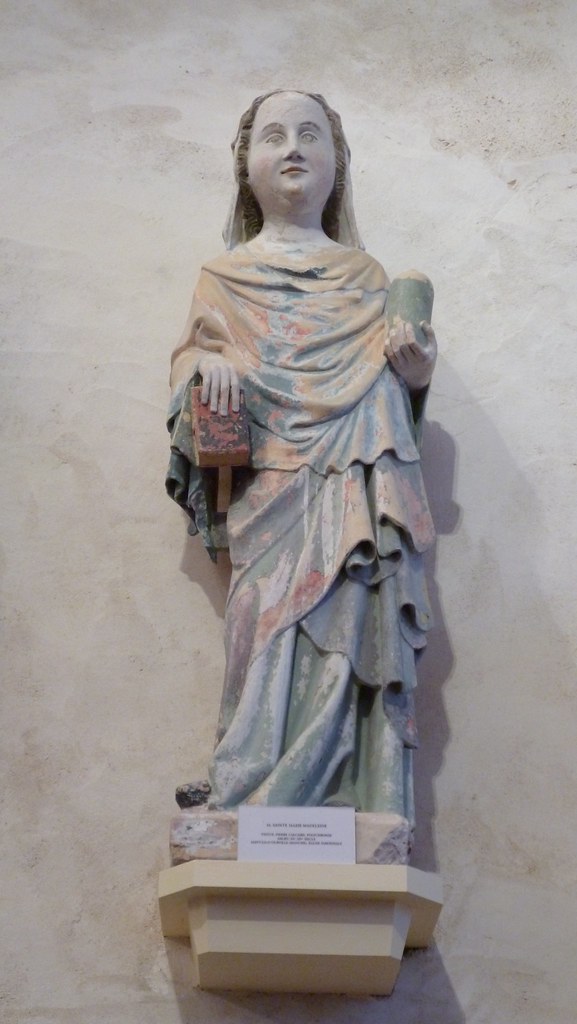
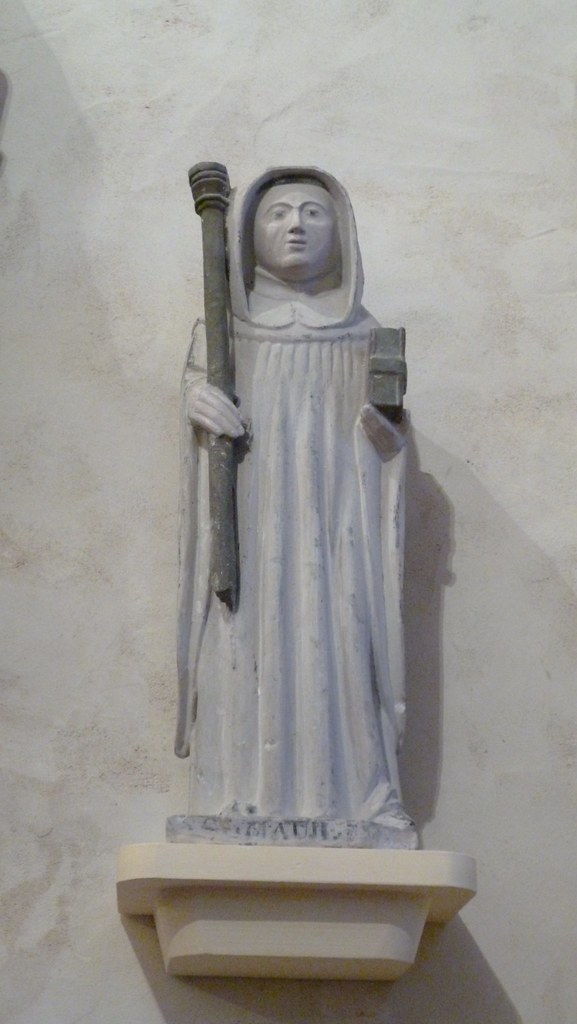
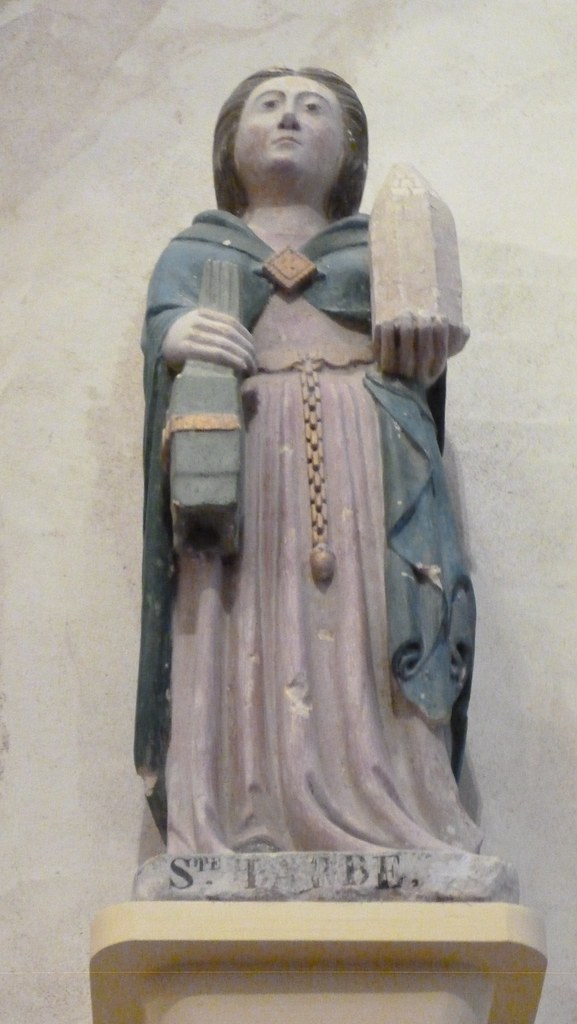 There are also a number of fine statues here as well such as a small wood statue of Mary Magdalen from the 15th century as well as some older statues of Saint-Maur and Sainte-Barbe. To the left of the transept is a statue to the Blessed Thomas Hélye.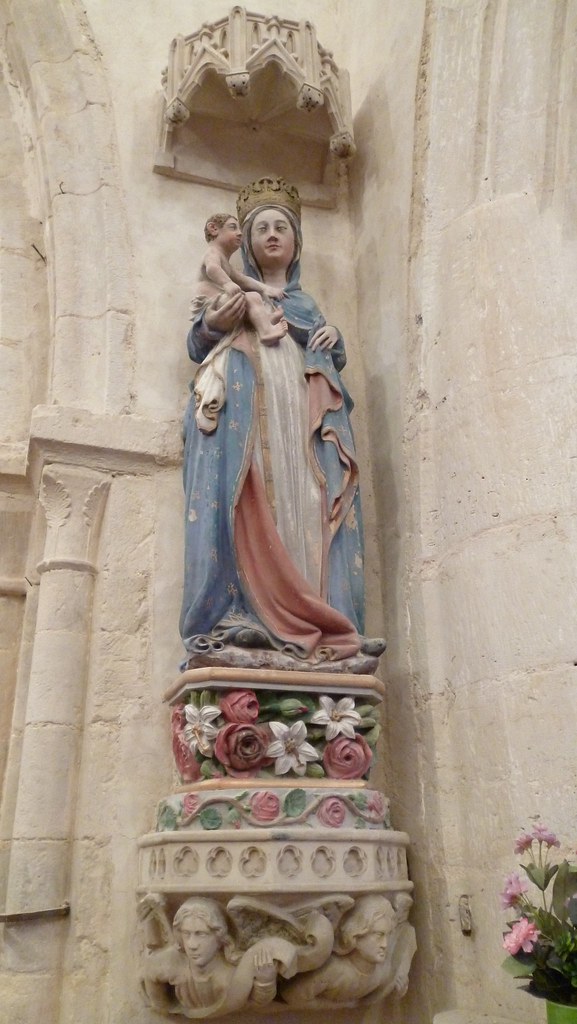
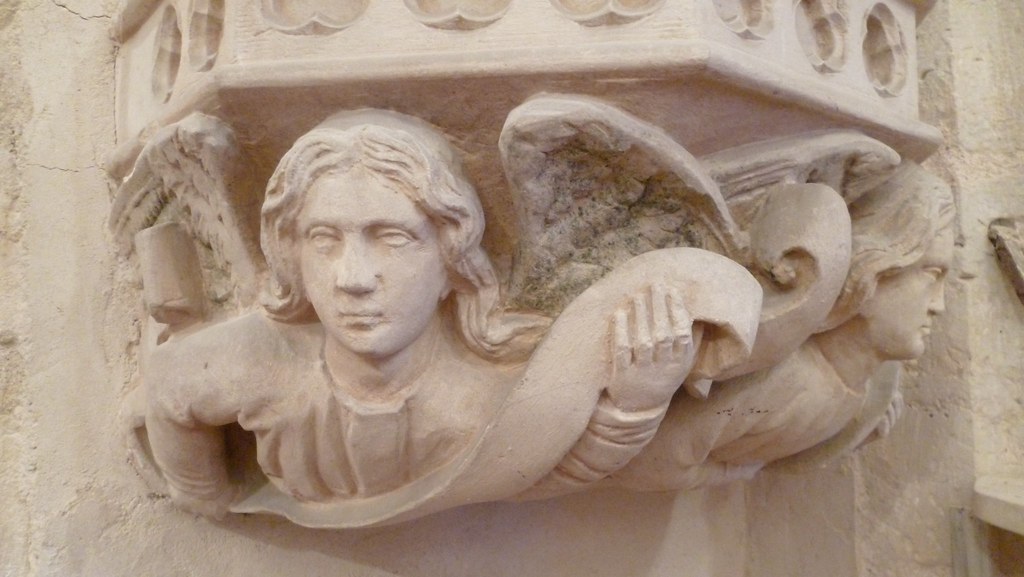 To the right of the transept is a 14th century polychrome stone statue of the Virgin and Child.
 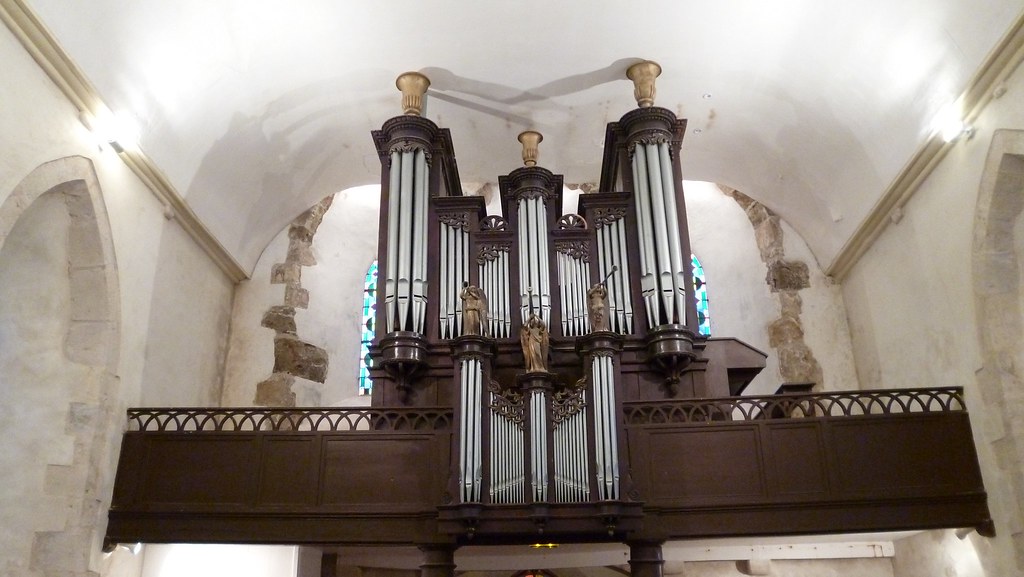 The organ, built in 1852 by the Bataille brothers, organ builders from Saint-Nicolas-de-Pierrepont, was restored in 1912. Heavily damaged during the events of 1944 it was restored again in 1956. This time it was equipped with an electric blower. The presence of such an organ in a modest parish church is exceptional. Inventories of organs in la Manche totals 78 with most of them being in religious buildings of large towns.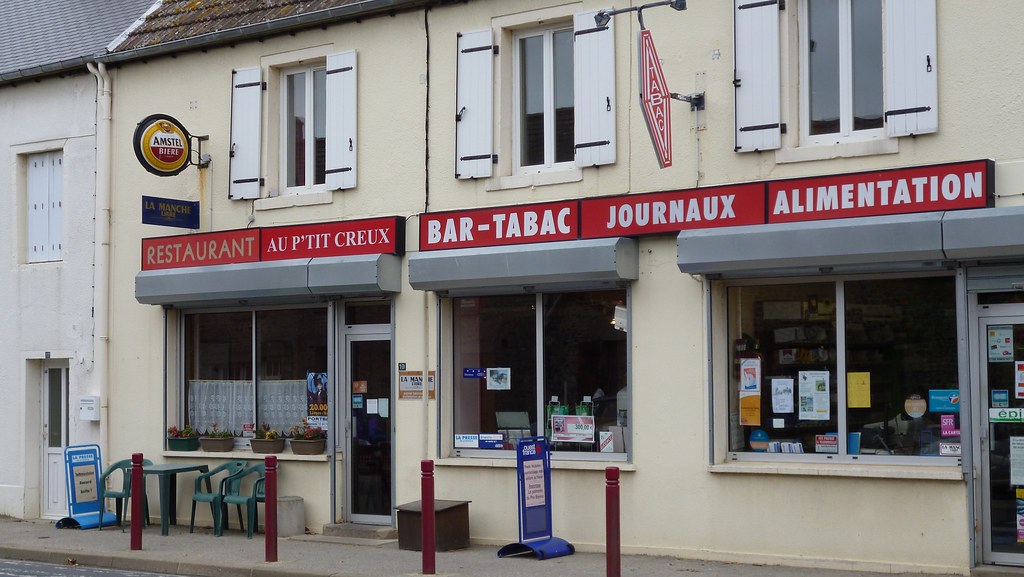
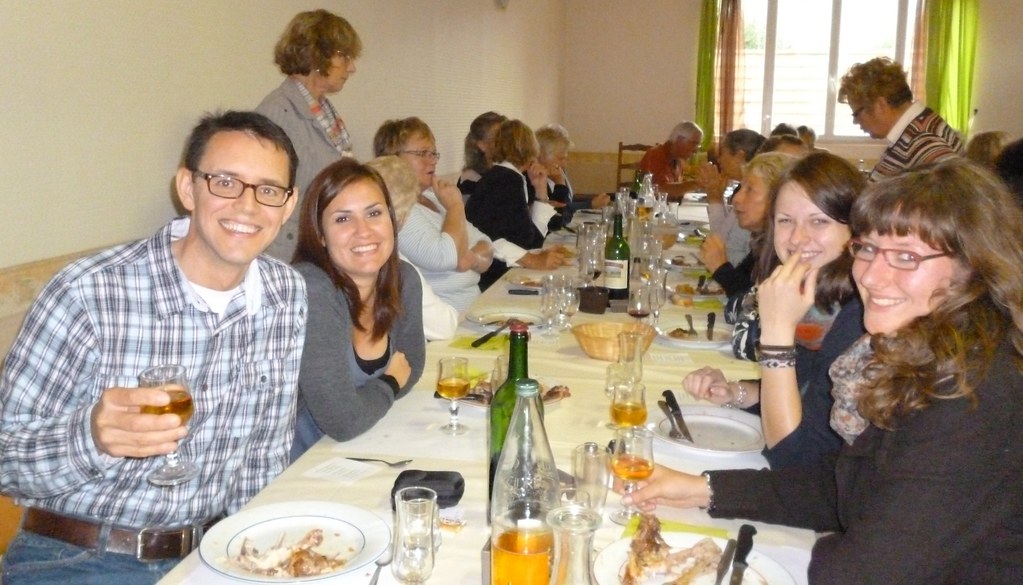 Anyway, after the guided tour of the church, we all headed across the street to the restaurant "Au p'tit creux" where we had lunch together.
 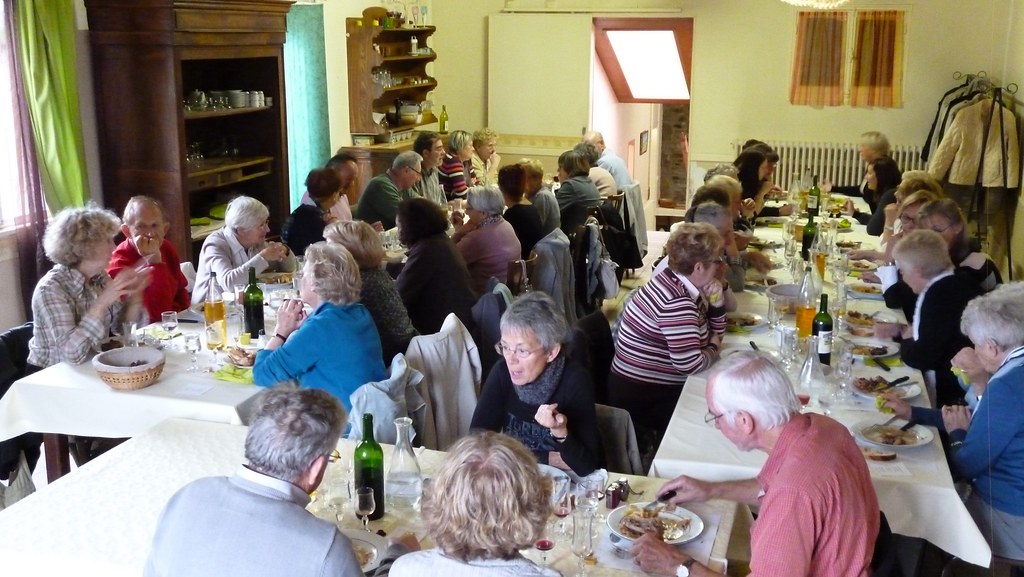 I had the roasted chicken with green beans while others had steak and fries. I have to say that for only 21 EUROS, the trip was well worth it and I am anxious to go on another excursion with AVF.


/http%3A%2F%2Ffarm3.staticflickr.com%2F2922%2F14679955883_19ebe03a53_z.jpg)
/http%3A%2F%2Ffarm6.staticflickr.com%2F5518%2F14455224977_5981185dd7_z.jpg)
/http%3A%2F%2Ffarm8.staticflickr.com%2F7208%2F14035504773_1ed4430ed9_z.jpg)
/http%3A%2F%2Ffarm8.staticflickr.com%2F7300%2F14012320672_1dabb28ee7_z.jpg)