
De captivants à banals, les articles et photographies de “The Baguette” sont une tentative de publier un journal de ma vie dans la Manche et de proposer un forum de discussion pour tout ce qui touche à la Normandie.
 Like so many religious buildings in the Cotentin, this church is consecrated to the Virgin Mary. In Normandy alone, more than a thousand are named in her honor. Built on the hillside town of Hainneville, the church stands in the middle of a cemetery.
  A church existed at this site by the end of the 11th century, under the patronage of St-Sauveur-le-Vicomte Abbey and the powerful Norman baron Néel II. It was not until 1650 that Louis Gigault de Bellefonds, Lord of Hainneville, became its patron and founded the Confraternity of the Holy Trinity in 1657.
  An elegant bell tower (A), which dates from the middle of the 18th century, welcomes visitors. The main portal is composed of a semicircular Gothic arch supported by pilasters topped with a classical triangular pediment.
  The tympanum reveals a bas-relief shield which identifies the local lord, Jacques Bernardin, who took the title of Marquis de Bellefonds in 1753.
 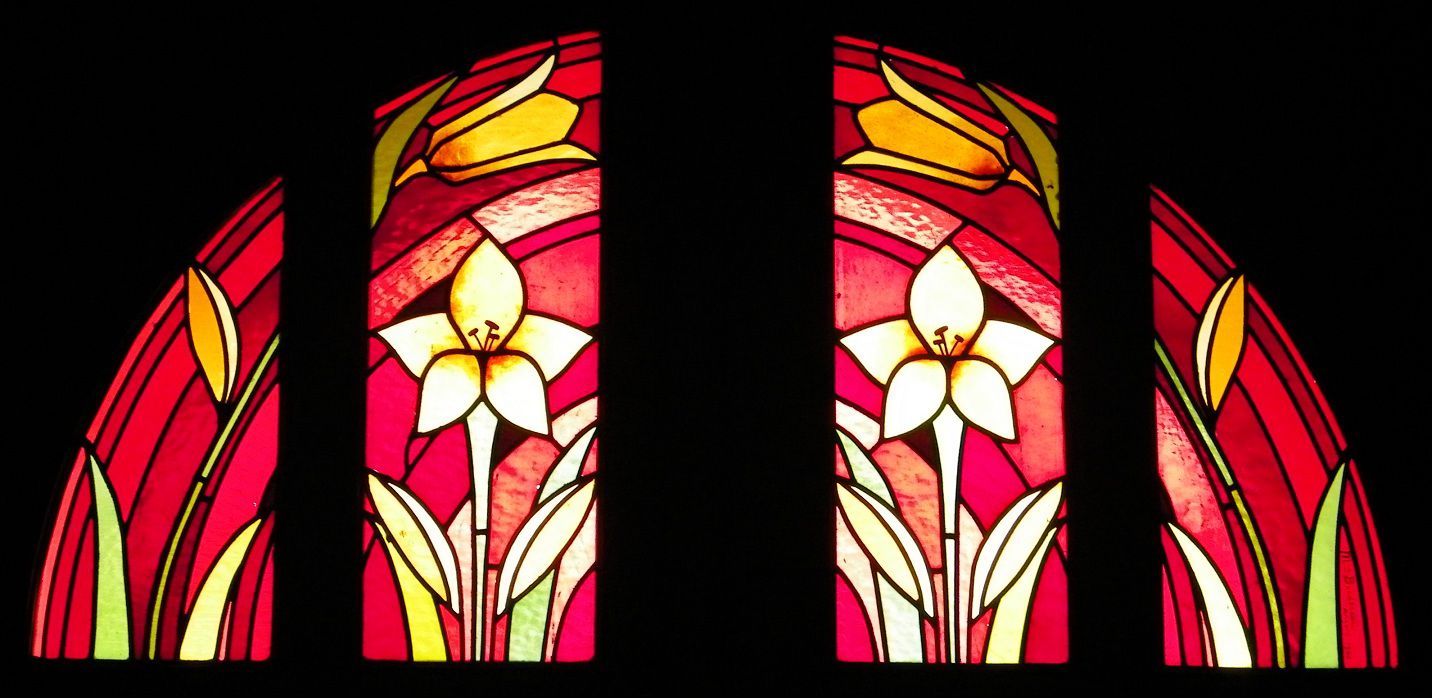 Above the door is this beautiful stained glass window in red adorned with tulips and lilies. Inside, the 15th century choir (E) is quite large for a country church.
  Punctuated by strong, round pillars it has the distinction of being flanked by two chapels. (G) The sacristy is located to the south-east corner of the church beside the choir.
  The southern chapel (F) is dedicated to Ste-Anne. Its 18th century tabernacle is in polychrome wood with gold inlay. It is currently undergoing restoration. To the left and right are statues of St. Joseph and Venerable Thomas Hélye of Biville.
  The northern chapel (D) is dedicated to Our Lady of Lourdes and was built in 1857 with generous donations from parish members. It, too, is of polychrome wood and gold inlay. The arches of the nave (B), which have been reworked throughout the 19th century, provide access to the aisles (C) which were enlarged and extended in 1859 to accommodate the growing local population.
 Two columns along the south aisle have interesting corbels – one appears to be the face of a man while the other a face of an animal.
  (1) The baptismal font is limestone and dates from the middle 19th century as does the
  (2) pine wood confessional. Other points of interest throughout the church are the extraordinary stained glass windows from the workshops of Vermonet-Pommery in Riems:
  (3) St-Louis,
 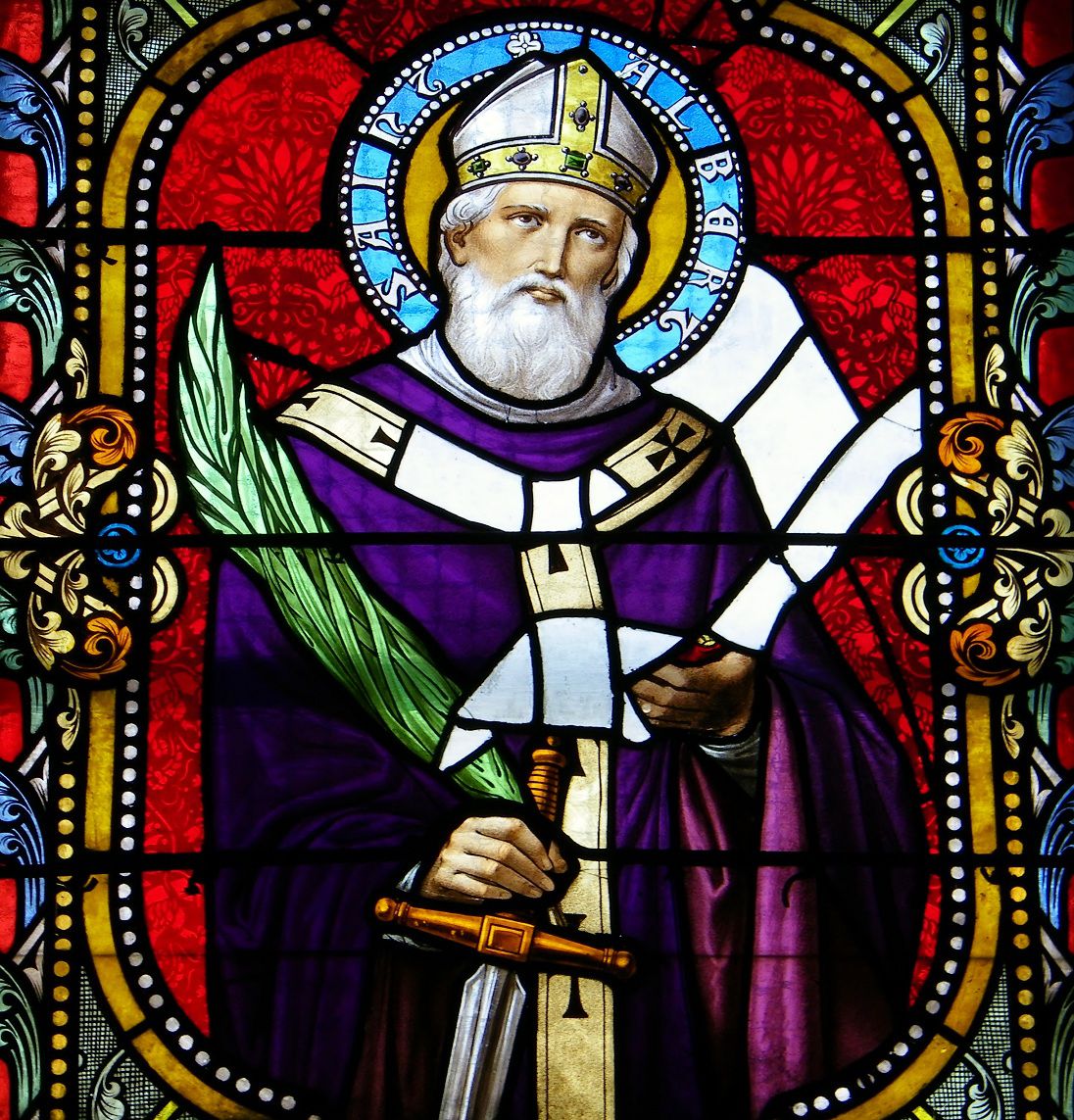 (4) St-Albert,
 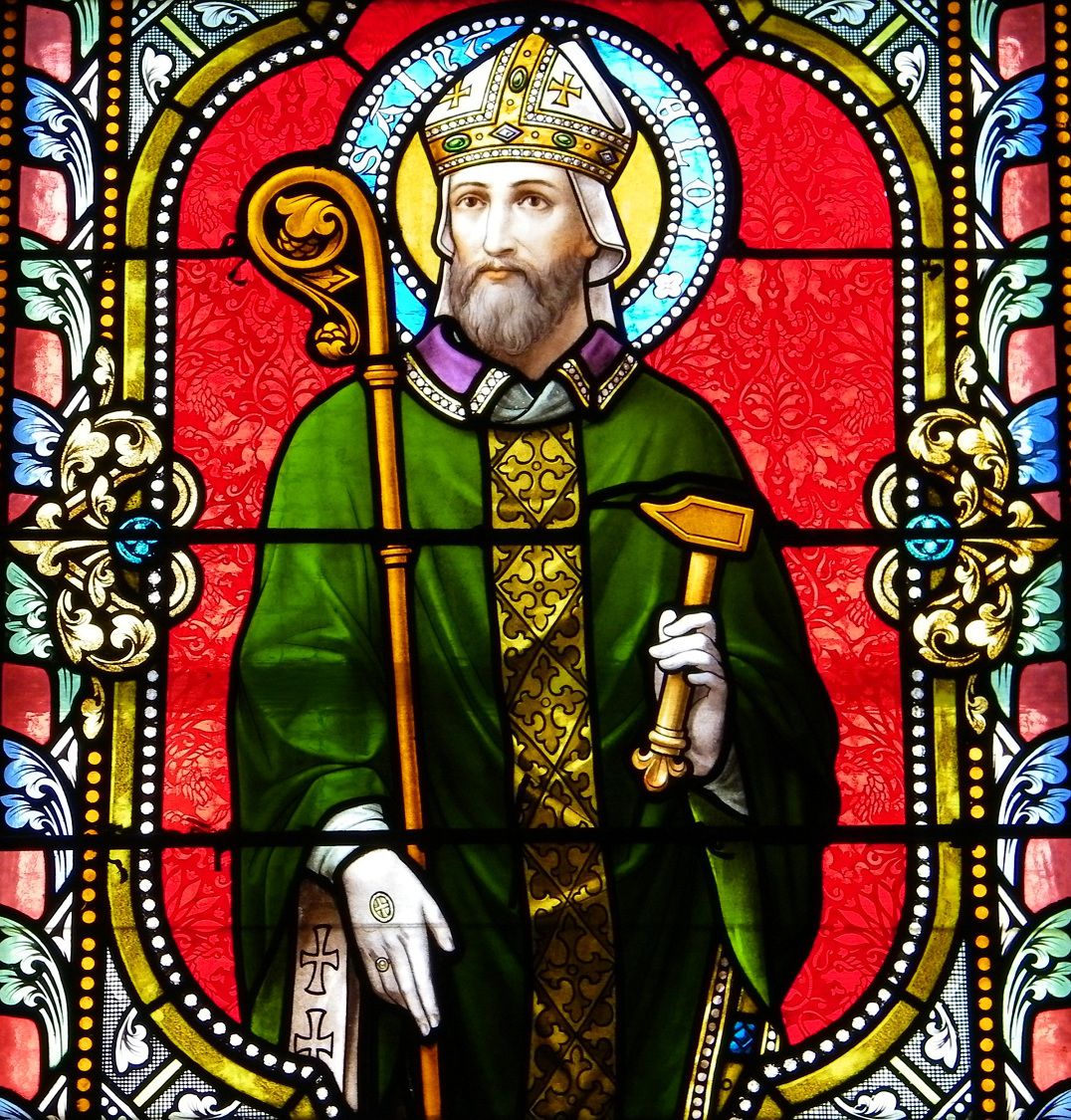 (5) St-Eloi,
 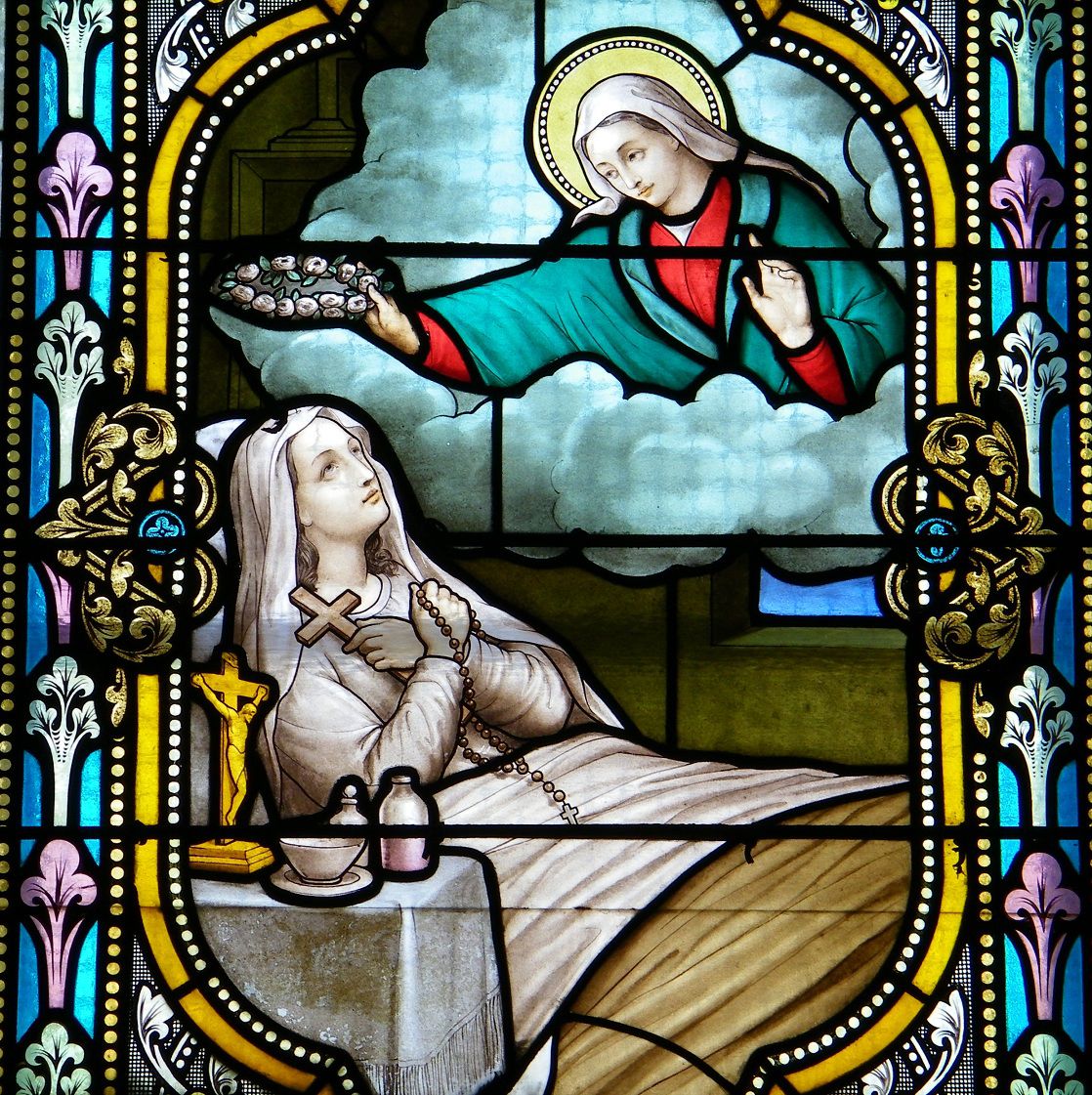 (6) The Virgin bestowing health,
  (7) St-Joseph,
  (8) St-John the Evangelist,
 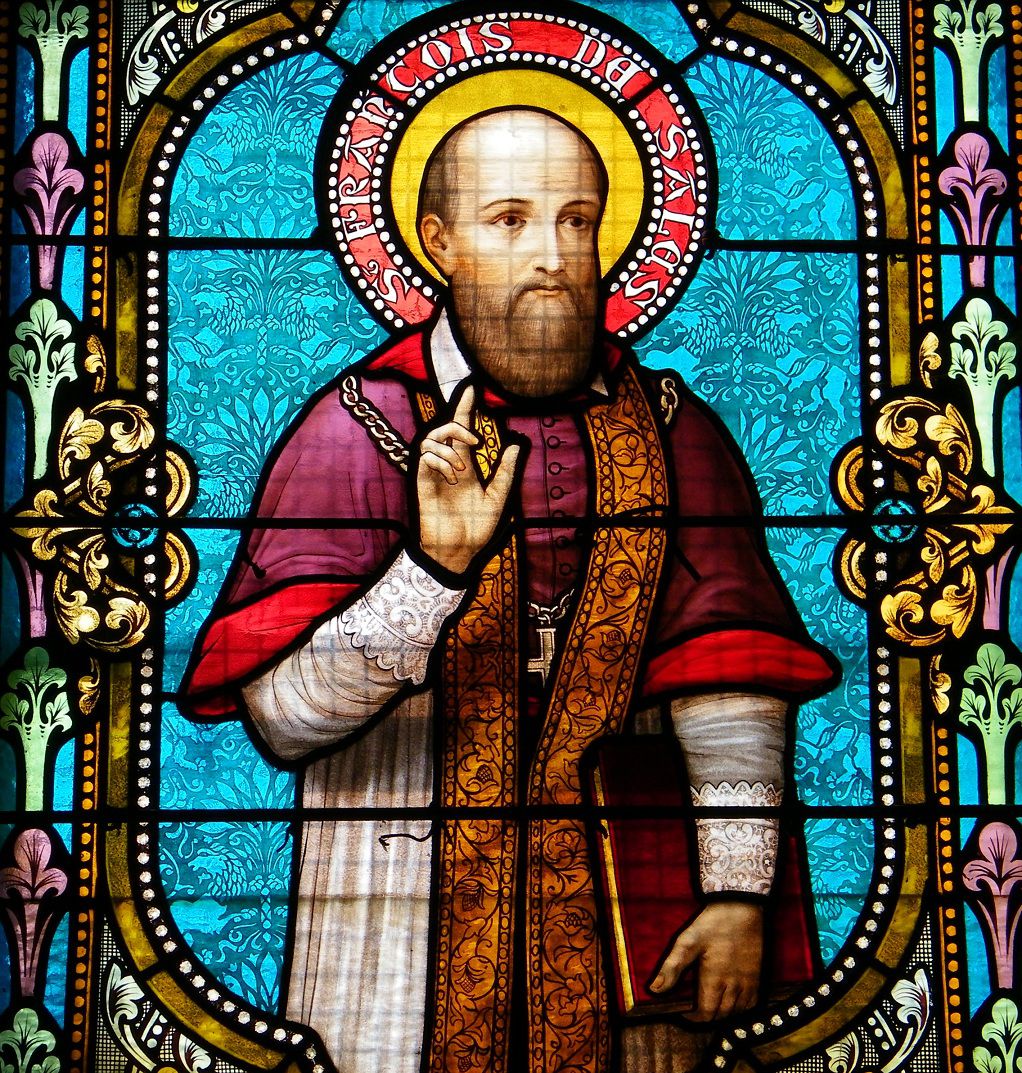 (9) St-Francis de Sales,
  (10) St-James,
 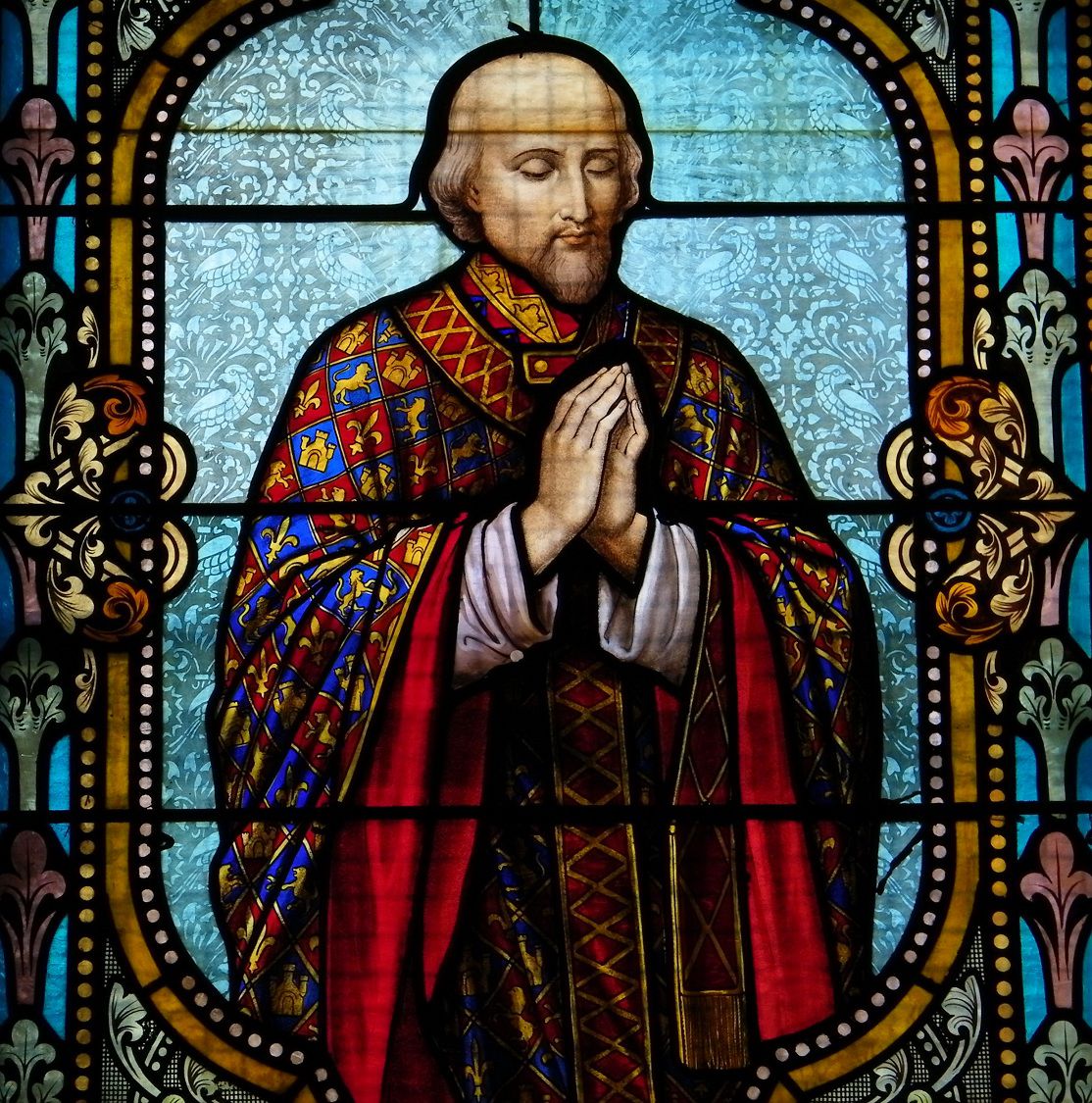 and (11) Venerable Thomas Hélye.
 Just before the altar are left (12) The Virgin and Infant, and right (13) St-John the Baptist – both in polychrome wood from the end of the 18th century.
  (14) The three stained glass windows in the choir depict St-Peter and St-Paul with the Assumption of the Virgin at the center.
 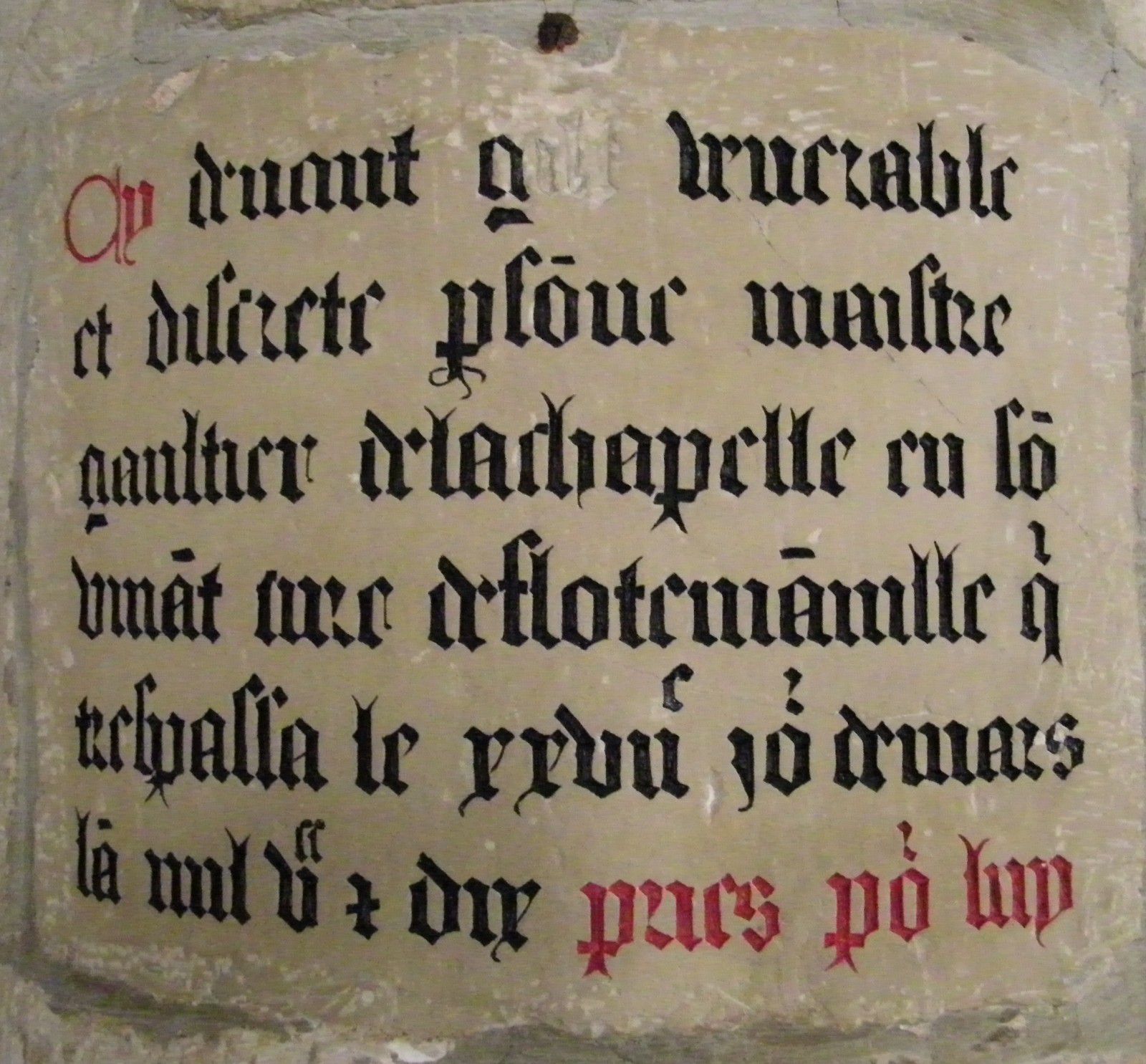 (15) One round column close to the altar has the limestone epitaph from 1510 of Gautier de la Chapelle, a priest from nearby Flottemanville.
  (16) Another column nearby has the limestone epitaph from 1650 of priest, Gilles Nicollet. Overall, this is a very warm and welcoming country church. Although the congregation has decreased over the years, it is still a part of my local parish, Notre-Dame de l'Assomption.


/http%3A%2F%2Ffarm3.staticflickr.com%2F2933%2F14696714673_852dd4be16_z.jpg)
/idata%2F3191025%2FGrand-Vacance%2Falerte-rouge.gif)
/http%3A%2F%2Ffarm9.staticflickr.com%2F8508%2F8390904887_012fa54ac5_b.jpg)
/http%3A%2F%2Ffarm9.staticflickr.com%2F8342%2F8253896265_fae9c6e939_b.jpg)