
De captivants à banals, les articles et photographies de “The Baguette” sont une tentative de publier un journal de ma vie dans la Manche et de proposer un forum de discussion pour tout ce qui touche à la Normandie.
 The château stands with its back to a cliff on the edge of Chinon Forest, its terraced gardens overlooking the Indre. Its impressive bulk and fortified towers contrast sharply with the white stone, myriad roofs, turrets, dormers and chimneys rising against a green background. Tradition has it that when Charles Perrault, the famous French writer of fairy tales, was looking for a setting for Sleeping Beauty, he chose Ussé as his model.
  Ussé is a very old fortress; in the 15th century it became the property of a great family from Touraine, the Bueils, who had distinguished themselves in the Hundred Years’ War (1337 – 1453). In 1485, Antoine de Bueil, sold Ussé to Jacques d’Espinay. The Espinays were Breton family who had been chamberlains and cupbearers to the Duke of Brittany, Louis XII and Charles VIII. The château frequently changed hands. Among its owners was Vauban’s son-in-law, Louis Bernin de Valentinay; the great engineer paid frequent visits to Ussé.
 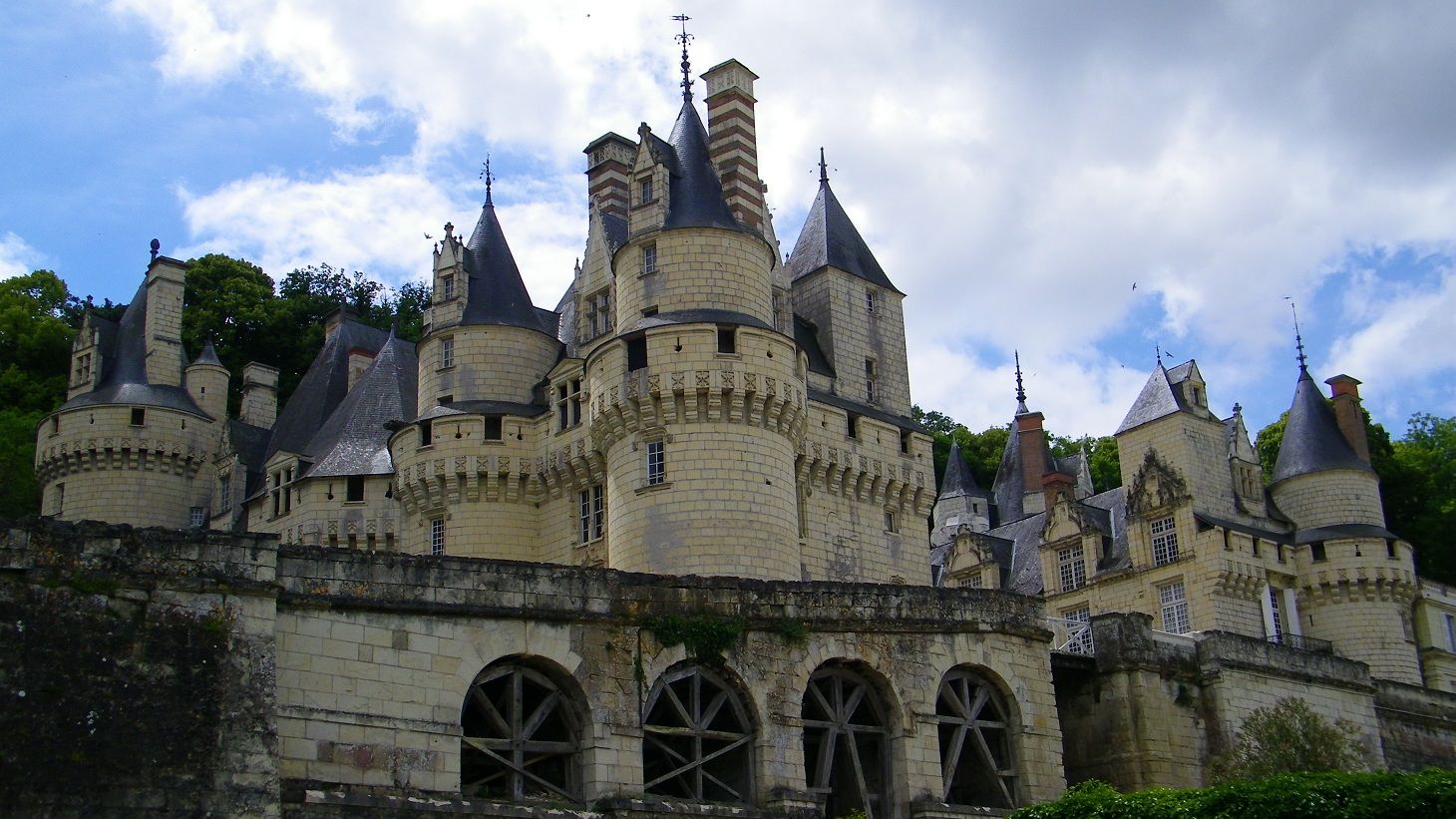 Voltaire and Châteaubriand were guests at the château. The estate has belonged to the Blacas family since the late 19th century. On the walk toward the château, a lovely kaleidoscope of roofs and turrets can be glimpsed through the leaves of the stately Lebanon cedars, said to have been planted by the great French author Châteaubriand.
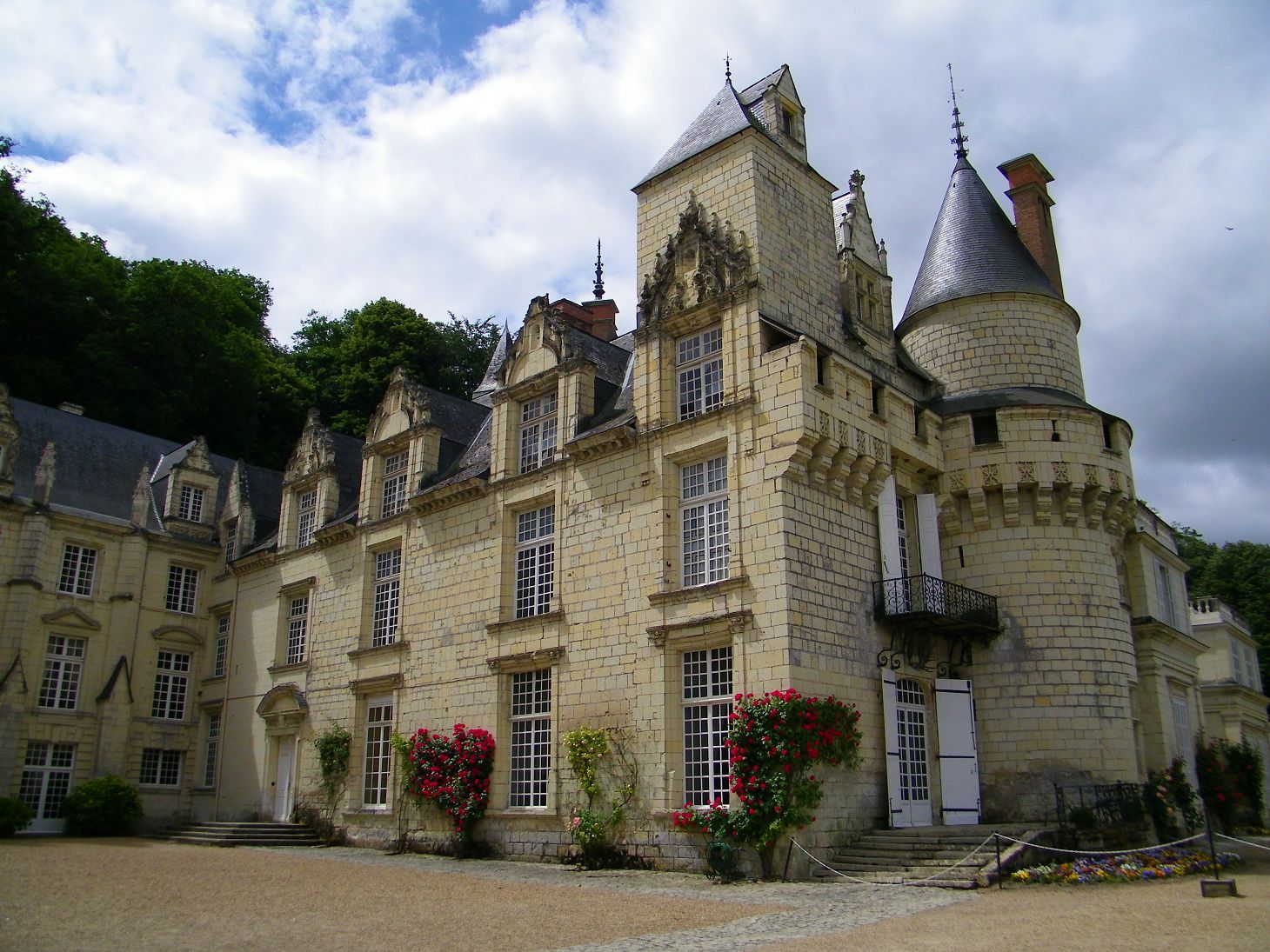
 The outside walls (15th century) have a military appearance whereas the buildings overlooking the courtyard are more welcoming and some even carry an elegant Renaissance touch.
  The first building that one visits on the property is the Collégiale Notre-Dame, a chapel which stands alone in the park. It was built from 1520 to 1538 in Renaissance style. The initials C and L, to be found in other parts of the estate, are used as a decorative motif; they refer to the first names of Charles d’Espinay, who built the chapel, and his wife Lucrèce de Pons.
 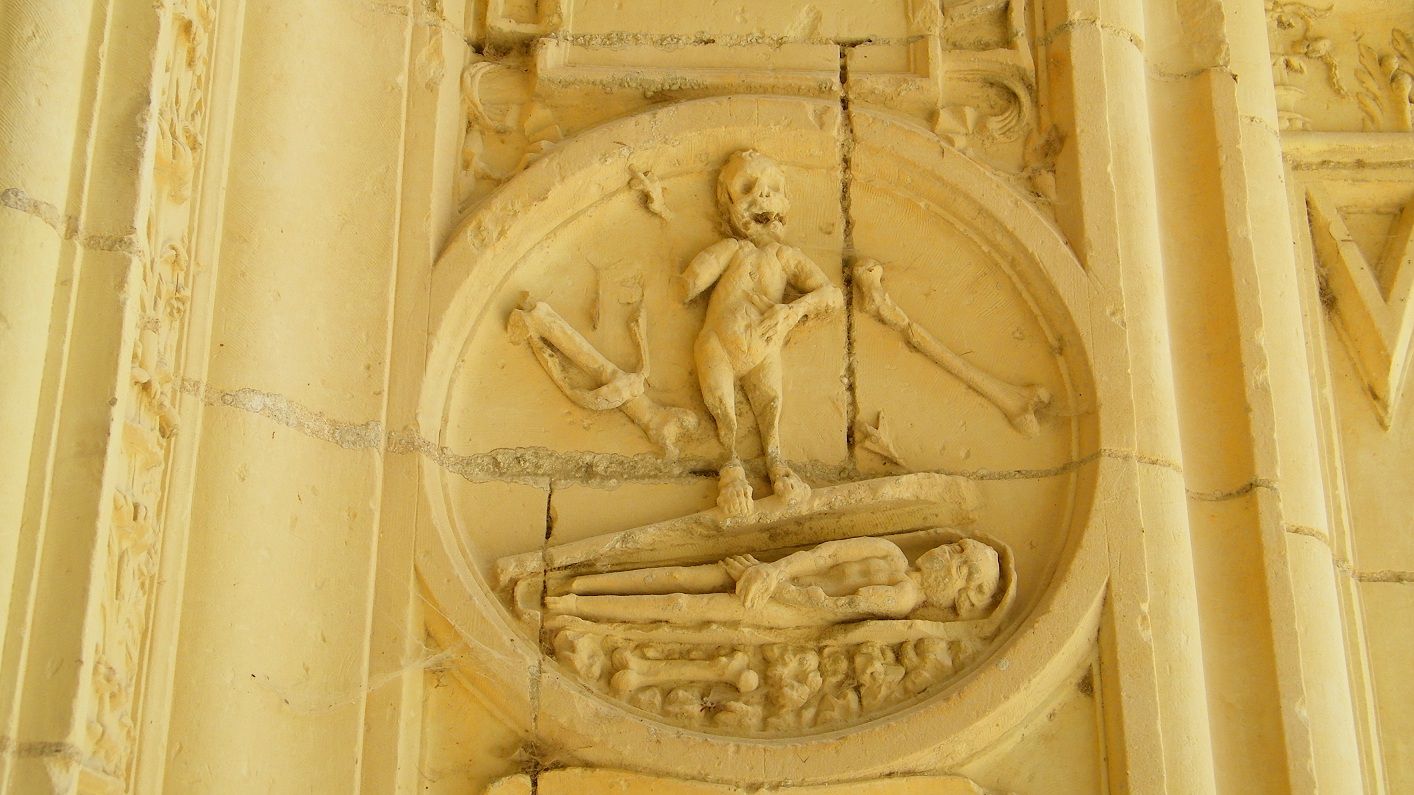 At the main entrance there are carvings of the apostles as well as four medallions which express the theme of death. Creepy.
  The lofty, luminous interior contains fine 16th century stalls decorated with carved figures. After leaving the chapel, one can explore the wine cellars carved directly into the limestone cliffs behind the château.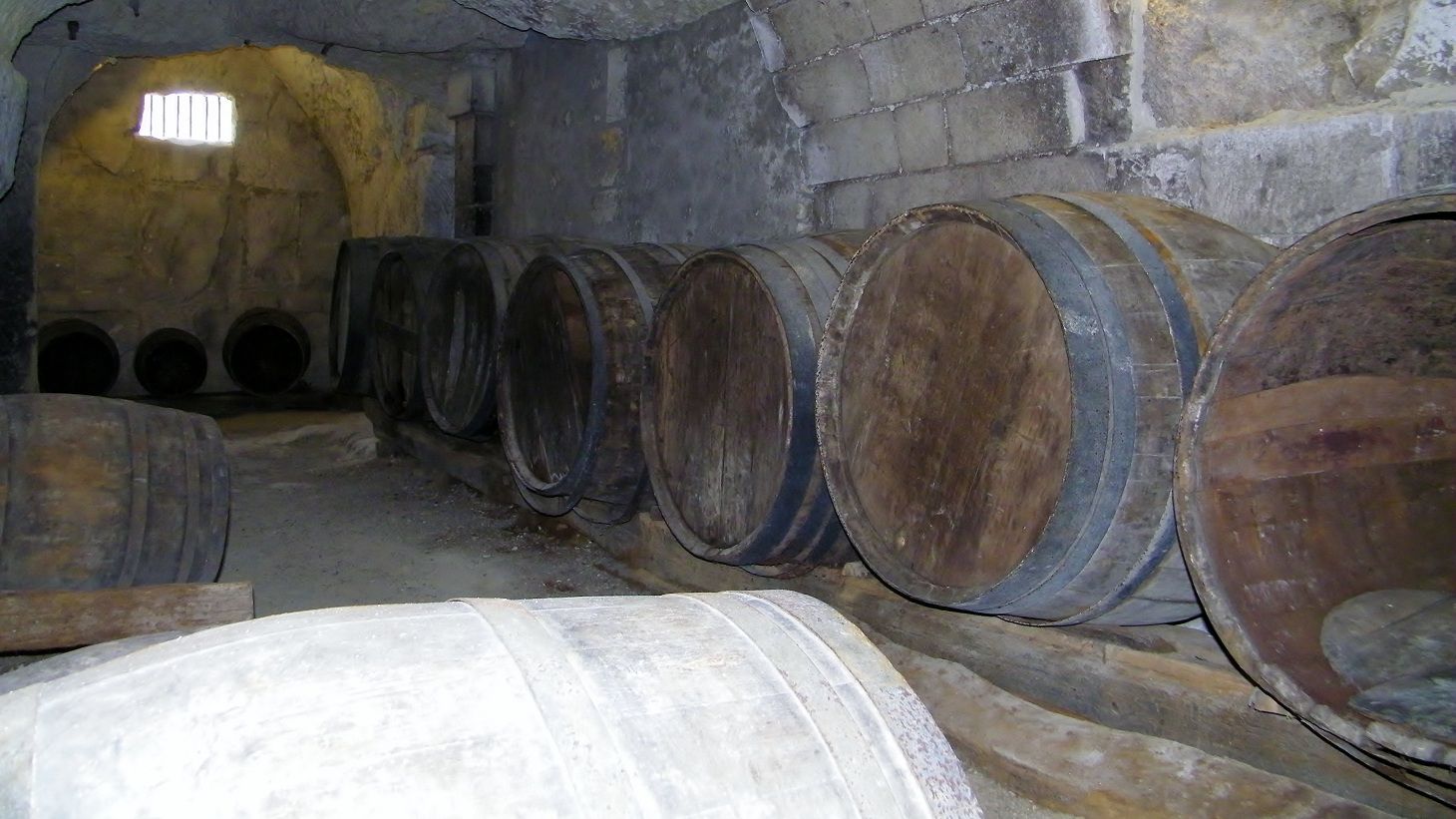
 The cellars were first dug in the Touraine limestone in the 15th century. The longitudinal gallery gave access to the different smaller cellars used to keep wine in either barrels or in bottles.
  The vineyards situated on the top of the hill at a place called “Belvedère” were mainly Chenin blanc, an old variety of grape made known by Saint-Martin in the Abbey of Marmoutier during the 4th century. A little chapel dedicated to Saint-Vincent-de-Saragosse is situated at the extreme right of the gallery.
 The old stables show off the many different carriages used at Ussé in the past. Inside, the furniture and art collections come from the great families who lived at Ussé throughout the centuries.
 The Salle des gardes boasts a 17th century trompe-l’oeil ceiling and a collection of Oriental weapons.
  The Grande galerie links the east and west wings of the château. Hanging along the walls are 18th century Flemish tapestries depicting lively, realistic country scenes in Flanders inspired by the drawings of David Teniers, a 17th century painter.
  The Grand escalier is a beautiful example of a straight staircase with wrought iron banisters inspired by Italian craftsmen. It dates from the early 17th century.
  The dining room was renovated in 2005 and features furniture designed in Louis XVI style. Above the fireplace is a large painting of Louis XV.
 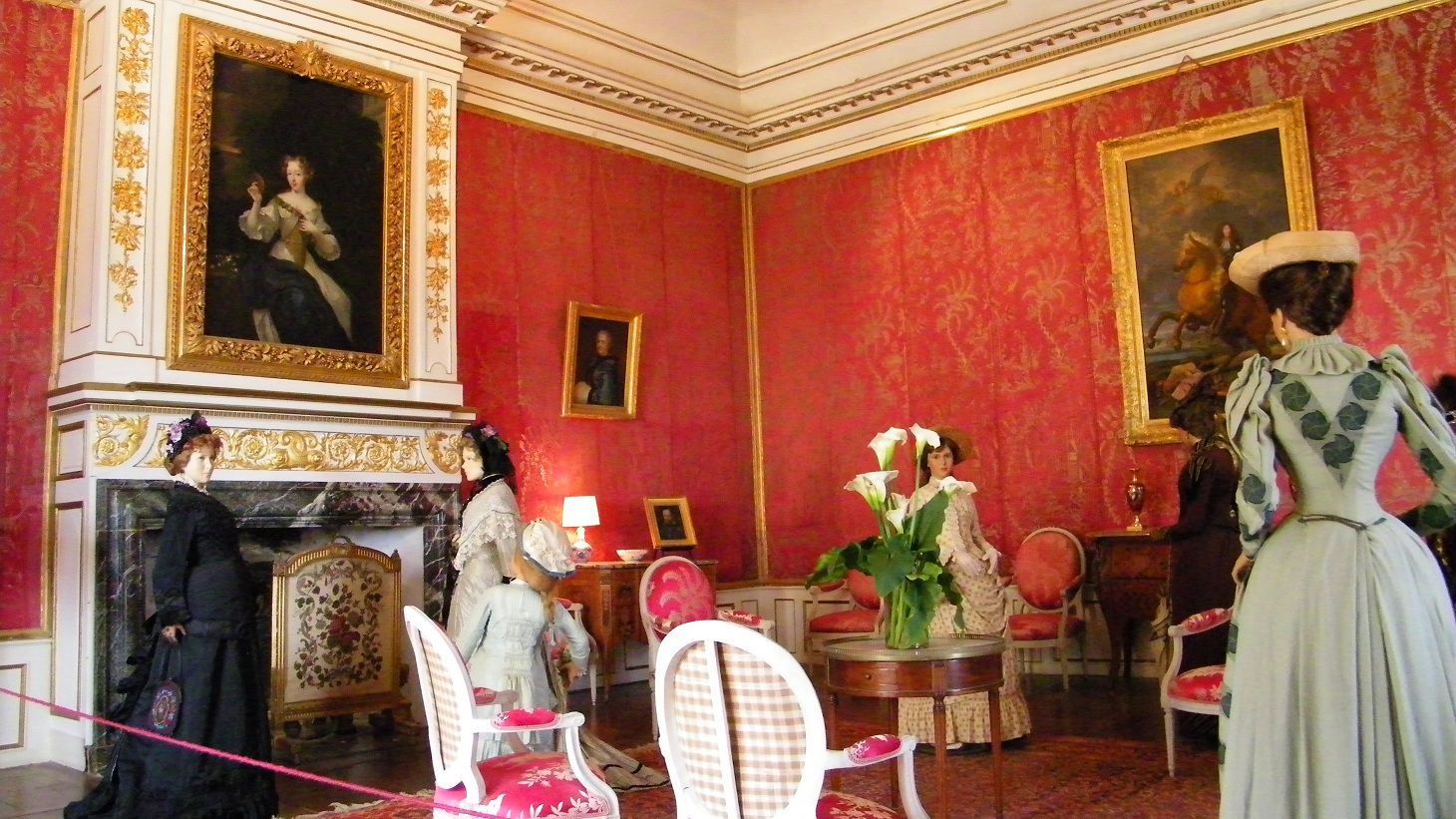 Under the reign of Louis XIV, some of the larger castles were obliged to prepare rooms for the King—however, there is no evidence that any king ever stayed in this room.
 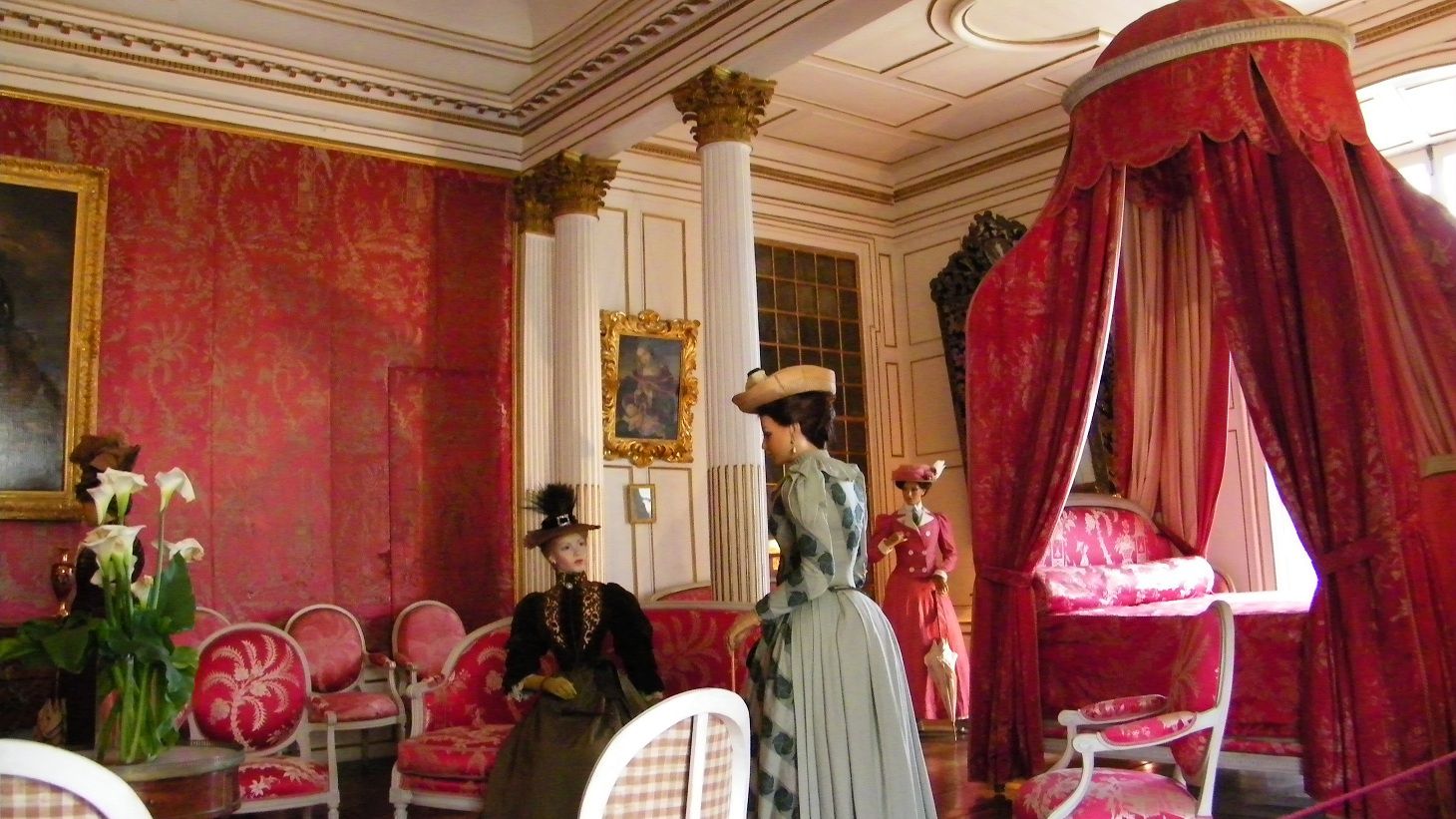 The original silks on the wall were woven in the 18th century with Chinese patterns fashionable at the time at a factory in Tours. Today, throughout the château’s rooms, one can find exhibits of costumes worn by men and women from different centuries. The fashion exhibits change every year.
 After visiting the decorated rooms, one can explor the old attic with its dusty treasures and admire the intricate woodwork needed to create the pointed towers.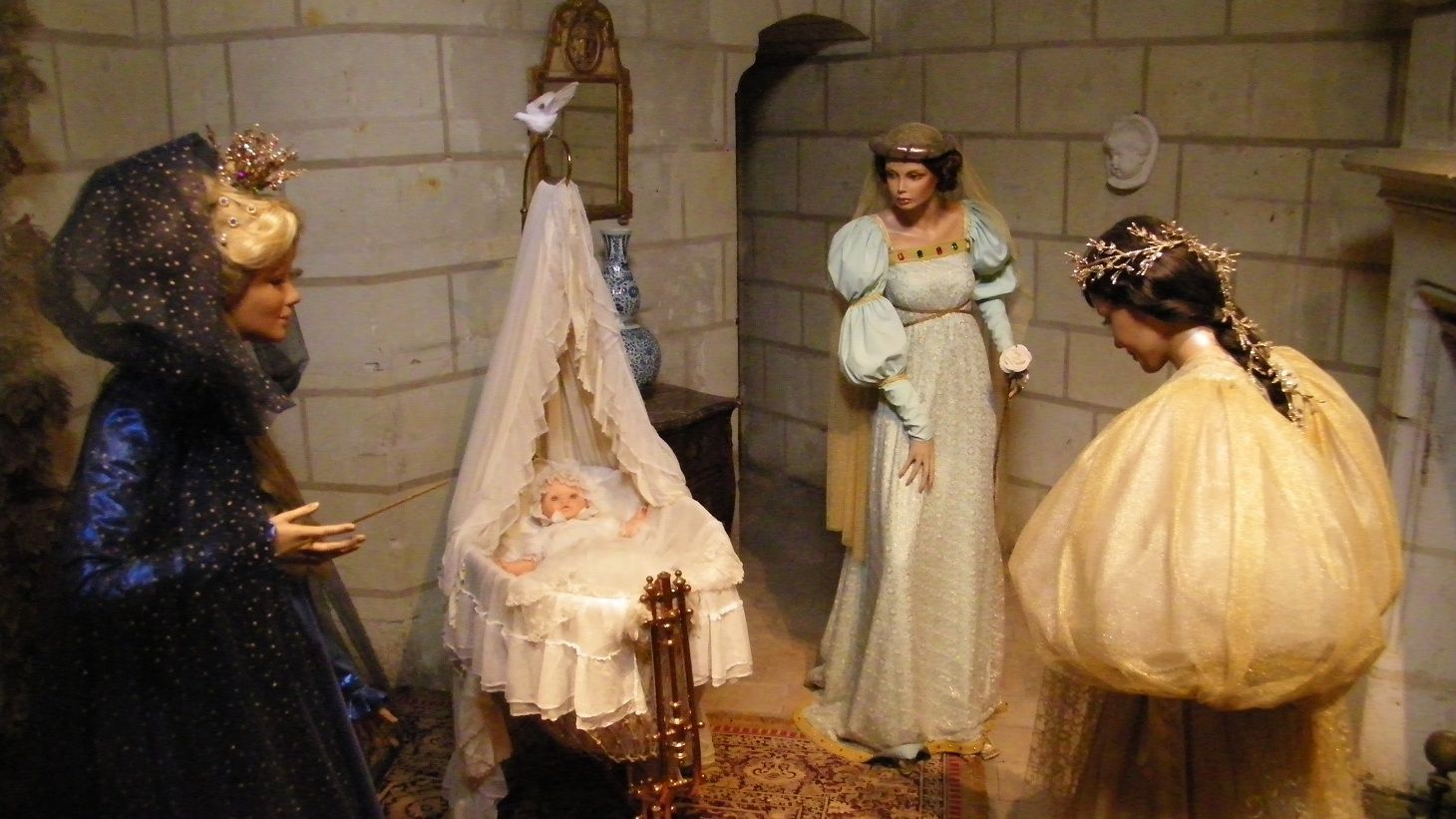

 There are other portions of the château open to the public with rooms designed to retell portions of the Sleeping Beauty story.
  The parterre terrace and the formal gardens were designed by André Le Nôtre, the famous architect of the gardens of Versailles.


/https%3A%2F%2Ffarm8.staticflickr.com%2F7438%2F15965745004_2a52983196.jpg)
/https%3A%2F%2Ffarm9.staticflickr.com%2F8653%2F16306926175_62e724361f_z.jpg)
/https%3A%2F%2Ffarm6.staticflickr.com%2F5579%2F14502905999_0c41a11062_z.jpg)
/https%3A%2F%2Ffarm4.staticflickr.com%2F3837%2F14687100974_1f29ecd1c4_z.jpg)