
De captivants à banals, les articles et photographies de “The Baguette” sont une tentative de publier un journal de ma vie dans la Manche et de proposer un forum de discussion pour tout ce qui touche à la Normandie.
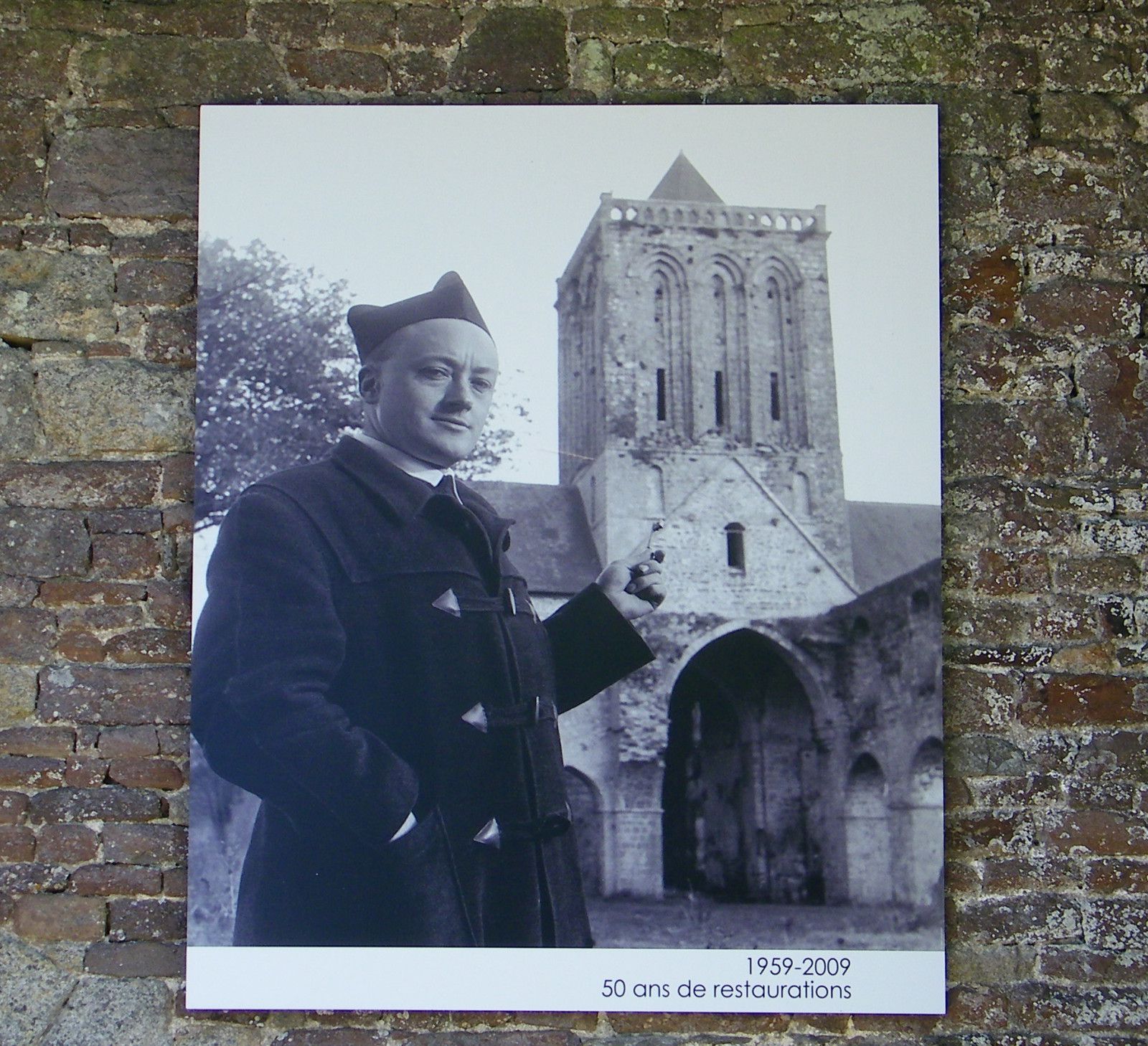
 The sizeable ruins of Lucerne Abbey stand in an isolated spot in the pleasantly green Thar Valley. The abbey was founded in 1143 by two Premonstratensian monks following a donation by Hasculfe de Subligny, the great nephew of William the Conqueror. It was not before 1164 that construction started. The abbey is in a fine parkland setting. After the French Revolution, the abbey was almost completely destroyed and its buildings dismantled so that the stone could be used to build roads and even a house located in Granville. In 1959, Abbot Marcel Lelégard purchased the church and its grounds and began restoration work which continues to this day.
 The Romanesque doorway in the 12th façade is decorated with flat heads on the archivolts. The Cistercian-style nave consists of seven bays. The six arches of the north side, which collapsed in the 19th century, were reconstructed using the south side as a model.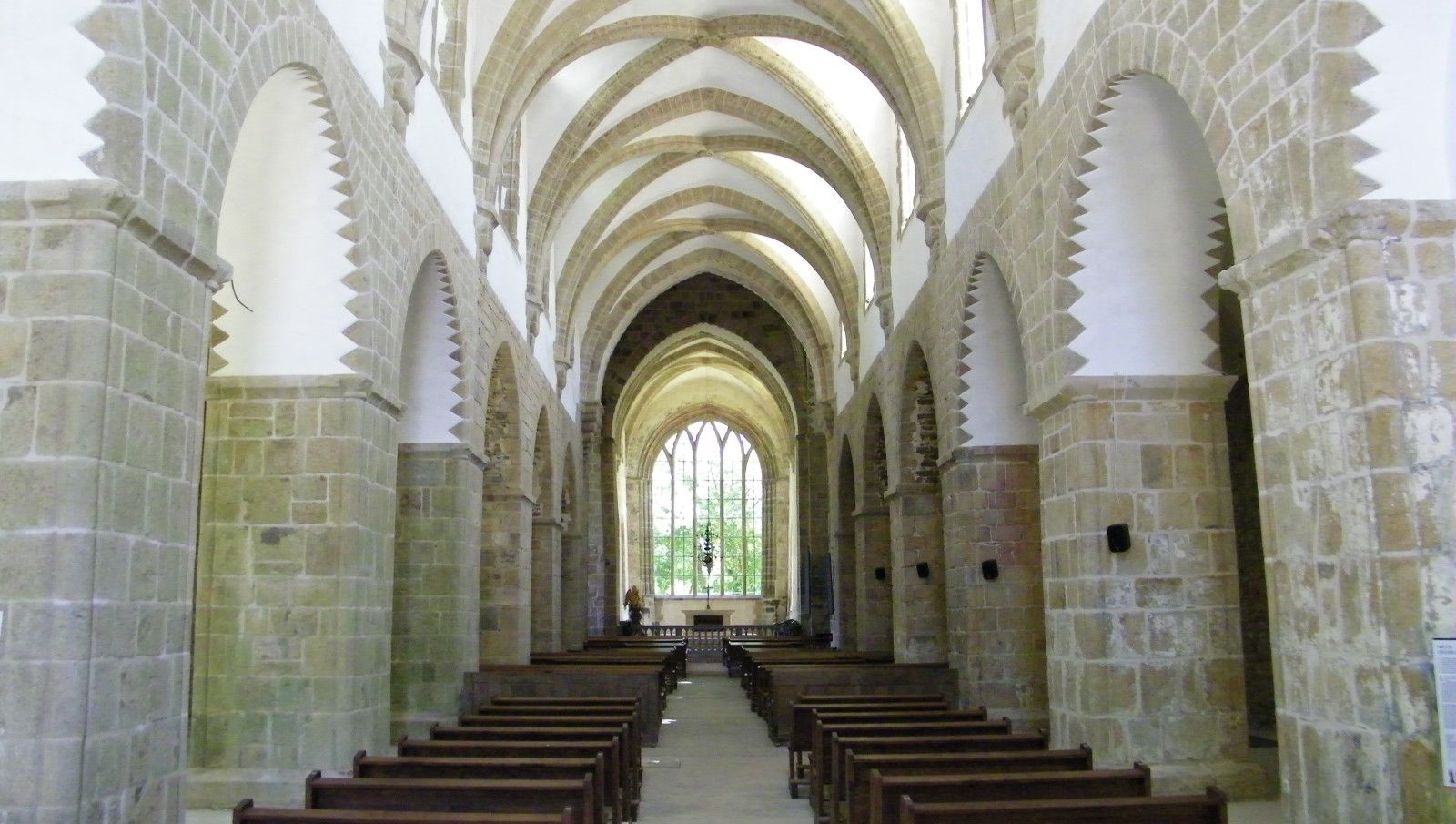


 The transept crossing supports a late 12th century Gothic square bell tower, pierced on each side with narrow lancets. During my visit, it was completely covered in scaffolding for restoration purposes.
 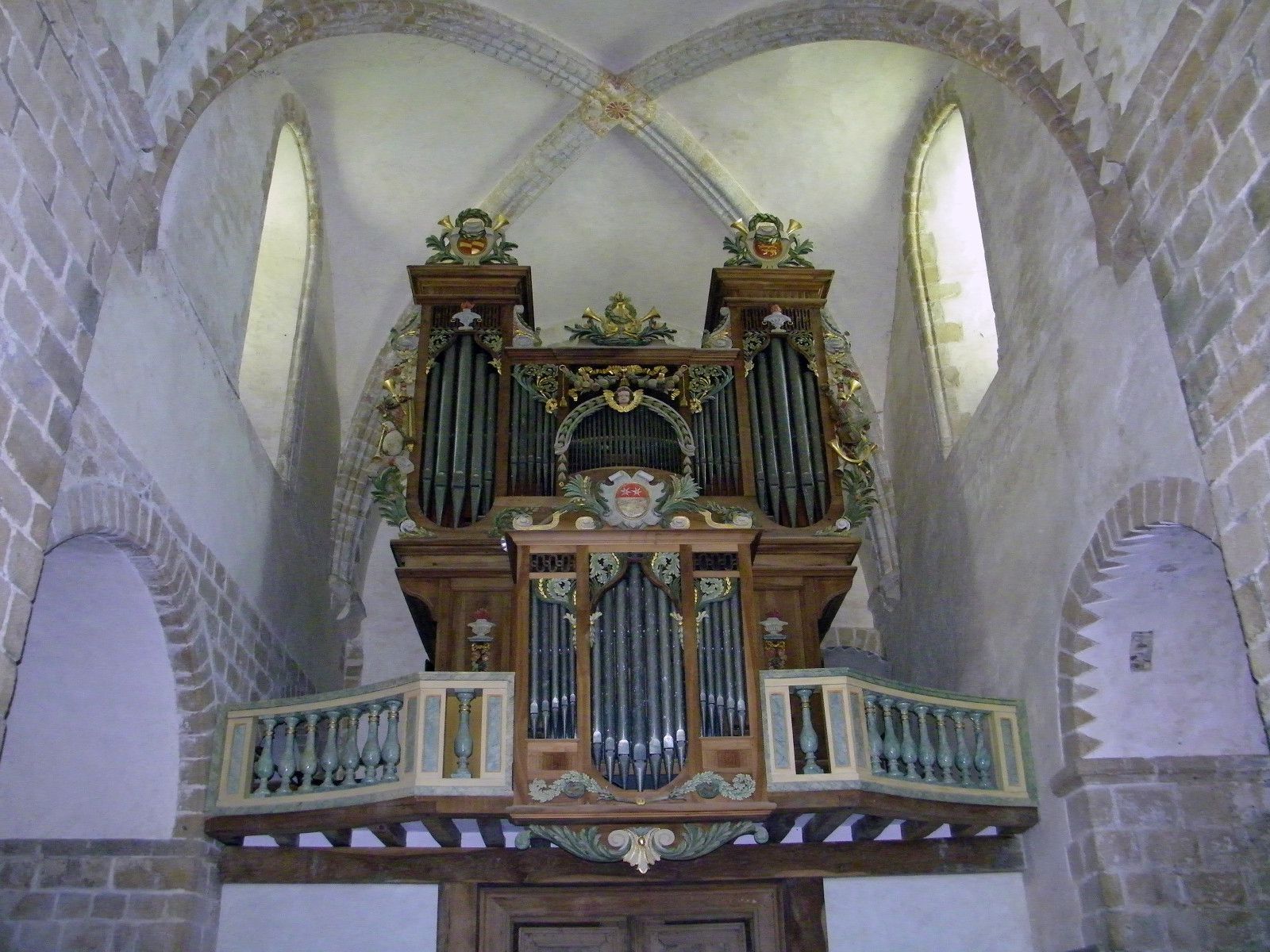 The south transept houses a fine 18th century organ with 33 stops.
  All that remains of the cloisters is the north western angle. There is currently a project to rebuild the cloister gallery, which was destroyed at the beginning of the 19th century. The arcades of the northwest corner and the entrance to the chapter house are still standing. In the southwest corner, near the door to the old refectory (entirely rebuilt), is a 12th century lavatorium with four beautiful little Romanesque arcades.
 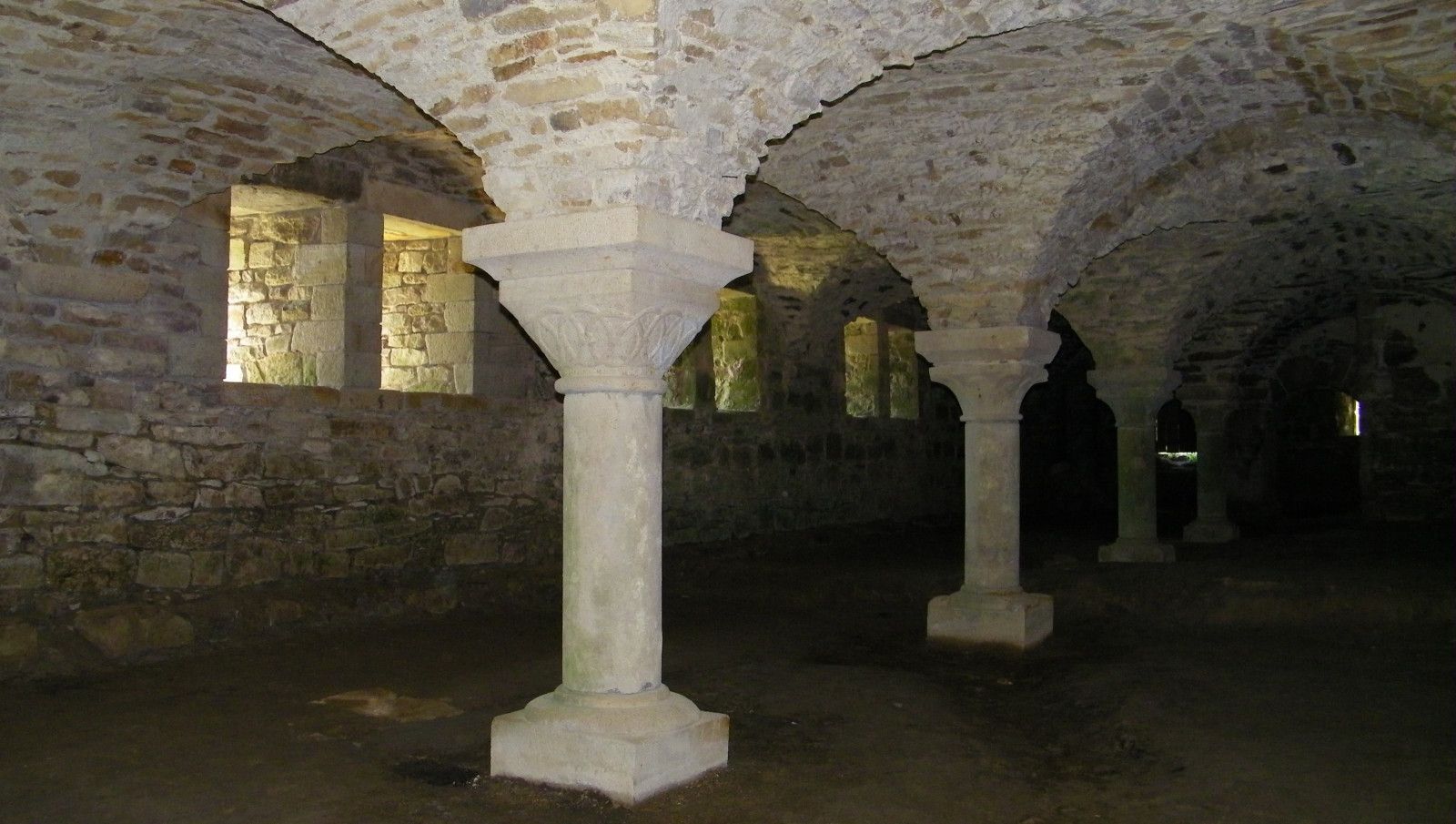 Underneath the refectory are the cellars which are partially buried in the ground.
  The refectory, three quarters of which were destroyed, was rebuilt from 1989 to 1995 with support from the French Department of Historical Monuments. Before restoration all that remained were the first two windows. Following the same outline as Mont-Saint-Michel, but in a slightly more Romanesque style, the refectory is a succession of identical windows, on both its north and south sides.
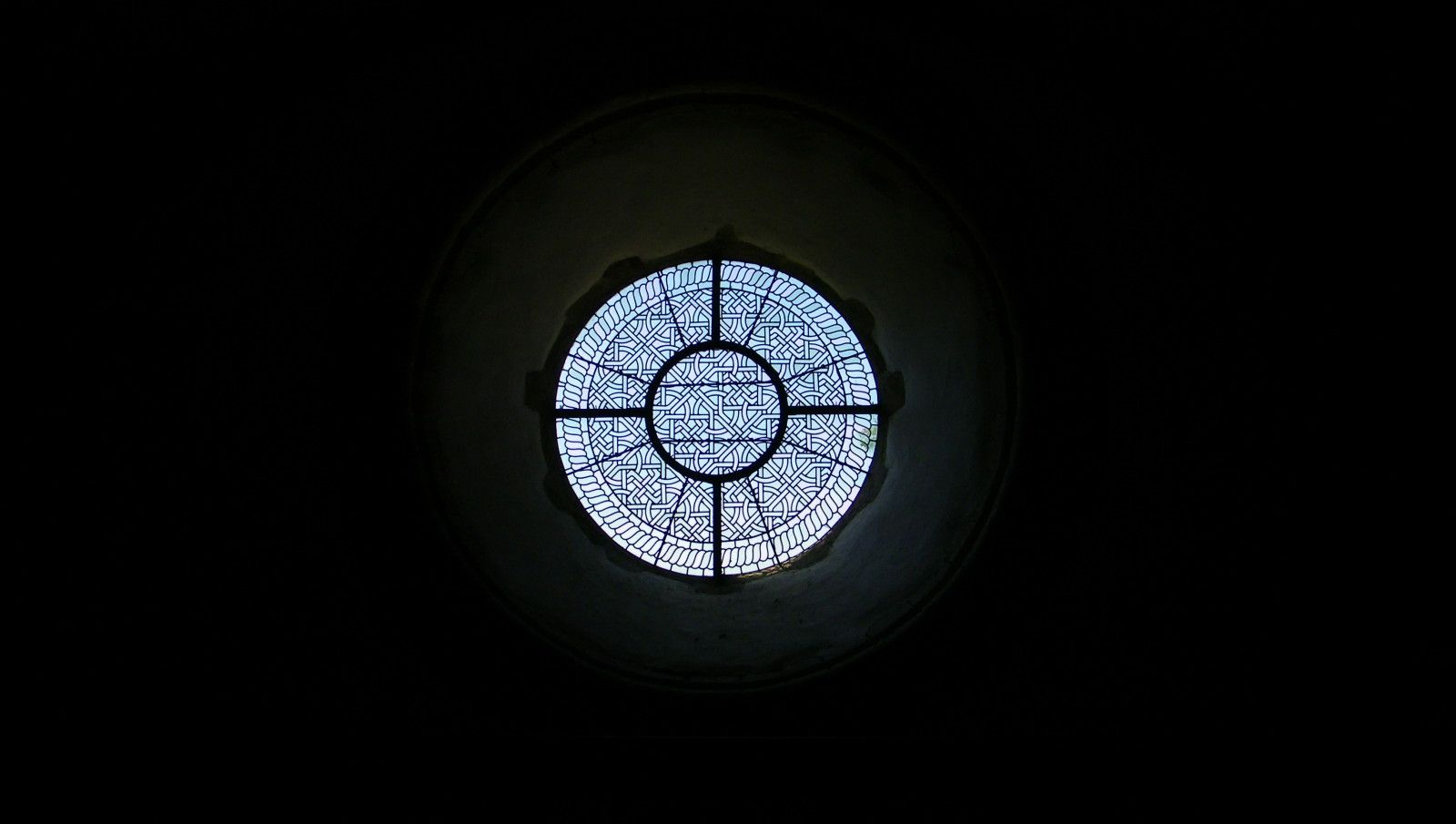
 To the north, two thirds of these windows have been walled, in order to reinforce the building to ensure outside support for the cloister gallery roof.
 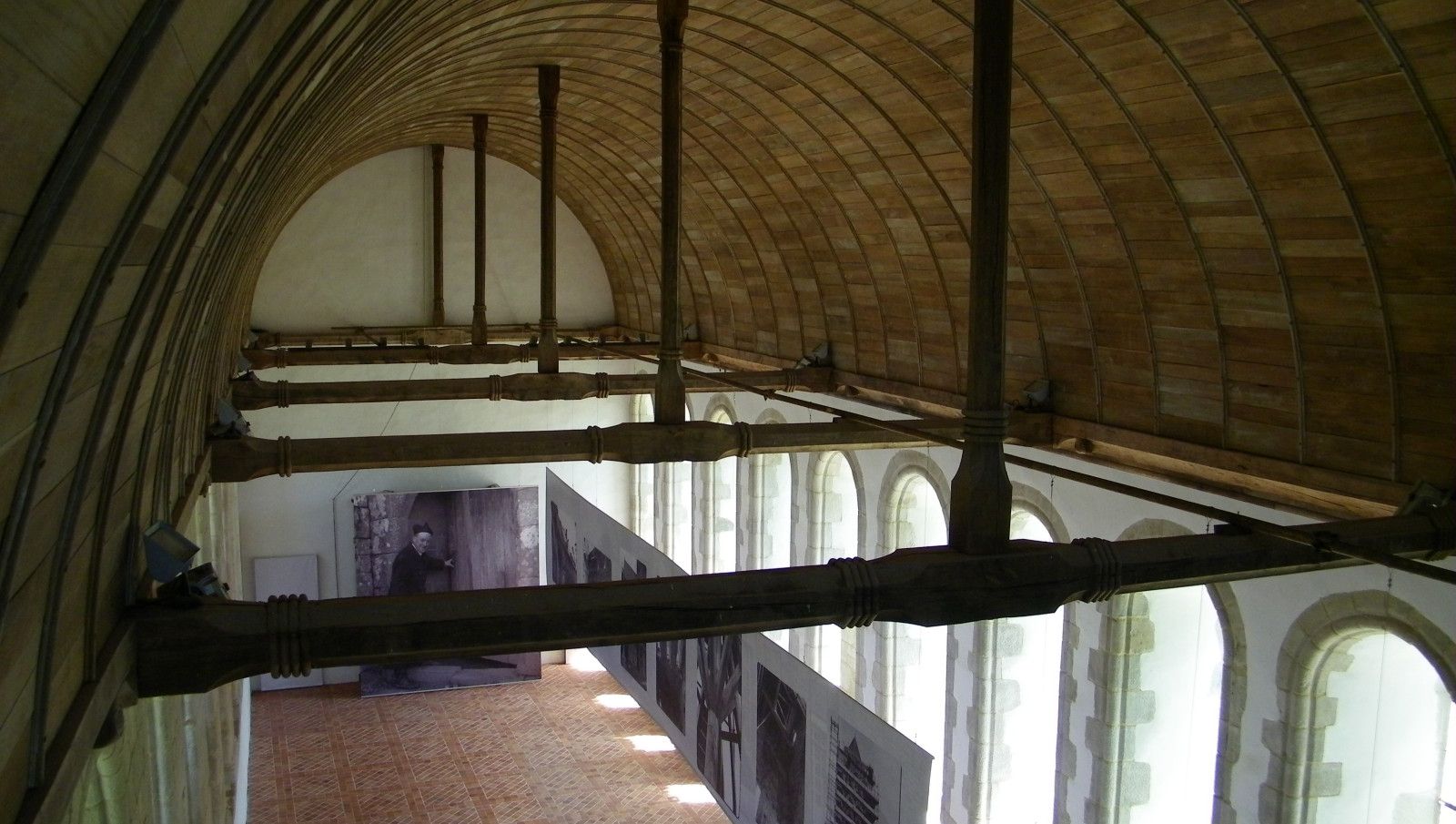 The roof framework, in the form of an overturned hull, has been restored following the 15th century carpentry design, fortunately preserved in the west monastic building. 110 cubic meters of oak were required for its construction.
 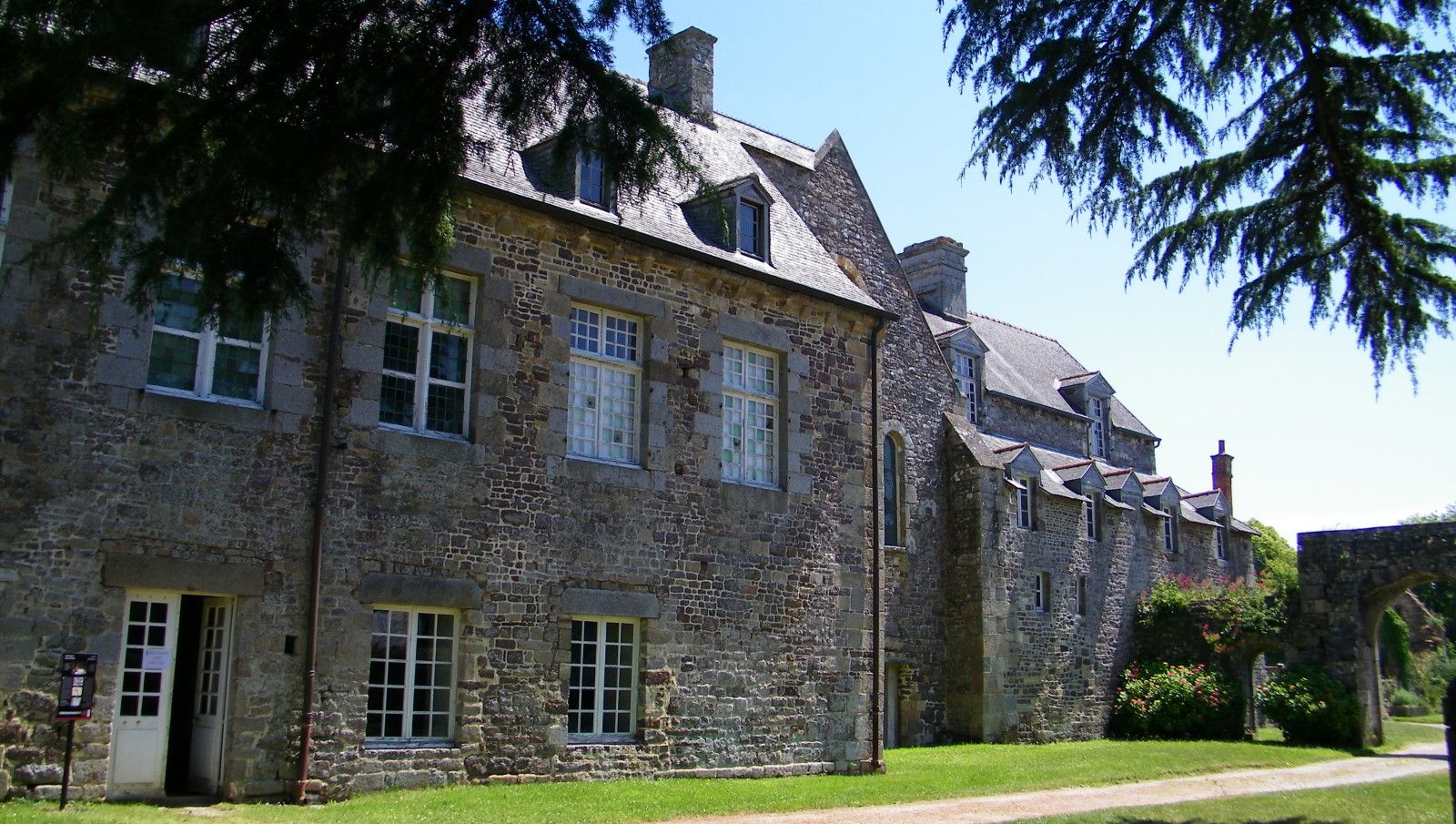 The west monastic building was the only building which remained completely intact in 1959. Originally, it housed the lay brothers. In the 15th century, after the decimation of the brothers, caused by the 14th century black plague epidemic, the building was used as a barn. To the east, two corridors offered access to five rooms on the first floor to accommodate passing guests or visitors to the order, then nine further loft cells for the novices and servants.
  South in the park are the remains of an aqueduct built in 1803 to provide water for the spinning mill set up in the abbey precincts.
  The east gate was rebuilt during the 18th century, very probably on the same site as the original medieval gate, at the edge of the forest. It comprises a perron with double revolution staircase and a wrought iron grid maintained by two blue Carolles granite pillars.
  Overlooking a stretch of water is the fine Classical façade of the abbot’s lodging. It was built from 1719 onwards.
  Across the ornamental pond is the abbey’s old mill, together with its small bridge. It was extended with the addition of a right-angled wing in 1866, using stone from the east monastic building.
  Temporary exhibitions are now held in the rooms above the 12th century to 15th century gatehouse (Almonry Gate), which is also the location of the ticket desk and souvenir shop.
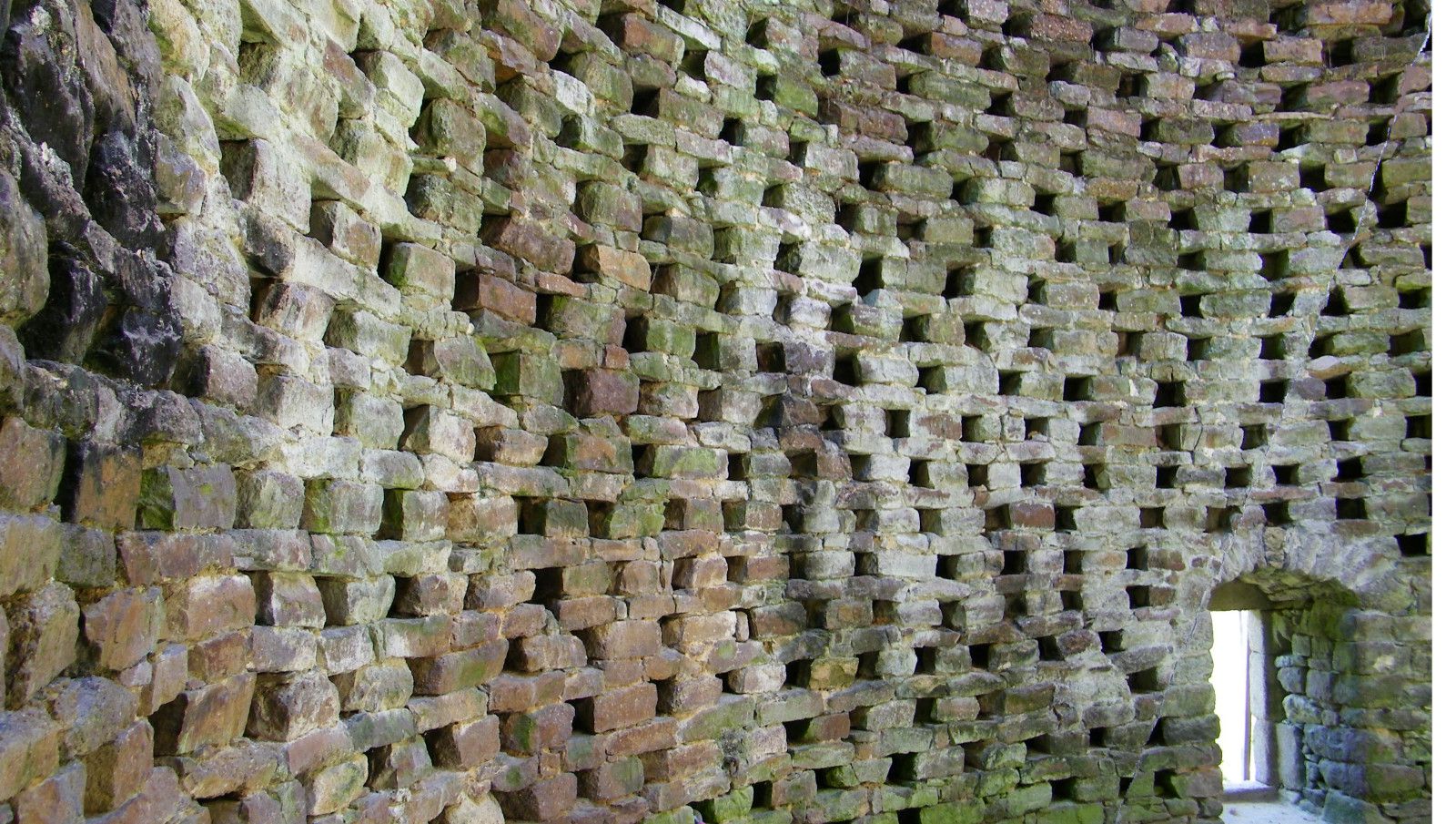 The way back to the porter’s lodge passes the old tithe barn and the dovecote, a huge round tower with 1,500 pigeon holes accommodating up to 3,000 pigeons. Sadly, during my visit, the exterior of this building was also covered in scaffolding for restoration purposes.


/http%3A%2F%2Ffarm6.staticflickr.com%2F5579%2F14502905999_0c41a11062_z.jpg)
/http%3A%2F%2Ffarm4.staticflickr.com%2F3837%2F14687100974_1f29ecd1c4_z.jpg)
/http%3A%2F%2Ffarm4.staticflickr.com%2F3894%2F14473353040_0e0ae9fc82_z.jpg)
/http%3A%2F%2Ffarm8.staticflickr.com%2F7207%2F14015976344_5eb65701a9_z.jpg)